Modern Arab Art & Art Movements
Editorial essays on the art movements Western art history left out — Baghdad, Khartoum, Casablanca, Cairo, Tehran. Hurufiyya, the Baghdad Group, the Casablanca School, Saqqakhaneh: a whole century of painting and abstraction that got written out of the global story, told back in.
There is a version of twentieth-century art history that runs Paris, New York, and stops. In that version, an entire century of painting made in Baghdad, Khartoum, Casablanca, Cairo and Tehran simply is not there. It was not lost. Someone decided it did not count. This series of editorial essays is the correction — movement by movement, group by group, the modernism the global canon skipped, told with the names, the dates and the manifestos, and pointed at the collections where you can stand in front of it now.
The letter that became abstraction
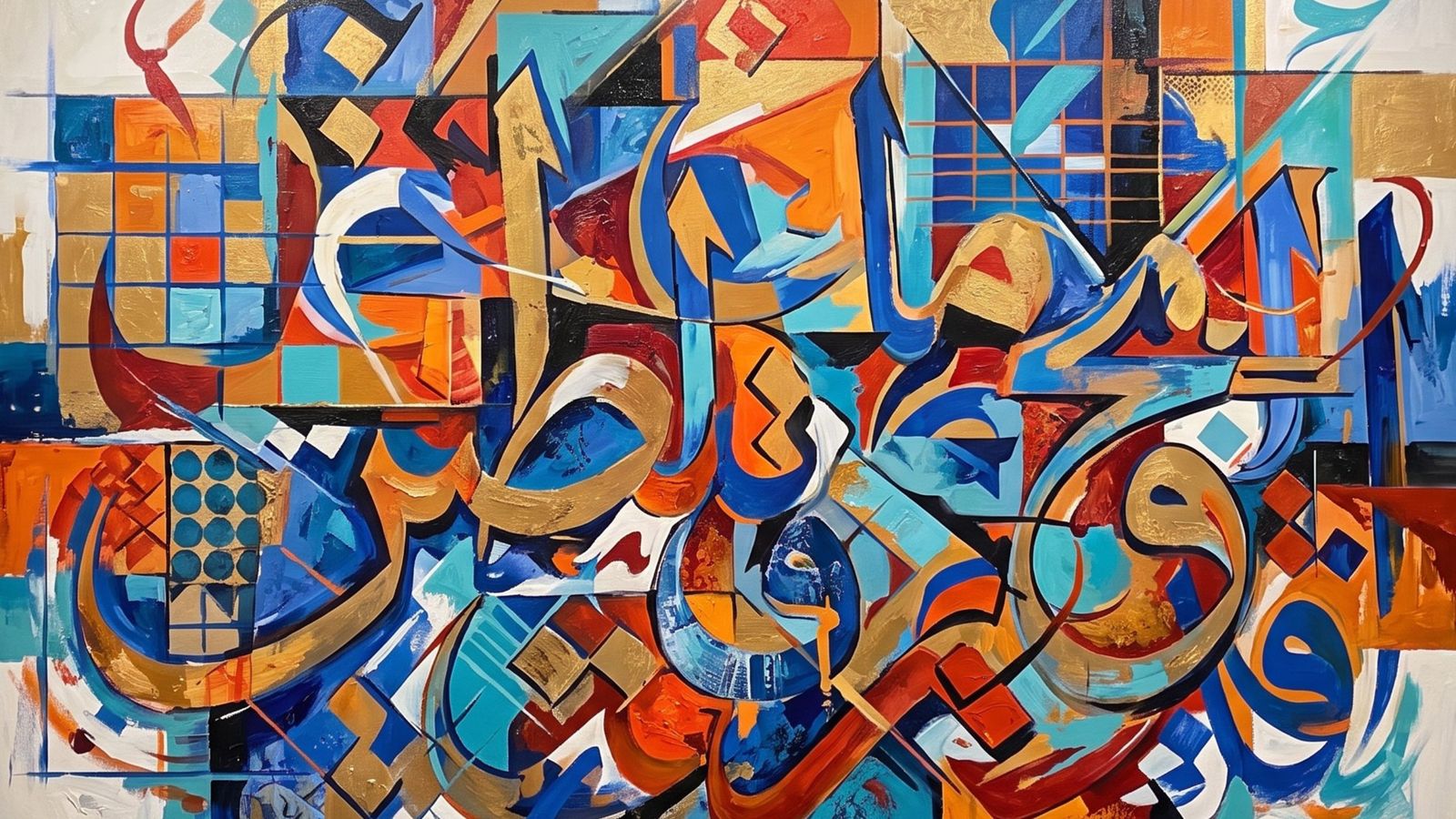
The single most important thing modern Arab art did was take the Arabic letter and set it free. Hurufiyya — from ḥurūf, letters — pulled calligraphy loose from meaning and turned it into pure form. It did not happen in one place. Madiha Umar was exhibiting letter-based abstraction in Washington by 1949 and in Baghdad's Ibn Sina show of 1952; parallel versions surfaced independently in Sudan, Morocco and Iran, artists barely aware of each other arriving at the same idea. Each essay follows one thread of it, because the story is richer as several stories than as one.
The groups that built a modernism
Movements here were collectives with manifestos, not loose tendencies. The Baghdad Group for Modern Art, founded in 1951 by Jewad Selim, went looking for a modernism rooted in Mesopotamia — cuneiform and ancient motif answering Picasso. The One Dimension Group turned Sufi thought and the scratched, burned surface into a theory of the flat plane. The Casablanca School built a post-colonial visual language after 1965; Aouchem, in Algeria, made the Amazigh tattoo a manifesto. We take each group on its own terms — what it argued, who was in it, what it made.
The map beyond Iraq
The century did not belong to one city. The Khartoum School is where African and Arab modernism met in the work of Ibrahim El-Salahi. Saqqakhaneh was Iran's answer to Hurufiyya, Tanavoli and Zenderoudi turning folk and Shi'i material into high modernism. Cairo had its Art and Liberty surrealists and its neo-pharaonic sculptors; Tunis had the Ecole de Tunis; the UAE had Hassan Sharif making conceptual art to near-total ridicule. Each essay puts a place on the map that the standard survey left blank.
Who decided what counted
This is the argument under all of it, and the series does not dodge it. Great art does not go invisible by accident — museums, markets and canons make choices, and for decades those choices ran one way. Now they are running another: the Barjeel collection's Taking Shape rehung 1950s–80s Arab abstraction with near gender parity, and the market has started paying attention to what the textbooks missed. We name the mechanism, not just the fact.
Where the canon is being rewritten now
The correction is happening in real buildings, and that is where each essay lands. The works are entering the collections at Barjeel and Mathaf, coming up at auction, hanging in Sharjah and Doha. Every piece ends where Exhibo begins — with the galleries, institutions and works near you, so a movement you just read about opens straight onto the room where you can see it. The century that got skipped is being shelved back into the story, and you can go stand in front of the evidence.
Articles in this series
- EditorialMovements
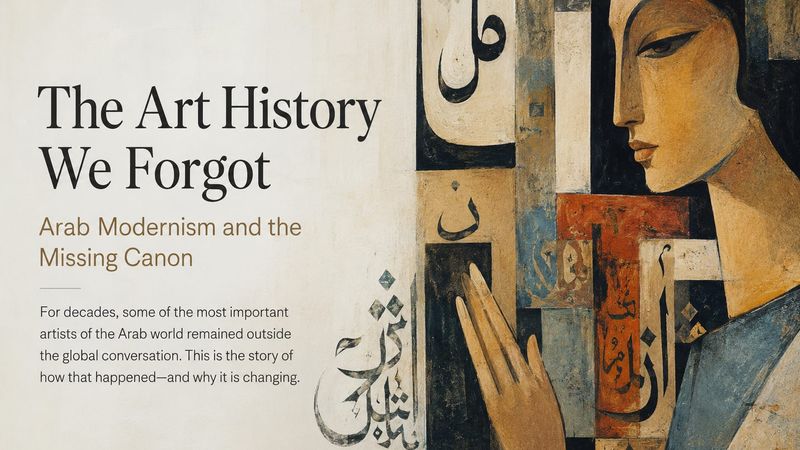
Arab Modernism 101: The Movement That Western Art History Forgot
An entire century of extraordinary painting, sculpture and radical thinking got written out of the global canon. Someone made that decision. And now the market — and the collectors who pay attention — are making a different one.
Great art does not become invisible by accident. Arab Modernism reveals how museums, markets and cultural institutions shape what the world sees — and what it overlooks. A story about artists, recognition and the blind spots that define art history.
- EditorialMovements
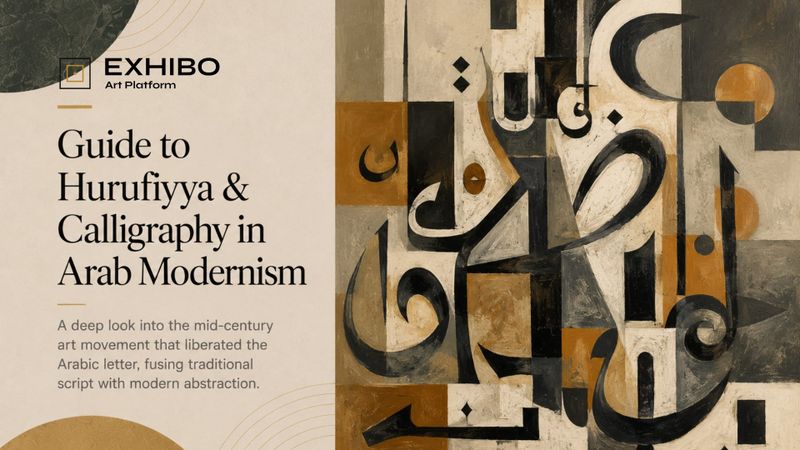
Understanding Calligraphy and Hurufiyya in Arab Modernism
A deep look into the mid-century art movement that liberated the Arabic letter, fusing traditional script with modern abstraction.
The Hurufiyya movement stands as one of the most significant developments in twentieth-century Arab art. Discover how modernist pioneers deconstructed traditional Arabic calligraphy to assert a post-colonial cultural identity, and learn where to experience these works today using Exhibo.
- EditorialMovements
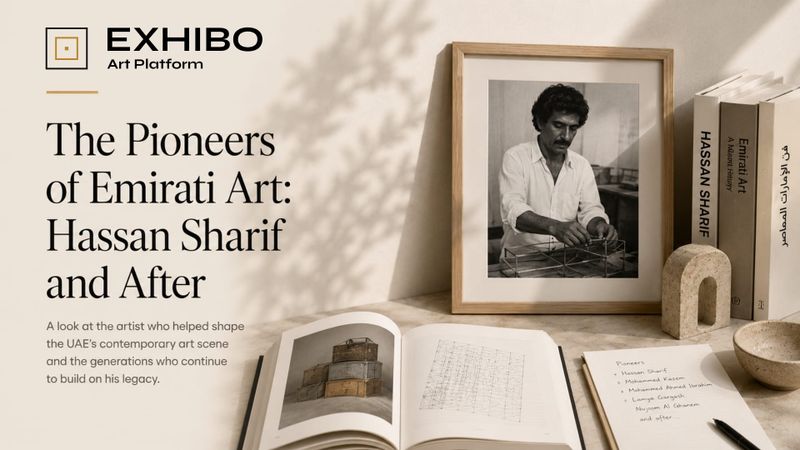
The Pioneers of Emirati Art: Hassan Sharif and After
How Hassan Sharif and the artists known as "the Five" built conceptual art in the UAE from nothing
Before the Louvre came to Abu Dhabi and Alserkal filled with galleries, a small group of artists made conceptual art in the UAE with almost no audience and a great deal of ridicule. This is the story of Hassan Sharif and the pioneers who built a scene from nothing — and why their work still anchors Emirati art today.