
Exhibo Editorial
Mexican Muralism
Post-revolutionary public fresco in Mexico: Vasconcelos, los tres grandes, named walls from the National Palace to Detroit and Dartmouth
Mexican muralism is the government-backed public art programme that covered schools, ministries and civic buildings in Mexico after the Mexican Revolution (1910–20). Painters worked on lime plaster and later on industrial coatings, turning walls into a readable national story for a largely rural and often illiterate public. The project gathered force under José Vasconcelos at the Secretaría de Educación Pública in the early 1920s and reached its best-known form through Diego Rivera, José Clemente Orozco and David Alfaro Siqueiros, nicknamed los tres grandes. Their cycles argued over history, labour, Indigenous heritage and the costs of war; they disagreed on almost everything except the claim that art belonged on walls people walked past every day.
This guide stays with that historical muralism: conditions that produced it, how the style works, close readings of named murals with museum and building locations, the United States commissions of the 1930s, and what critics still dispute. Frida Kahlo’s easel painting sits beside this story in popular memory; her biography belongs to a separate brief in this programme (S4-11), not here. For the wider Americas context, see Latin American Modernism. The series hub is World Art Traditions. Sites named below also appear in the museums directory.
After the Revolution: why the state paid for walls
The Revolution left Mexico with a new constitution, a devastated countryside and rival factions that had fought under different banners. Álvaro Obregón’s government needed a shared story that could turn maderistas, zapatistas and other wartime identities into mexicanos. Officials and intellectuals such as the anthropologist Manuel Gamio argued that Indigenous peasants and popular crafts should sit at the centre of that story. Murals offered a medium that did not require literacy or a ticket to a private gallery.
The idea did not appear from nowhere. Pre-Hispanic sites from Bonampak onward show that Mesoamerican elites already used wall paint as public speech. Colonial churches covered plaster with Christian doctrine for converts who could not read Latin. Nineteenth-century painters such as Juan Cordero tried secular philosophical murals; under Porfirio Díaz the Academy of San Carlos still pushed European models. Gerardo Murillo, better known as Dr. Atl, argued before 1910 that Mexican art should look like Mexican life, experimented with his own durable pigments, and later championed younger painters during the war years. José Guadalupe Posada’s broadsheets taught the same generation to satirise power in cheap print. Mexican muralism fused those local habits with a modern ministry budget.
Vasconcelos, as Minister of Public Education, hired painters for civic interiors and gave them unusual freedom of subject. The first major campus was the old Jesuit Colegio de San Ildefonso, then the Escuela Nacional Preparatoria in Mexico City. Rivera’s Creation (1922–23) and Orozco’s Maternity (1923) still look toward Italian Renaissance allegory more than toward street politics; they mark the moment wall painting returned to public buildings at monumental scale. Fernando Leal’s Dancers of Chalma and Jean Charlot’s Conquest of Tenochtitlan on the same campus show how wide the early roster ran. Within a few years the programmes hardened into the didactic cycles that define Mexican muralism for searchers and students: Indigenous bodies as protagonists, colonial violence, revolutionary martyrs, factory labour, and a future framed by technology or by its abuse.
A 1922 Syndicate of Technical Workers, Painters and Sculptors manifesto, drafted with Siqueiros’s leadership, rejected “aristocratic” easel painting and praised monumental art as public property. Many muralists were communists; the Obregón and later Calles governments still used their images to legitimise the post-revolutionary state. That tension never left the movement. Patrons wanted unity. Painters often painted class conflict. Viewers inherited both messages on the same wall. Vasconcelos left office in 1924 and mural commissions contracted; the political bargain grew sharper. Rivera kept major state work, Orozco and Siqueiros looked abroad, and the walls that remained became the textbook image of a “Mexican Renaissance” that American visitors crowded journals to describe.
What Mexican muralism is
Mexican muralism is a public art programme first, a style second. MoMA’s glossary frames it as a movement that began in the early 1920s when the Mexican government commissioned artists to educate the mostly illiterate population through wall painting. Scale matters: cycles wrap stairwells, courtyards and auditoria rather than fitting a single canvas. Subject matter matters more: history, labour and national identity take priority over private portraiture. Technique varies. Rivera and Orozco revived fresco; Siqueiros pushed commercial enamels, projectors and spray equipment. The common claim is that the wall should teach and persuade, not decorate a collector’s salon.
Art historians sometimes fold related easel production into an “Escuela Mexicana de Pintura y Escultura,” a loose label from the 1930s rather than a school with one manifesto. Muralism overlaps that label but has clearer institutional edges: ministry contracts, union halls, university chapels, and later private hotels and banks when state commissions thinned. The social-realist register dominates, yet each painter kept a personal handwriting. You can mistake a postcard for “Mexican muralism” in general; on site the brushwork, palette and politics diverge within metres.
Scholars sometimes split an early “heroic” phase under Vasconcelos from a later “statist” phase after his 1924 resignation, when commissions narrowed and Rivera dominated official work. Leonard Folgarait and others mark around 1940, after Lázaro Cárdenas left office, as another hinge: conservative politics reduced appetite for radical mural programmes even as the walls remained. Production continued for decades; Siqueiros lived until 1974. Textbooks that stop at 1940 describe a peak of international fame, not the death of the medium. Mary Coffey’s work on museum display and mural afterlives reminds you that later viewers meet these walls as heritage tourism as much as as revolutionary pedagogy.
Scale, site and audience
A Mexican mural is architecture as much as painting. Rivera’s History of Mexico fills the main stairwell of the Palacio Nacional; you climb through centuries. Siqueiros’s Portrait of the Bourgeoisie wraps three walls and a ceiling in the stair of the Sindicato Mexicano de Electricistas so that your body supplies the camera move. Orozco’s Dartmouth cycle in Baker Library turns a reading room into a continuous American epic. The intended audience was the public that used those buildings: students, clerks, workers, visitors. Ticketed museum display came later for some works, or for portable panels such as Orozco’s Dive Bomber and Tank (1940) at MoMA.
Location also set the political temperature. A ministry courtyard in Mexico City carried state sponsorship. A New York lobby carried corporate risk, as Rivera learned at Rockefeller Center. A college library offered academic cover that Orozco used for bitter anti-war allegory. Site is not background; it is part of the argument. Conservation practice follows the same logic: you cannot ship a stairwell to a blockbuster loan show. Visitors travel to the building, or they study the mural through photography that flattens height and sound.
Themes: history, labour, mestizaje
Shared themes include indigenismo (pride in Indigenous heritage), mestizaje (mixed Spanish and Indigenous identity as national character), celebration of rural and urban labour, satire of clergy and oligarchs, and retellings of conquest and revolution. Rivera tends to stack heroic ancestors and productive workers into optimistic sequences. Orozco returns to anonymous victims and broken machines. Siqueiros stages class war and antifascist struggle with cinematic force. None of the three treated pre-Hispanic Mexico as a dead museum; they used Aztec and other motifs as living political symbols, sometimes romanticised, sometimes as warning.
Labour iconography binds city and countryside: sugar cane cutters, miners, teachers, auto workers, mothers with children. Anti-clerical scenes in Rivera’s cycles reflect post-revolutionary conflicts with the Catholic Church; Orozco can show a friar’s mercy beside colonial destruction, refusing a single villain. Technology arrives as promise (electrification, vaccines, assembly lines) and as threat (bombs, tanks, poison gas). If you want a one-sentence subject list for exam revision, use history, labour, race and machines. The walls themselves argue over which of those four should win.
Los Tres Grandes
Three painters dominate English-language search results for mexican muralism, and for good reason: their output, press coverage and United States commissions outpaced peers. The nickname los tres grandes is a convenience, not a closed guild. Jean Charlot, Fernando Leal, Roberto Montenegro, Rufino Tamayo, Pablo O’Higgins and many others painted walls in the same decades. For an introductory map, though, Rivera, Orozco and Siqueiros still organise the field by temperament as much as by biography.
Each trained or travelled differently. Rivera spent much of the 1910s in Europe absorbing Cubism and Renaissance fresco. Orozco stayed closer to Mexico, saw revolutionary violence as a journalist with Carranza’s forces, and kept a darker view of political heroics. Siqueiros fought young, organised unions, wrote theory, then rebuilt his practice around industrial materials. Their styles diverge enough that a trained eye can often name the author before reading a plaque.
Diego Rivera
Diego Rivera (1886–1957) built the most readable narrative machines. Figures stack like Giotto’s, coloured in earth tones that nod to Indigenous wall painting, with Cubist collage logic in the way scenes abut. He painted the Secretaría de Educación Pública courtyards between 1923 and 1928, then the Palacio Nacional stair cycle The History of Mexico (begun 1929, major campaign through 1935). The Universidad Autónoma Chapingo chapel murals (mid-1920s), including the allegorical Liberated Earth, extend the same agrarian optimism into a former hacienda church. Abroad he produced the Detroit Industry frescoes (1932–33) at the Detroit Institute of Arts and the destroyed Rockefeller Center mural Man at the Crossroads (1933–34), remade in Mexico City as Man, Controller of the Universe (1934) at the Palacio de Bellas Artes. Rivera’s politics were communist and public; his walls often still sold a hopeful modernisation story that governments and industrial patrons could live with, until Lenin’s portrait at Rockefeller Center crossed that line. Foreign press called him Mexico’s greatest painter; peers sometimes heard that headline as erasure of their own walls.
José Clemente Orozco
José Clemente Orozco (1883–1949) painted tragedy more than triumph. Early San Ildefonso work such as The Trench (mid-1920s) shows anonymous revolutionaries in cruciform collapse rather than named generals on horseback. His United States years produced Prometheus at Pomona College (1930), murals at the New School for Social Research in New York, and the twenty-four-panel Epic of American Civilization (1932–34) in Dartmouth College’s Baker Library. Later Mexican cycles include the Hospicio Cabañas in Guadalajara, where Miguel Hidalgo and other independence scenes share space with Orozco’s characteristic fire and distortion. MoMA’s Dive Bomber and Tank (1940), painted on site as six rearrangeable panels, treats modern war as scrap metal without national insignia. Contemporaries sometimes called Orozco the “apolitical” grande; his walls still attack dogma, empire and mechanised killing. He refuses Rivera’s sunny pantheon. Defacement of early Mexico City murals, later restored, shows how contested that refusal was in real time.
David Alfaro Siqueiros
David Alfaro Siqueiros (1896–1974), the youngest of the three, treated muralism as a technical and political laboratory. He argued that revolutionary content required modern materials: pyroxylin and Duco auto lacquers, spray guns, projectors, concave surfaces, what he later called polyangular perspective for moving spectators. Early experiments include Plastic Exercise (1933) in a Buenos Aires basement; New York workshop pieces such as Collective Suicide and Echo of a Scream (both 1936–37, MoMA) show controlled accidents of pooled industrial paint. Portrait of the Bourgeoisie (1939–40) at the Electricians’ Union in Mexico City ranks among his strongest murals. In the Palacio Nacional he later painted The Torment of Cuauhtémoc (1950s), one of his clearer Indigenous-history scenes. Late career climax: The March of Humanity on Earth and Toward the Cosmos at the Polyforum Cultural Siqueiros in Mexico City, inaugurated 1971, an immersive octagonal environment on industrial supports. Siqueiros’s politics stayed militant; exile, prison and antifascist organising shaped the biography as much as any commission.
Key murals, read closely
Named walls beat abstract definitions. The works below are still on site or in museum collections with stable public identities. Dates follow museum and teaching consensus; a few campaigns spanned years, and titles sometimes shift in English translation. Walk them in person when you can: photographs flatten the stair, the courtyard echo and the height that forces your neck back.
Rivera at the National Palace and the SEP
At the Palacio Nacional in Mexico City, Rivera’s stair murals compress conquest, colonial rule, independence and revolution into a spiral you climb. An eagle on a cactus near the centre echoes the founding omen of Tenochtitlan and the modern Mexican flag. Caricatured priests and generals face Indigenous labourers and revolutionary leaders; Zapata’s “Tierra y Libertad” appears among the slogans. Rivera places different epochs in the building’s arches rather than forcing a single vanishing-point stage. The result is didactic and crowded on purpose: a national textbook in pigment. Guides often pause visitors midway up the stair so that Aztec foundation myths, Spanish steel and revolutionary rifles occupy the same glance.
Earlier, at the Secretaría de Educación Pública, Rivera filled courtyard walls with labour, festivals and political allegory across multiple floors. Smarthistory’s room-by-room essays remain the clearest English walkthrough of the Court of Labour and related bays. Teachers and street vendors share space with Marxist emblems; the courtyards were built for daily foot traffic, not for a single ceremonial viewing. Together the SEP and National Palace cycles made Rivera the face of Mexican muralism for foreign visitors in the late 1920s, sometimes to the annoyance of peers who painted fewer square metres but sharper doubt.
Detroit Industry at the DIA
Commissioned for the Detroit Institute of Arts and funded by Edsel Ford, Rivera’s Detroit Industry murals (twenty-seven fresco panels, 1932–33) wrap what is now Rivera Court. Rivera sketched for weeks at Ford’s River Rouge plant, then translated assembly lines, powerhouses, aviation and medicine into a cosmology of earth and machine. The south wall’s stamping press rhymes with the Aztec goddess Coatlicue; vaccination scenes face poison-gas manufacture. East-wall agriculture panels root the auto industry in soil and harvest; west-wall aviation splits passenger flight from bombers. DIA director William Valentiner pushed the commission despite political noise; Edsel Ford’s funding for the expanded garden-court programme is commonly cited around $20,000–$21,000 (secondary sources vary between about $20,889 and $20,899 after an initial lower brief). Local conservatives protested a communist painting Detroit’s factories. The museum kept the cycle, which Rivera later ranked among his best. You stand in a courtyard and read industry as both fertility and threat, without leaving Midwestern limestone.
Orozco at Dartmouth and San Ildefonso
At Colegio de San Ildefonso, Orozco’s The Trench refuses glory. Faces hide; bodies twist into a collective death. Cubist fracturing of space replaces Rivera’s clear stacks. Art History Teaching Resources notes the suggestion that the three figures may be one man seen in successive positions, a modernist time compression that still reads as mass death. The wall asks whether revolutionary sacrifice was worth the cost, a question Orozco had earned the hard way.
At Dartmouth, the Epic of American Civilization pairs Indigenous and European myth across facing walls. In The Departure of Quetzalcoatl, priests drive the feathered serpent away; opposite, Modern Migration of the Spirit shows a muscular Christ who has broken his cross amid junked ideologies. Gun-barrel forms and machine parts invade sacred gesture. Anita Brenner’s 1929 book Idols Behind Altars, which publicised muralists for English readers, argued that Indigenous belief survived under Catholic ritual; Orozco’s paired gods give that thesis a hard visual form. Academic patronage let Orozco keep the bitterness that corporate lobbies would not.
Siqueiros: Electricians’ Union and the Polyforum
Portrait of the Bourgeoisie turns a union stair into antifascist montage: capital, war machinery, mass media and a rising armed figure aligned with the climber’s path. Projectors helped Siqueiros diagram sightlines; the seams between wall and ceiling stay visible. You do not “view” the mural from one ideal spot; you assemble it while ascending. Scholars who favour Siqueiros often start students here because the politics and the optics arrive together: fascism as capitalism’s last resort, montage as the mural’s answer to film.
The Polyforum Cultural Siqueiros, inaugurated December 1971 in Mexico City, houses The March of Humanity, an octagonal sculpted mural environment on resins, fibreglass and concrete, often cited as among the largest mural surfaces of the twentieth century. Industrialist Manuel Suárez backed the complex; panels were prepared with an international workshop team before installation. A rotating platform and light programme (with Siqueiros’s recorded voice in the historical presentation) treated spectatorship as engineered experience. Late muralism here becomes architecture, theatre and propaganda at once. Square-metre totals differ across tourist and scholarly sources; what does not differ is the ambition to surround the visitor on every side.
Technique: fresco, industrial paint and the wall as machine
Rivera and Orozco worked in fresco for most major cycles: water-based pigment on wet lime plaster that carbonates into a mineral bond. That Italian method suited narrative clarity and matched Vasconcelos’s revivalist cultural programme. Assistants, cartoons and giornate (day’s patches) structured the labour, as in any large fresco campaign. Lime-safe earth colours dominate many walls; fugitive lakes and tricky blues still pushed workshops toward secco touch-ups on dry plaster, the same compromise Italian crews knew. Encaustic and mosaic appear in related Mexican programmes; the core civic cycles remain fresco-led for Rivera and Orozco.
Scaffolding, plasterers and pigment grinders made muralism a building trade. Contracts timed delivery to walls, not to private inspiration. Humidity, cold and rain delayed intonaco the way they delayed any construction site. Read a finished courtyard as pure ideology and you miss the craft schedule that made the ideology stick.
Siqueiros broke that consensus. Auto lacquers, airbrushes and projection promised speed, durability on modern substrates and effects fresco could not deliver. Talks with Soviet filmmaker Sergei Eisenstein in Mexico fed his interest in cinematic angles and moving spectators. His New York Experimental Workshop (1936) trained artists, including a young Jackson Pollock, in pooled and sprayed paint; Pollock’s later drip language owes a debt to that freedom even when Abstract Expressionism dropped Siqueiros’s politics. Conservators now face different failure modes: industrial films can yellow, crack or off-gas in ways carbonate fresco does not. Technique was never neutral. Choosing lime meant joining a Renaissance lineage; choosing Duco meant claiming the factory as art’s proper shop.
Mexican muralism in the United States
Between the late 1920s and about 1940, los tres grandes painted major United States commissions while American artists travelled south to learn from Mexican walls. Orozco arrived first; Rivera’s Detroit and Rockefeller projects made front-page news; Siqueiros taught and painted in Los Angeles and New York. Photographer Edward Weston wrote that Mexico and her artists were “on everyone’s lips.” Journals such as The Nation and Creative Art carried ecstatic reports. The Whitney Museum’s Vida Americana scholarship (Barbara Haskell and colleagues) tracks how Mexican example shaped Depression-era American public art, including Works Progress Administration mural programmes that borrowed the civic premise if not always the Marxist content.
American hunger for Mexican authenticity had a darker twin. Romantic books about peasant villages circulated while Mexican Americans faced repatriation campaigns during the early Depression. Muralists painting workers’ dignity in Detroit or Los Angeles walked into that contradiction. Their walls did not solve it; they made the labouring body impossible to ignore in elite museums and campuses.
Censorship and protest followed the painters north. Rivera’s Rockefeller mural was destroyed after he refused to remove Lenin; he rebuilt the composition in Mexico. Detroit conservatives attacked Detroit Industry and failed to erase it. Siqueiros’s Los Angeles murals faced whitewashing. Influence outlasted the scandals: Chicano mural movements from the 1960s onward cited Mexican muralism as ancestor for community walls in California and the Southwest. That later history is a sequel, not a substitute for the 1920–50 civic programme. For the broader regional modernisms that grew beside and after these walls, use the Latin American Modernism sibling rather than stretching this page into a hemisphere survey.
Named murals and where to find them
Use the table as a visit and study checklist. Confirm opening hours and conservation closures before travel; stairwells and union buildings may require tours or appointments.
| Work | Artist | Date | Location / collection | Notes |
|---|---|---|---|---|
| Creation | Diego Rivera | 1922–23 | Colegio de San Ildefonso, Mexico City | Early allegory; Indigenous Adam and Eve |
| Maternity; The Trench | José Clemente Orozco | 1923; mid-1920s | Colegio de San Ildefonso, Mexico City | From Renaissance echo to revolutionary grief |
| SEP courtyard cycles | Diego Rivera | 1923–28 | Secretaría de Educación Pública, Mexico City | Multi-floor labour and festival narratives |
| The History of Mexico | Diego Rivera | 1929–35 | Palacio Nacional, Mexico City | Stairwell national epic |
| Detroit Industry | Diego Rivera | 1932–33 | Detroit Institute of Arts (Rivera Court) | 27 fresco panels; Edsel Ford gift |
| Epic of American Civilization | José Clemente Orozco | 1932–34 | Baker Library, Dartmouth College, Hanover, NH | Quetzalcoatl and modern Christ facing |
| Man at the Crossroads / Man, Controller of the Universe | Diego Rivera | 1933–34 / 1934 | Destroyed at Rockefeller Center; remade Palacio de Bellas Artes, Mexico City | Censorship case study |
| Portrait of the Bourgeoisie | David Alfaro Siqueiros | 1939–40 | Sindicato Mexicano de Electricistas, Mexico City | Stairwell polyangular composition |
| Dive Bomber and Tank | José Clemente Orozco | 1940 | Museum of Modern Art, New York | Six panels; anti-war assemblage |
| The March of Humanity | David Alfaro Siqueiros | inaugurated 1971 | Polyforum Cultural Siqueiros, Mexico City | Immersive late mural environment |
| Chapingo chapel cycle | Diego Rivera | mid-1920s | Universidad Autónoma Chapingo, State of Mexico | Agrarian allegory in a former hacienda church |
| Prometheus | José Clemente Orozco | 1930 | Frary Hall, Pomona College, Claremont, CA | Early US campus mural; fire-bringer theme |
| Hospicio Cabañas murals | José Clemente Orozco | late 1930s | Hospicio Cabañas, Guadalajara | Independence and modern Mexico; UNESCO site complex |
Critics then and now
Contemporaries argued over propaganda versus art, and over which grande deserved primacy. Octavio Paz later complained that Rivera’s dominance made outsiders misread muralism as one aesthetic and one idea. Desmond Rochfort’s survey Mexican Muralists favours Orozco’s tragic humanism and stays cooler on Siqueiros’s radicalism; Leonard Folgarait’s Mural Painting and Social Revolution in Mexico, 1920–1940 and the essay collection Mexican Muralism: A Critical History (Anreus, Folgarait, Greeley) push readers past hero worship toward state patronage, gender gaps and post-1940 continuities. Anthony Lee’s writing on Detroit and Robert Linsley’s work on Rockefeller Centre keep the United States scandals tied to what the paintings contain, not only to the headlines.
Hard-line critics treat post-1930 murals as cover for a consolidating one-party state. Soft-line readers note changing presidencies without declaring every wall corrupt. Both camps agree that the early San Ildefonso and SEP years set expectations the later PRI decades could not meet. Feminist and Chicana scholarship has also widened the cast beyond los tres grandes, recovering women muralists and community practices that textbooks skipped. Rufino Tamayo’s relative distance from mural dogma, and his abstract Birth of Our Nationality at Bellas Artes, give critics another foil: Mexican modernism that refused the muralist syllabus. The debate now is less “was it art?” than “whose Mexico did the wall sell, and who was left off it?”
Tourism adds a further layer. Walls painted to educate workers now greet school groups and international visitors with timed tickets and gift-shop reproductions. That afterlife does not cancel the original politics; it changes the room in which you meet them. Read the plaque, then read who paid for the building.
What muralism left behind
Mexican muralism normalised the idea that modern states and cities could treat walls as civic media. It revived fresco at industrial scale, then forced a second conversation about synthetic paints and cinematic space. It exported a model of public narrative that American New Deal muralists adapted and that later Chicano artists reclaimed for neighbourhood politics. Museum collections of portable works (MoMA’s Siqueiros panels, Orozco’s Dive Bomber and Tank) keep the movement visible where travel to Mexico City is impossible. In Mexico City you can still read the Revolution’s afterlife in plaster at the Palacio Nacional, Bellas Artes and San Ildefonso; in Detroit and Hanover the same painters wrote Mexico into United States museum and campus memory. The museums directory is a practical next step when you plan a visit around these names.
The movement also left a caution. Public art tied to ministries ages with those ministries. Radical paint can serve official myth. Standing in Rivera Court or under Siqueiros’s Polyforum dome, you still face that double bind: the wall teaches, and someone chose the lesson. That is why Mexican muralism remains useful to study. It is beautiful craft and contested speech in the same glance.
FAQ
Who are the “big three” Mexican muralists?
Diego Rivera, José Clemente Orozco and David Alfaro Siqueiros, nicknamed los tres grandes. They were the most prolific and internationally visible painters of the post-revolutionary mural programme, though many other artists painted civic walls in the same decades.
When did Mexican muralism begin?
Government-backed mural commissions took shape in the early 1920s under President Álvaro Obregón and education minister José Vasconcelos, after the military phase of the Mexican Revolution (1910–20). Major public campaigns continued through the mid-century; surveys often treat c. 1920–1940 as the peak “heroic” international period.
Where can you see Rivera’s most famous murals?
In Mexico City: the Secretaría de Educación Pública courtyards, the Palacio Nacional stair (The History of Mexico), and Man, Controller of the Universe at the Palacio de Bellas Artes. In the United States: the Detroit Industry frescoes at the Detroit Institute of Arts. The Rockefeller Center mural was destroyed; the Bellas Artes version is the surviving remake.
How is Mexican muralism different from street art or graffiti?
Historical Mexican muralism was typically commissioned for civic, educational or union buildings, often in fresco or planned industrial coatings, with explicit nation-building or political programmes. Contemporary street art and graffiti share public walls and sometimes political urgency, but they usually lack that state education brief and Renaissance-scale fresco workshop structure.
Did Mexican muralism influence art in the United States?
Yes. Orozco, Rivera and Siqueiros painted major United States commissions between the late 1920s and 1940. Their example shaped Depression-era public mural culture and later Chicano community mural movements. The Whitney’s Vida Americana research maps that exchange in detail.
Was Frida Kahlo a muralist?
Kahlo worked primarily in easel painting and is not one of los tres grandes. She shared a milieu and a marriage with Rivera; her life and canvases belong to a separate biography brief, not to this muralism guide.
What materials did the muralists use?
Rivera and Orozco relied heavily on fresco (pigment on wet lime plaster). Siqueiros experimented with pyroxylin and other auto lacquers, spray application, projectors and mixed industrial supports, especially from the 1930s onward. Related programmes also used encaustic, mosaic and cement-based techniques.
What is the most visited Mexican mural cycle for travellers?
Rivera’s Palacio Nacional stair and the Detroit Industry court at the DIA are among the most accessible high-profile cycles for international visitors. Orozco’s Dartmouth murals and Siqueiros’s Polyforum reward travellers who book campus or cultural-centre visits. Always check access rules; some union and government sites limit hours.
Related reading
Sharjah Biennial 17 Unveils Curatorial Vision and Opening Schedule
Angela Harutyunyan and Paula Nascimento frame the 2027 edition around archival residue and spatial memory
The seventeenth iteration of the Sharjah Biennial runs from January to June 2027, presenting a dual curatorial methodology that examines historical legacies and infrastructural critique across multiple emirate locations.
One Thousand and One Nights as a Visual Network
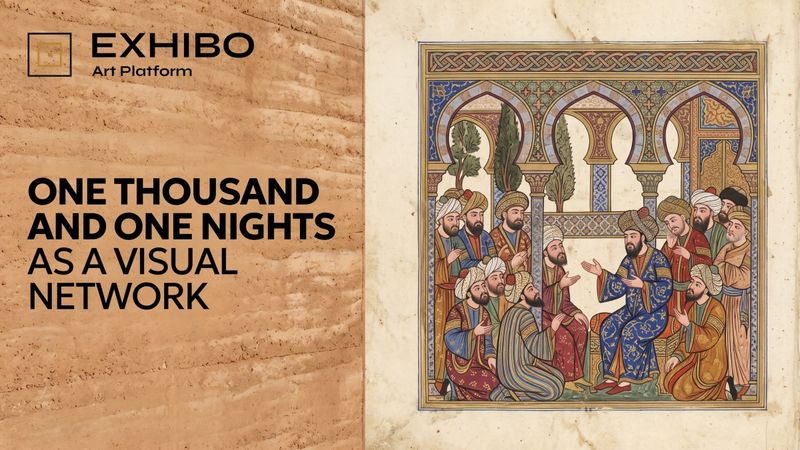
The book that taught Europe to picture the East arrived with no pictures at all. Three centuries of illustrators — Dutch, Egyptian, Persian, French, German, Iraqi — each gave it a face, and every face was a self-portrait.
Open Galland's Thousand and One Nights, the edition that conquered Europe, and there is nothing to look at: no genie, no lamp, not one illustration. The most visually imagined book in the world began blind — and because its text was never fixed either, no picture of it could ever be a copy.
Curating Tomorrow's Archive: Hamburger Kunsthalle Seeks Contemporary Collections Lead
A new permanent appointment will steer the museum's post-1960 holdings across paper, photography, and media formats.
The Hamburger Kunsthalle is inviting applications for a senior curatorial position focused on contemporary acquisitions, exhibition strategy, and digital collection management. Applications close October 2026 for a January 2027 start.