
Exhibo Editorial
How Galleries Get Discovered Online in 2026
Collectors now start with a search bar — increasingly, an AI one — long before they reach a gallery door. A practical guide to how discovery actually works now, and what a gallery can do about it.
The journey to a gallery almost never begins at its door any more. It begins in a search field — someone typing "contemporary art gallery Dubai", "buy abstract sculpture", or the name of an artist they read about — and, increasingly, it begins inside an AI assistant that answers the question directly without ever showing a list of links. For galleries, this is both an opportunity and a quiet threat. A gallery with a serious programme and a beautiful physical space can still be effectively invisible online, while a less interesting operation with cleaner digital plumbing gets found first. This guide sets out, without jargon, how online discovery actually works for galleries in 2026, and what a gallery can do to be found by the right people at the right moment.
What changed: discovery has split into three layers
For most of the last decade, "getting found online" meant one thing: ranking on Google. That is no longer the whole picture. Discovery now happens across three overlapping layers, and a gallery needs a presence in all of them.
The first layer is classic search — Google results for queries like "art galleries [city]" or a specific artist's name. This still matters enormously and still rewards the same things it always has: a fast, mobile-friendly site, clear page structure, and content that genuinely answers what people are searching for.
The second layer is AI answer engines — ChatGPT, Perplexity, Google's AI Overviews, Claude and others that synthesise an answer rather than return links. This is the genuinely new development. A large and growing share of searches now resolve inside an AI response, often with no click through to any website at all. When a prospective collector asks an assistant "which galleries in the region show emerging South Asian artists?", the gallery either appears in that answer or it doesn't — and being absent there is a new kind of invisibility that strong traditional SEO alone does not fix.
The third layer is platforms and social — the directories, marketplaces and social channels where collectors browse and where, crucially, authority signals accumulate that feed back into the first two layers.
The practical takeaway: a gallery's own website is necessary but no longer sufficient. Discovery in 2026 is distributed, and visibility compounds across these layers rather than living in any single one.
Layer one: making your own site findable (the foundations)
Nothing else works if the foundation is weak. The good news is that the fundamentals are unglamorous and entirely within a gallery's control.
Treat the website as a living resource, not a static catalogue. This is the single most common and most costly mistake. A site that simply lists current stock and never changes signals to search engines that the gallery is dormant. The galleries that rank consistently publish — exhibition texts, artist biographies, studio visits, notes on their curatorial thinking — giving both search engines and collectors a reason to return.
Get the technical hygiene right. A few specifics matter disproportionately:
Image SEO. Artwork is visual, but search engines read filenames and alt text, not pixels. An image saved as
IMG_0045.jpgwith no description is invisible to image search; the same file renamed to something descriptive, with proper alt text ("untitled abstract painting, artist name, 2025"), becomes a discovery surface in its own right.Structured data (schema). This is the most important technical lever of 2026, and the most overlooked. Schema markup is code that tells engines a page is a
VisualArtwork, aPerson(the artist), or anEvent(an exhibition). It is what makes a page eligible for rich results in classic search — and, critically, what makes content machine-readable for the AI engines in layer two.Speed and mobile. Most collectors browse on a phone. A load time under three seconds and clean mobile navigation are not refinements; they are table stakes.
Write the content collectors actually search for. Not keyword-stuffed filler, but genuinely useful pages: a clear artist page for every represented artist, exhibition pages that survive past the show's close as a permanent archive, and the occasional guide ("how to start collecting", "what to ask before buying") that pulls in people higher up the funnel.
Layer two: being visible to AI search
This is the area most galleries have not yet thought about, which is precisely why early movers gain an advantage. AI answer engines don't reward keyword density or backlink volume in the old way; they reward content they can confidently extract, attribute and cite. A few principles translate the abstract into the actionable:
Lead with the answer. AI engines tend to pull the first sentence or two of a section to decide whether it answers a query. A paragraph that opens with vague throat-clearing gets passed over; one that states the substance immediately gets cited.
Make your entity legible. The gallery's name, location, the artists it represents, the mediums and regions it focuses on — these should be stated plainly and consistently across the site and anywhere else the gallery appears. AI systems work by recognising entities and their relationships before they parse anything else.
Be consistent across the web. When a gallery's name, programme and artists are described the same way across its own site, its social profiles and any platforms it sits on, the picture an AI assembles is coherent and confident — and confident sources get cited. Inconsistent or contradictory information makes a gallery a risky source to quote.
Keep it fresh. AI engines track content age and deprioritise stale pages. A gallery that updates its programme and refreshes key pages stays citable; one that publishes once and forgets fades out of the answer layer.
The underlying logic is simple: structured, clearly-written, consistent content serves both classic search and AI search at once. There is no trade-off — the work that makes a gallery citable by ChatGPT is largely the same work that makes it rank on Google.
Layer three: platforms, directories and social
The third layer is where a gallery borrows authority it cannot build alone — and where the first two layers get reinforced.
Social, used as a feeder, not a destination. Instagram remains the default discovery surface for visual art — a large majority of art buyers use it — but its mechanics have shifted hard. Organic reach has collapsed to a fraction of a follower base for many accounts, and the algorithm now favours fast, entertainment-style content, which can leave quieter, more conceptual work invisible. The realistic 2026 posture is to treat social as a signal and a feeder: a place where collectors first encounter a name and then expect a seamless path to deeper information. Every post should ultimately lead somewhere — an exhibition page, an artist profile, a way to make contact — rather than existing as an end in itself. "Being everywhere" is now widely regarded as a waste of resources; a focused presence on one or two platforms that genuinely fit the programme beats a thin spread across six.
Directories and platforms, for authority and reach. A gallery listed on a respected, high-authority art platform gains two things at once. The first is direct reach: collectors browsing that platform encounter the gallery's artists and works. The second is less obvious but arguably more valuable — the authority of a well-ranked platform can lift a gallery's own visibility in both classic and AI search, because that platform is exactly the kind of structured, trusted, frequently-crawled source that search engines and answer engines lean on. A profile on a credible art platform is, in effect, a high-quality structured listing of the gallery's identity, location and programme, published somewhere with more domain authority than most individual galleries can build on their own. This is one of the few moves that pays into all three discovery layers simultaneously.
A note on choosing platforms: the value is in authority and relevance, not in being listed everywhere. A single profile on a respected, well-maintained art platform does more than a dozen listings on generic, low-quality directories — which can, at the margin, do more harm than good.
The conversion problem: being found isn't enough
Discovery delivers a visitor; it does not, by itself, deliver an inquiry. Two findings from recent market research are worth a gallery's attention here, because they bear directly on whether all that visibility turns into anything.
The first is about price transparency. A striking share of collectors — around 69% in one study — report being deterred from buying by a lack of pricing information, and galleries that display prices (or at least a clear "price on request" pathway) see measurably higher conversion. Hiding every price behind an opaque inquiry wall is a habit worth re-examining.
The second is about the path from discovery to contact. A collector who arrives from an Instagram post or an AI answer arrives warm but impatient. If the route from "I found this artist" to "I can ask about this work" is buried or clumsy, the moment is lost. The galleries converting well in 2026 make the inquiry action obvious, low-friction and reassuring — which, not incidentally, is also the kind of clean, well-structured page that the first two discovery layers reward.
A practical checklist
For a gallery that wants to act on this rather than admire it, a sensible order of work:
Fix the foundations. Mobile speed, descriptive image filenames and alt text, and a site that publishes rather than sits still.
Add structured data.
VisualArtwork,PersonandEventschema across the relevant pages — the single highest-leverage technical move of 2026.Make every page answer-first. Lead with substance, state your entity (name, location, artists, focus) plainly and consistently.
Use social as a feeder. Focused, not everywhere; always linking back to deeper information.
Claim authority where it compounds. A profile on a respected, high-authority art platform, kept accurate and current, that lifts visibility across classic and AI search at once.
Close the loop. Transparent (or clearly-pathed) pricing and a frictionless inquiry route, so discovery actually converts.
None of this requires a large budget. It requires treating digital presence with the same seriousness a gallery brings to hanging a show — and recognising that, in 2026, the first room most collectors walk into is a search result.
Galleries mentioned
Exhibitions mentioned
Related reading
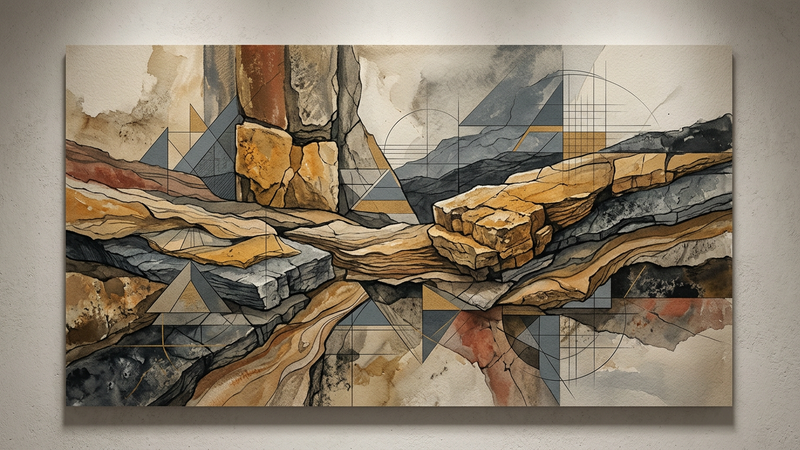
Diego Rivera's Monumental Stadium Relief Set for Conservation in Mexico City
A multi-institutional campaign targets the artist's unfinished stone facade at UNAM alongside works by Siqueiros and O'Gorman
Local conservators will lead a phased preservation effort for Diego Rivera's volcanic stone relief at Mexico City's Olympic stadium, supported by the World Monuments Fund and US diplomatic grants.
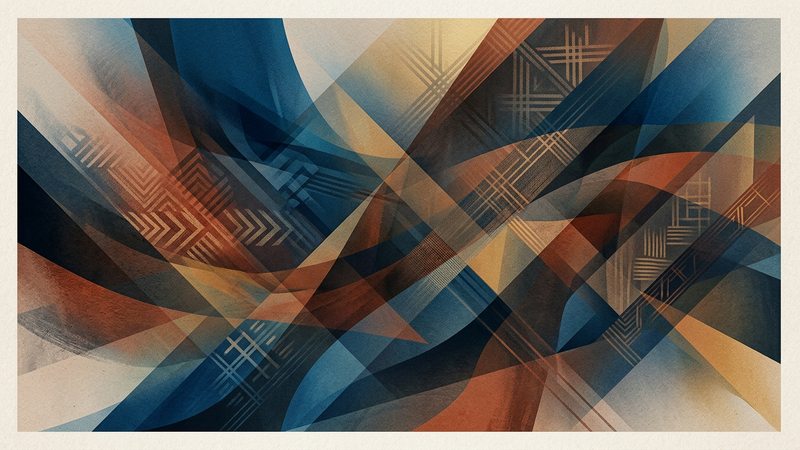
Van Lévé: Sovereign Caribbean Visions Take Shape at Harvard
A transnational survey charts twenty-five years of Creole and Maroon artistic practice across the French Caribbean and Amazonia.
Harvard's Alain Locke Gallery presents a landmark survey tracing contemporary production from Guadeloupe, Martinique, Guyane, and Haiti since two thousand and one.
Gustave Fayet: Collector—Artist Designer
A comprehensive survey at the Fondation Louis Vuitton reuniting collected masterpieces with the designer's own studio practice.
The Paris institution expands its patronage series with a dual-focused examination of Gustave Fayet, bringing together hundreds of acquired works and restored creations to chart his impact on early modernism.