
Milan · Italy
Shilpa Gupta: One Palm Closer to the Sky
A survey of surveillance, language, and collective resilience at Milan's GAM
A Quiet Resistance in Milan's Modern Art Spaces
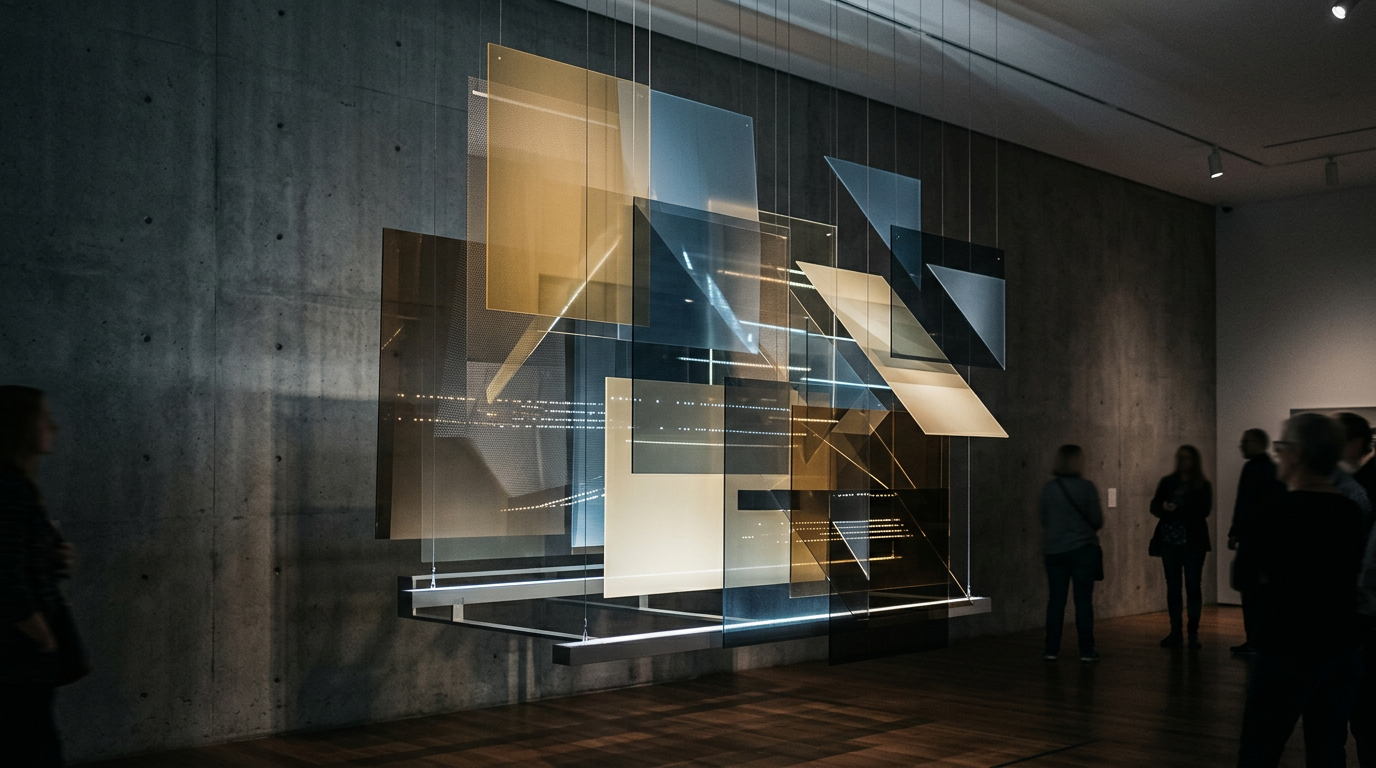
Shilpa Gupta arrives at Milan's Galleria d'Arte Moderna for a substantial survey that bridges institutional history and urgent contemporary inquiry. Running from September 15, 2026 through January 6, 2027, the presentation is titled One Palm Closer to the Sky. Bruna Roccasalva has shaped the itinerary, drawing together recent commissions alongside established interventions to map the artist's sustained investigation into communication networks, surveillance mechanisms, and the fragile architecture of personal liberty.
Gupta's methodology consistently refuses passive viewing. Her practice operates across multiple mediums, utilising kinetic displays, acoustic environments, sculptural forms, and participatory frameworks to expose how narratives are constructed and enforced. The current show extends this trajectory by positioning new works within the museum's nineteenth-century holdings. This deliberate juxtaposition forces a dialogue between historical conceptions of citizenship and the friction of modern digital and physical borders. Rather than treating the gallery as a sealed environment, the project deliberately spills into courtyards and civic areas, suggesting that artistic research should function as a living exchange rather than a static archive.
Central to the exhibition is a meditation on endurance. Despite escalating geopolitical pressures and the consolidation of state power across various regions, the work maintains a steady focus on collective resilience. The courtyard installation HOPE (2026) establishes this tone immediately, employing light and spatial arrangement to evoke both vulnerability and determination. Moving inward, visitors encounter illuminated typography such as Truth (2026), which interrogates how certainty is manufactured and distributed through everyday media. Meanwhile, SoundOnMySkin (2024/2025) reactivates the artist's signature split-flap display mechanism, translating textual fragments into rhythmic visual pulses that mimic the cadence of broadcast information.
Acoustic layers further complicate the narrative. When the Stone Sang to the Glass (Bella Ciao) (2025/2026) transforms a familiar protest anthem into a resonant environmental score, stripping away its militant edge to highlight communal memory. Complementing these auditory experiments is Breathe (2024/2026), an interactive piece that requires audience participation to generate atmospheric shifts. By making viewers co-authors of the experience, Gupta dismantles traditional hierarchies between creator and observer. The result is a series of encounters designed to provoke listening, speculation, and open-ended conversation rather than delivering fixed conclusions.
This presentation forms a key component of the ongoing Furla Series initiative, a programme launched in 2017 that collaborates with prominent Italian cultural organisations. Since 2021, Fondazione Furla and GAM have maintained a dedicated annual schedule, deliberately centring female practitioners whose work challenges conventional aesthetic boundaries. The cycle has consistently prioritised projects that examine gender, politics, and social infrastructure, positioning women's contributions at the forefront of contemporary cultural production. Gupta's inclusion continues this lineage, offering a rigorous examination of how power structures permeate daily routines while simultaneously proposing alternative modes of engagement.
The curation strategy deliberately avoids chronological ordering, instead grouping pieces by thematic resonance. This approach mirrors the non-linear nature of digital information flows, reinforcing Gupta's critique of algorithmic governance. By removing temporal markers, the exhibition encourages visitors to navigate the space intuitively, much like users traverse opaque network architectures. Such structural choices underscore how contemporary art can model complex socio-political dynamics without resorting to didactic messaging.
The exhibition does not merely document artistic evolution; it functions as a methodological framework for understanding contemporary anxieties. By weaving together historical artefacts, newly fabricated objects, and responsive technologies, One Palm Closer to the Sky demonstrates how creative practice can serve as both diagnostic tool and catalyst for empathy. In an era characterised by fragmented information ecosystems and tightening regulatory environments, the show reminds audiences that critical reflection remains a vital civic practice. Visitors leaving the galleries carry not just visual impressions, but a reinforced awareness of how individual actions intersect with broader systemic forces.
Related reading
Reimagining Ancient Crossroads at Fondazione Prada
A new exhibition maps millennia of Mediterranean-Asian exchange through curated artefacts and architectural design.
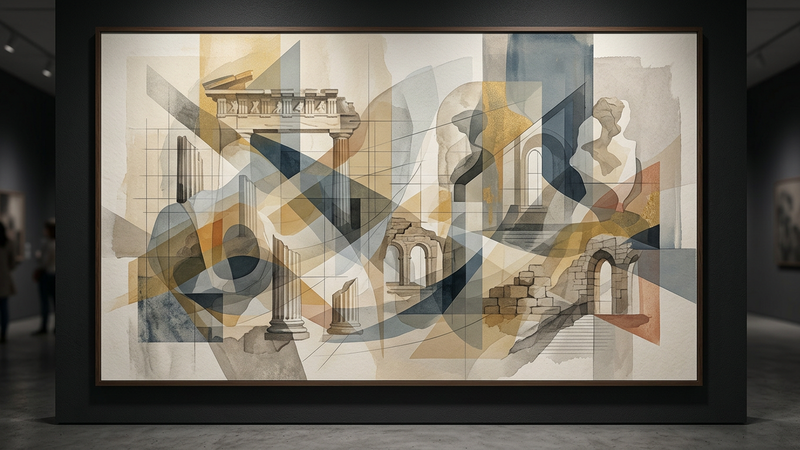
Fondazione Prada's latest survey traces over seventeen centuries of cultural dialogue between Europe and Asia, challenging modern notions of isolationism through ancient artefacts and innovative spatial planning.
Chiharu Shiota: The Moment the Snow Melts at MUDEC
Tracing severed connections through suspended filaments and collective memory
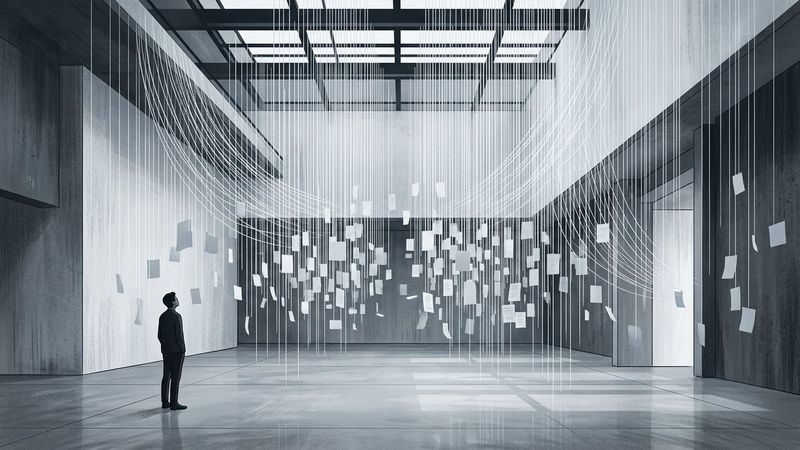
The Japanese artist reimagines Milan's central atrium with a site-specific thread installation exploring loss, cyclical time, and public participation.
Marlow Moss Steps Out of Mondrian's Shadow in New London Retrospective
The pioneering Constructivist receives her first major UK showcase since the 1970s.
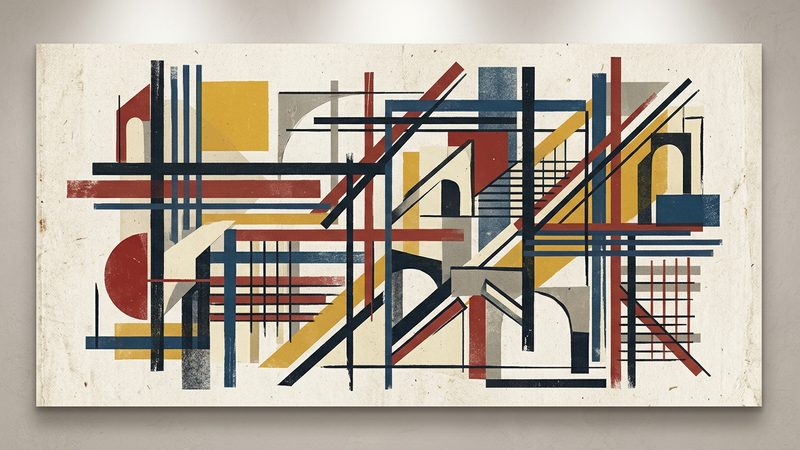
A landmark exhibition at Ward Moretti reclaims the legacy of the overlooked Neoplasticist, whose radical ideas quietly shaped modernism while history credited others.