
Milan · Italy
Reimagining Ancient Crossroads at Fondazione Prada
A new exhibition maps millennia of Mediterranean-Asian exchange through curated artefacts and architectural design.
Mapping Millennia of Connection
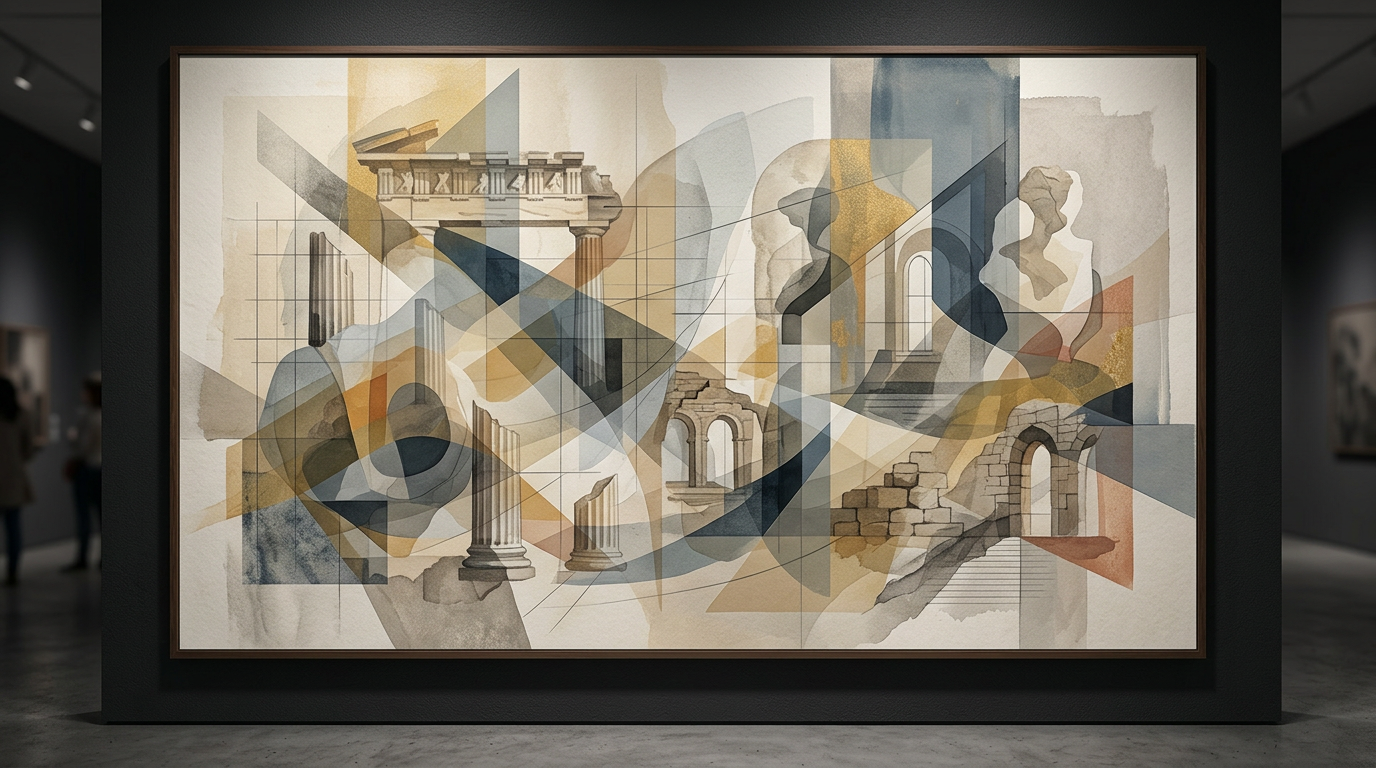
Fondazione Prada is set to open Global Antiquity at its Milan headquarters, running from 5 November 2026 until 1 March 2027, with a press viewing on Wednesday, 4 November. Under the direction of Salvatore Settis, Anna Anguissola, and Chiara Ballestrazzi, alongside spatial concepts by Rem Koolhaas and AMO/OMA, the project examines cross-cultural dynamics spanning roughly 1,700 years. The chronological scope stretches from approximately 700 BC to 1000 AD, positioning classical heritage not as a static relic but as an active force shaping contemporary discourse.
This initiative builds upon a sustained scholarly trajectory initiated by the institution in 2015. Previous investigations included Serial Classic and Portable Classic, which explored classical forms across Milan and Venice, followed by Recycling Beauty in 2022. That earlier project examined how Greek and Roman pieces were repurposed throughout medieval and baroque periods. The current survey expands this methodology, treating antiquities as living documents that reveal persistent structural patterns in human civilisation.
Artefacts as Geographic Nodes
Visitors will encounter more than one hundred and fifty objects drawn from diverse collections worldwide. Rather than arranging items chronologically or geographically, the presentation treats each piece as a node within a broader network. The physical discovery site holds equal significance to the place of manufacture, allowing visitors to trace movement across land and sea. These trajectories expose intricate commercial, diplomatic, and spiritual pathways that predate conventional narratives about transcontinental commerce. By mapping these movements, the installation demonstrates how ancient societies operated within highly interconnected systems long before modern trade frameworks emerged.
The spatial arrangement deliberately avoids linear progression. Instead, it constructs a fluid matrix highlighting reciprocal influences. Unexpected pairings illustrate this approach vividly. Discoveries of Mediterranean material culture within Chinese archaeological contexts sit alongside South Asian figurines unearthed in Pompeii prior to the volcanic eruption of seventy-nine AD. Such juxtapositions collapse temporal boundaries, encouraging viewers to reconsider historical causality and regional development through a multidimensional lens.
Contemporary Parallels and Cultural Hybridity
The curatorial framework draws explicit parallels between ancient connectivity and current geopolitical debates. Central to this discussion is the distinction between globality and globalisation. While the latter describes contemporary vertical structures driven by market forces and state power, the former reflects horizontal, mutually transformative exchanges characteristic of earlier eras. The exhibition argues that understanding these historical models offers a critical counterpoint to modern protectionist ideologies that frame cultural identities as isolated entities requiring defence against external influence.
Drawing inspiration from Amitav Ghosh's observations on perpetual interconnectedness, the project positions cultural hybridisation as a historical constant rather than a recent phenomenon. By foregrounding osmotic relationships between disparate regions, the installation challenges contemporary narratives that prioritise purity over synthesis. The architectural environment designed by Koolhaas and his studio reinforces this conceptual architecture, utilising experimental display techniques to transform historical objects into active participants in present-day intellectual conversations.
As the institution continues its long-term engagement with classical material, this latest offering underscores how ancient practices of adaptation and circulation remain remarkably relevant. The survey invites both scholars and general audiences to examine how past methodologies of exchange might inform future approaches to cultural diplomacy and shared heritage.
Related reading
Shilpa Gupta: One Palm Closer to the Sky
A survey of surveillance, language, and collective resilience at Milan's GAM
Chiharu Shiota: The Moment the Snow Melts at MUDEC
Tracing severed connections through suspended filaments and collective memory
A Rare Market Appearance: Hilma af Klint's Geometric Masterwork Heads to Stockholm
A tightly guarded abstract canvas enters the secondary market, challenging established price benchmarks and highlighting sustained institutional momentum.