
Helsinki · Finland
The Other Side of the Mountain: Contemporary Voices from Africa and Afro-Nordic Contexts
Amos Rex presents eleven artists exploring migration, identity and urban experience through African and diasporic lenses
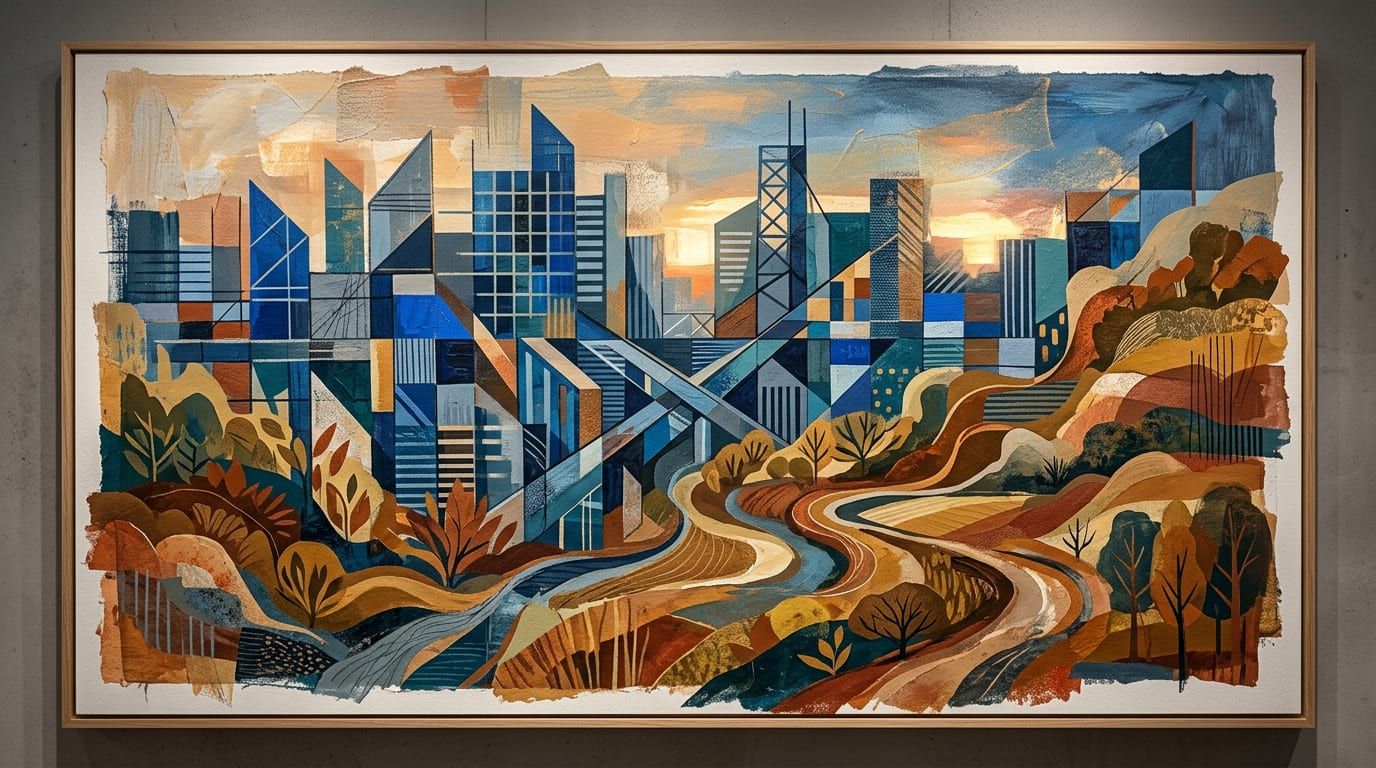
Amos Rex opens its autumn programme with an ambitious survey bringing together eleven contemporary artists whose practices engage with African and Afro-Nordic perspectives. Running from October 14, 2026 to March 21, 2027, the exhibition investigates how built and natural environments influence social relations, either drawing communities together or creating distance between them.
The participating artists approach questions of belonging through diverse media, considering how personal narratives intersect with broader socio-political transformations. Urban settings emerge as crucial sites for examining contemporary identity formation, where individual experiences meet collective histories of displacement and settlement.
Among the featured practitioners is Ghanaian artist Ibrahim Mahama, whose significant installations have garnered international recognition including the 2023 ArtReview Power 100 accolade. Norwegian-Congolese creator Sandra Mujinga contributes recent work following her 2025 solo presentation at Stedelijk Museum Amsterdam, while South African artist Igshaan Adams brings textile-based pieces that have circulated widely across major institutions and biennial platforms.
Five artists currently working within Nordic territories are included, with two based in Finland. For many participants, this marks their first showing in the country, offering fresh encounters between local audiences and practices rarely seen in Finnish contexts.
The exhibition forms part of Southnord Artfest 2026, a multi-venue initiative positioning Helsinki as a hub for Afro-Nordic contemporary discourse. Southnord, an artist-led platform, collaborates with Amos Rex to present artistic strategies that illuminate global concerns through specifically African and diasporic viewpoints.
Director Kieran Long notes the institution's distinctive remit: "Amos Rex has the unique ambition as an independent museum to think about the Nordic region's relationship to the rest of the world. The Other Side of the Mountain, and our collaboration with Southnord, is an opportunity to see the art of the African continent in relation to works from artists closer to home who are thinking about African identity in the Nordic context."
Curated jointly by Katariina Timonen of Amos Rex and Marcia Harvey Isaksson of Southnord, the exhibition demonstrates how contemporary art can bridge geographical and cultural distances while maintaining specificity to local experiences. The eleven artists—Adams, Akinbode Akinbiyi, Loulou Cherinet, Adji Dieye, Jeannette Ehlers, Lungiswa Gqunta, Liisa-Irmelen Liwata, Mahama, Mujinga, Karl Ohiri and Emeka Ogboh—offer varied interpretations of how movement across borders shapes contemporary consciousness.
This presentation reinforces Amos Rex's ongoing commitment to international contemporary art that provokes dialogue between regional and global perspectives, suggesting new frameworks for understanding shared realities through artistic inquiry.
Related reading
Kiasma Outlines a Robust 2027 Season Featuring Major Surveys and Prize Showcase
Helsinki's Museum of Contemporary Art Kiasma unveils a comprehensive schedule balancing institutional retrospectives, immersive solo projects, and regional award programmes.
The 2027 calendar at Kiasma positions spatial experimentation and critical historiography at the forefront of Nordic contemporary practice.

Helsinki Biennial 2027 Embraces Uncertainty Through Its New Theme Unknowns
Curators Mami Kataoka and Arja Miller assemble a global roster across three Helsinki venues this summer.
The fourth iteration of Finland's premier contemporary arts festival explores ambiguity, scientific inquiry, and imaginative speculation ahead of its 2027 run.

Nina Davies and 2girls1comp: The Inexorable Non-Player Character
Algorithmic prediction meets corporeal movement in a new Helsinki performance
An editorial examination of how Nina Davies and 2girls1comp fuse viral choreography and game modification to explore AI feedback loops.