
Ottawa · Canada
Sobey Art Award Exhibition 2026: A Survey of Contemporary Canadian Practice
Six finalists showcase diverse methodologies across sculpture, photography, and land-based interventions
A Panoramic Survey of Contemporary Canadian Practice
From early September until early January, the National Gallery of Canada hosts a comprehensive survey of emerging creative voices across the country. Funded by the Sobey Art Foundation and curated under the gallery's institutional framework, the 2026 Sobey Art Award Exhibition gathers six finalists whose methodologies span sculpture, photography, textile work, film, and site-specific interventions. The presentation opens on 4 September and remains accessible to the public until 3 January 2027.
Rather than adhering to a single aesthetic doctrine, this iteration emphasises geographic diversity and conceptual rigour. Each participant represents a distinct territorial zone, yet their individual inquiries converge around shared preoccupations: the weight of historical memory, the politics of territory, linguistic preservation, and the physicality of craft. By situating these practitioners within a unified programme, the curatorial team invites viewers to trace subtle dialogues between disparate regions while recognising the singular intensity of each studio practice.
Melaw Nakehk'o approaches her Circumpolar designation through a deeply embedded relationship with Dene epistemologies. Her contribution merges soft sculpture with painting, utilising caribou hide she prepared personally alongside canvas works that document shifting ecological rhythms. Similarly, Audie Murray channels Métis and Cree ceremonial protocols into a large-scale mural constructed entirely from charcoal derived from sweetgrass, cedar, and sage. The resulting surface functions less as decoration and more as a record of embodied labour and ritual presence.
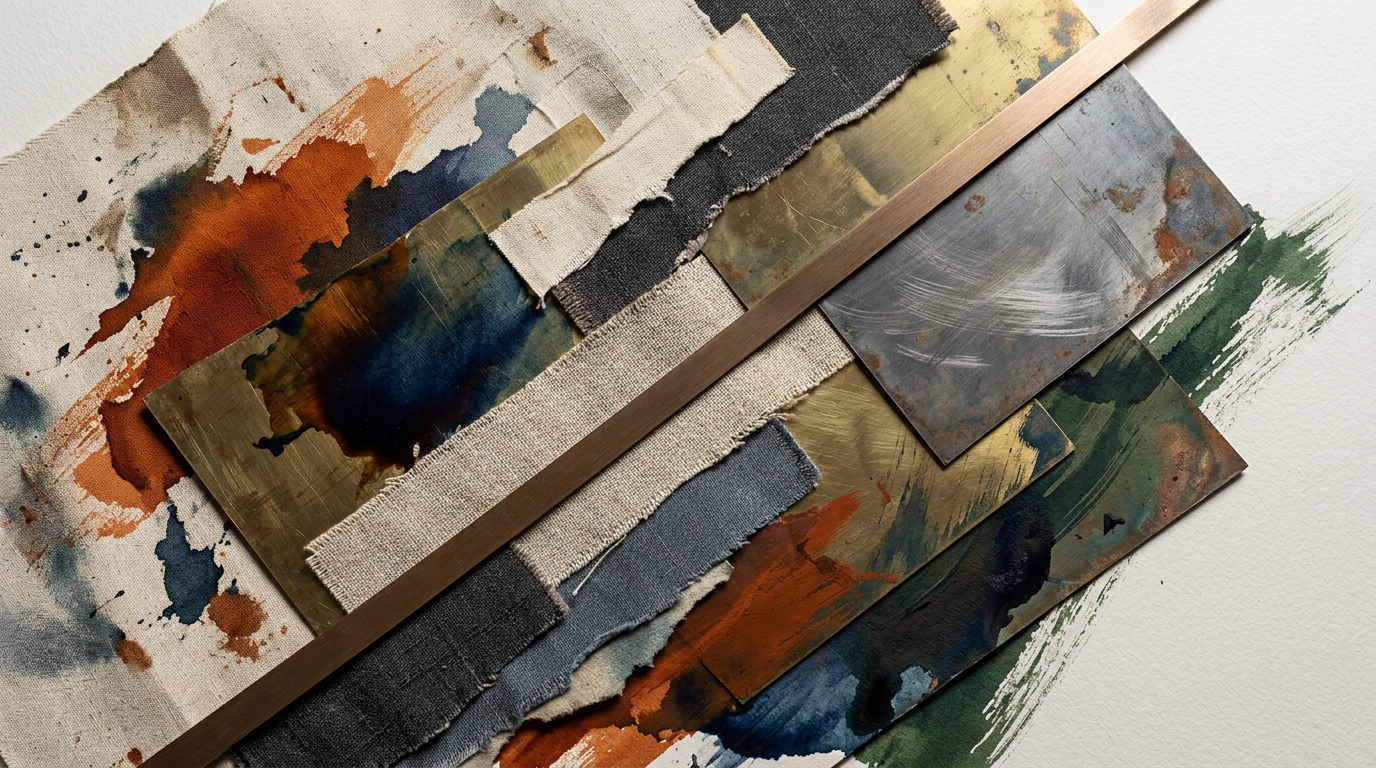
Moving westward, Samuel Roy-Bois interrogates architectural space through both photographic documentation and sculptural forms drawn from his Balloon and Sovereign series. His investigations question how built environments dictate human behaviour, positioning objects and structural elements as active participants within cultural systems. On the opposite end of the material spectrum, Shane Perley-Dutcher bridges metallurgy and traditional Wolastoqey basket weaving. His metallic sculptures echo the geometry of ancestral splint techniques, transforming industrial fabrication into a tribute to Indigenous craftsmanship.
Eastern representatives bring equally rigorous frameworks to the table. Caroline Monnet employs construction-grade substances like polyethylene and cement alongside embroidered textiles to examine housing insecurity and linguistic resilience within Indigenous communities. Meanwhile, Lotus L. Kang constructs kinetic installations that merge photographic processing equipment with literary rhythm. Her rotating apparatus, calibrated to the metrical patterns of Korean poetry, materialises concepts of transience and archival decay.
The selection committee, chaired by Jonathan Shaughnessy, has deliberately assembled a roster that refuses easy categorisation. According to foundation leadership, the initiative aims to elevate creators who challenge established boundaries while reflecting the multifaceted nature of current visual culture. This year's cohort demonstrates precisely that ambition, offering a nuanced portrait of national production that resists homogenisation.
Visitors will have the chance to witness how these distinct methodologies interact when displayed side by side. The spatial arrangement encourages comparative viewing, allowing audiences to map connections between material choices, geographic origins, and conceptual concerns. Such an approach underscores the prize's broader mission: to validate experimental trajectories that might otherwise remain marginalised within mainstream institutional narratives.
The ultimate recipient will be revealed on 14 November 2026, marking the culmination of a selection process that prioritises conceptual innovation over commercial viability. Until then, the gallery provides a vital platform for sustained engagement with these evolving practices. Attending the presentation offers a rare opportunity to observe how regional identities continue to inform cutting-edge creative strategies across the continent.
Looking Ahead
As the winter months approach, this gathering will serve as a crucial reference point for understanding the current trajectory of Canadian contemporary art. The emphasis on cross-regional dialogue and material experimentation signals a maturing landscape where local histories and global discourses intersect seamlessly. Institutions and independent studios alike would benefit from studying these methodologies as they navigate increasingly complex cultural terrains.
Related reading
More Than 100 Works Missing From Canada's Federal Indigenous Art Collection
Inventory discrepancies spark calls for reform at the national repository
São Paulo's MAM Returns With Landmark Art Survey After Renovation
The 39th Panorama of Brazilian Art opens the renovated pavilion, exploring representation through contemporary practice.
Ukrainian Museum Celebrates Half-Century With Community-Led Lobby Project
Molly Gochman transforms archive fragments into a projected collage marking five decades of cultural preservation