
São Paulo · Brazil
São Paulo's MAM Returns With Landmark Art Survey After Renovation
The 39th Panorama of Brazilian Art opens the renovated pavilion, exploring representation through contemporary practice.
A Historic Venue Reopens Its Doors
When the Museu de Arte Moderna de São Paulo welcomed visitors back on 12 September, it bypassed its usual permanent holdings. Instead, the institution launched the thirty-ninth iteration of its renowned national survey, Depois Que Tudo Foi Dito. Running until 24 January 2027, this choice carries deep historical resonance. The inaugural edition of the Panorama series took place within the identical Oscar Niemeyer-designed structure nestled in Ibirapuera Park. According to chief curator Cauê Alves, returning to this specific location marks a deliberate symbolic gesture following the building's extensive two-year refurbishment period.
Institutional Evolution During Closure
Contrary to what might be expected during such a prolonged shutdown, the museum remained highly active. Alves notes that staff organised over twelve separate shows across alternative locations throughout the renovation phase. This strategy allowed them to display more archival works simultaneously than at any previous point in their history. The experience fundamentally shifted how the institution approaches public engagement, proving that collections can travel, collaborate, and generate fresh conversations outside traditional walls.
Curating Contemporary Debates
The current survey falls under the direction of Diane Lima, whose recent stewardship of Brazil's Venice Biennale presence has cemented her standing among leading regional thinkers. Drawing inspiration from philosopher and visual practitioner Denise Ferreira da Silva, the exhibition title interrogates the state of artistic production following decades of intense discourse surrounding visibility and erasure. Lima explains that the project examines how creative practices stretch beyond conventional frameworks of depiction, employing radical imagination to confront entrenched colonial narratives.
Thirty-three practitioners feature in this year's lineup, all making their debut in the Panorama sequence. Rather than fulfilling stereotypical expectations attached to marginalised identities, these creators prioritise formal experimentation and material innovation. The show functions as a critical laboratory, inviting both makers and viewers to dismantle inherited mental categories and reconsider how cultural memory is constructed. Much like the institution itself has redefined its operational boundaries, the programme operates less as a static archive and more as an open invitation to participate in ongoing dialogue.
Mapping a National Discourse
Since its inception in 1969, the Panorama has functioned as a vital barometer for shifting priorities within the local creative sector. Initially staged every twelve months, the format transitioned to a biennial rhythm in 1993, mirroring broader institutional changes. Critics frequently draw parallels between this recurring showcase and America's Whitney Biennial, highlighting its capacity to capture pressing socio-political currents through visual language. The museum's own origins predate its current home, having been established in 1948 before temporarily operating alongside another major civic gallery and utilising the Bienal complex for nearly a decade. That early mobility foreshadowed today's flexible approach to curation and public access. As the institution steps back into its restored pavilion, the current programme underscores a commitment to dynamic exchange rather than static preservation.
Related reading
Recovery of Stolen Matisse Folios Brings Partial Closure to Brazilian Art Theft
Partial success as police locate eight prints while five Portinari works stay missing
State authorities in São Paulo have successfully retrieved eight prints by Henri Matisse following a brazen armed robbery that occurred late last year.
Ukrainian Museum Celebrates Half-Century With Community-Led Lobby Project
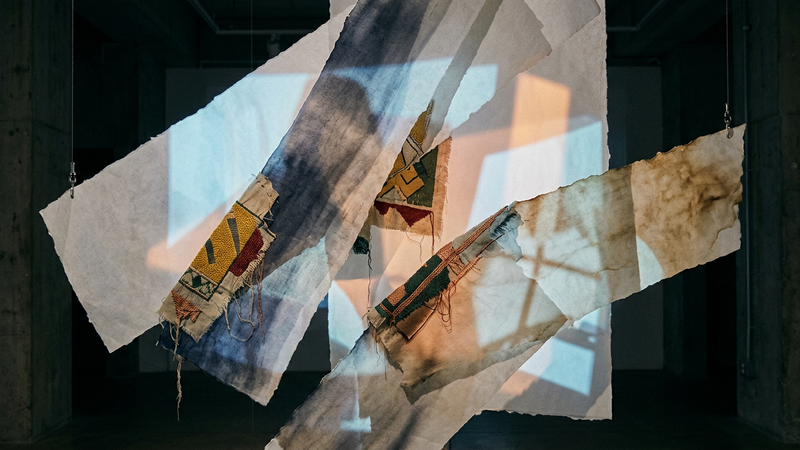
Molly Gochman transforms archive fragments into a projected collage marking five decades of cultural preservation
As the institution turns fifty, an immersive lobby installation invites locals to contribute personal artefacts, weaving private histories into a broader narrative of Ukrainian heritage and resilience.
Vancouver Art Gallery Confirms Dual Leadership Model with Permanent Co-Chief Executives
How a paired executive arrangement is reshaping governance at Canada's premier visual arts institution
Following financial restructuring and leadership changes, the Vancouver Art Gallery formalises its dual chief executive arrangement.