
New York · United States
Ukrainian Museum Celebrates Half-Century With Community-Led Lobby Project
Molly Gochman transforms archive fragments into a projected collage marking five decades of cultural preservation
A Half-Century of Cultural Preservation
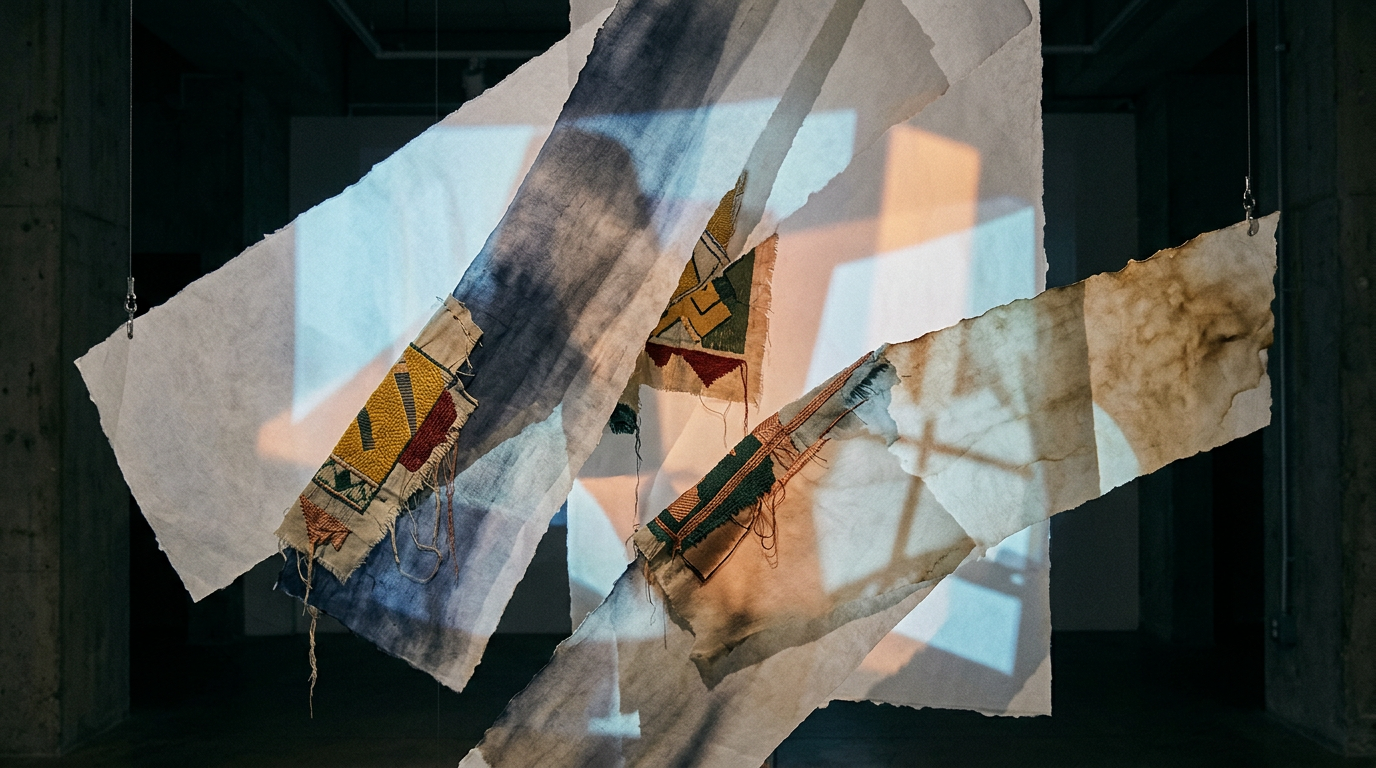
Marking its fiftieth year, the Ukrainian Museum in Manhattan has commissioned a new public-facing initiative that bridges archival research and neighbourhood participation. Artist Molly Gochman brings her established Memory Collage practice to the institution this autumn, transforming the glass-fronted entrance and adjacent reception area into a dynamic visual archive. Working alongside collections curator Maria Rewakowicz, Gochman has spent months navigating holdings that exceed forty-six thousand items. Photographs, handwritten correspondence, woven fabrics, and ceramic shards form the foundation of a narrative documenting centuries of displacement and creative endurance.
On 26 September, the initial projection debuted, prompting visitors and passersby to deposit personal keepsakes. Participants have been encouraged to submit fragments of cloth, family correspondence, culinary notes, or broken pottery, which are subsequently digitised and mapped onto the building’s façade. Remote submissions remain open via electronic mail, ensuring broader accessibility beyond physical drop-offs.
Weaving Diaspora Histories
Situated within Manhattan’s historic Ukrainian Village district, the gallery occupies ground long associated with successive waves of migration. Early arrivals sought refuge from imperial violence and Soviet repression, while contemporary refugees continue to navigate the cultural fallout of modern conflict. Established by the Ukrainian National Women’s League, the institution traces its origins to a substantial folk art acquisition made during the 1933–34 Chicago World’s Fair.
Gochman’s methodology draws from earlier investigations into familial memory, notably her 2009 Spring series, which repurposed degraded Kodachrome slides of her mother. Her ancestors departed Talne following regional pogroms, a lineage that informs her current approach to communal storytelling. By layering scanned contributions, she constructs a luminous tapestry that shifts with daylight and viewer movement. The effect deliberately echoes traditional ecclesiastical glazing, reframing everyday memorabilia as sacred cultural artefacts.
Activating Street-Level Spaces
Curator Elena Siyanko views the project as integral to a wider strategy of urban integration. Collaborating with former director Peter Doroshenko, she previously facilitated UKR/RUS, a sculptural work mapping geopolitical divisions through material boundaries. That collaboration deepened Gochman’s appreciation for the museum’s avant-garde holdings and craft traditions. Current programming reinforces these connections, featuring Zhanna Kadyrova’s recent survey The Ground Shifts Beneath Our Feet alongside A Living Canvas, an examination bridging studio practices and vernacular design.
To sustain momentum, the venue will reopen its basement gallery as a dedicated space for collection-led presentations. A 17 October event titled a reading rave will highlight Ukrainian publishing, showcasing illustrated editions by creators such as Jacques Hnizdovsky. Additionally, formal ties with the Cooper Union Schools of Art and Architecture aim to embed the institution more firmly within academic and creative networks.
Cultural Agency and Collective Resilience
Throughout the process, textile preservation remains a focal point. Gochman emphasises how embroidery and weaving function as metaphors for social cohesion, suggesting that interlaced threads yield greater structural integrity than isolated fibres. This philosophy mirrors contemporary observations regarding national solidarity amid ongoing hostilities. By positioning private heirlooms alongside institutional masterpieces, the installation challenges monolithic narratives, presenting Ukrainian identity as a cosmopolitan, adaptive force rather than a static relic. As sunlight interacts with the projected imagery, the façade becomes a living ledger of survival, asserting distinct cultural sovereignty against historical erasure.
Museums mentioned
Related reading
Mourning Keepsakes: Victorian Hairwork Arrives in Brooklyn
From Missouri to Brooklyn: preserving Victorian mourning crafts
A curated selection of commemorative hair artefacts opens at Brooklyn's Morbid Anatomy Library, exploring nineteenth-century grief rituals and the legacy of Leila's Hair Museum.
New York's Museum Building Boom Continues
How institutional expansions are reshaping the city's cultural geography
From avant-garde venues in the Lower East Side to historic collections scaling up across Manhattan, New York's architectural ambitions are fundamentally altering how audiences experience visual culture.
Taking Back Our Space: MoMA's Photographic Survey on Body Politics
How a 1970s feminist archive inspires contemporary photographers to rethink spatial inequality
A new exhibition at MoMA pairs Marianne Wex's pioneering street photography with seven modern creators exploring gender, race, and Indigenous sovereignty through the lens.