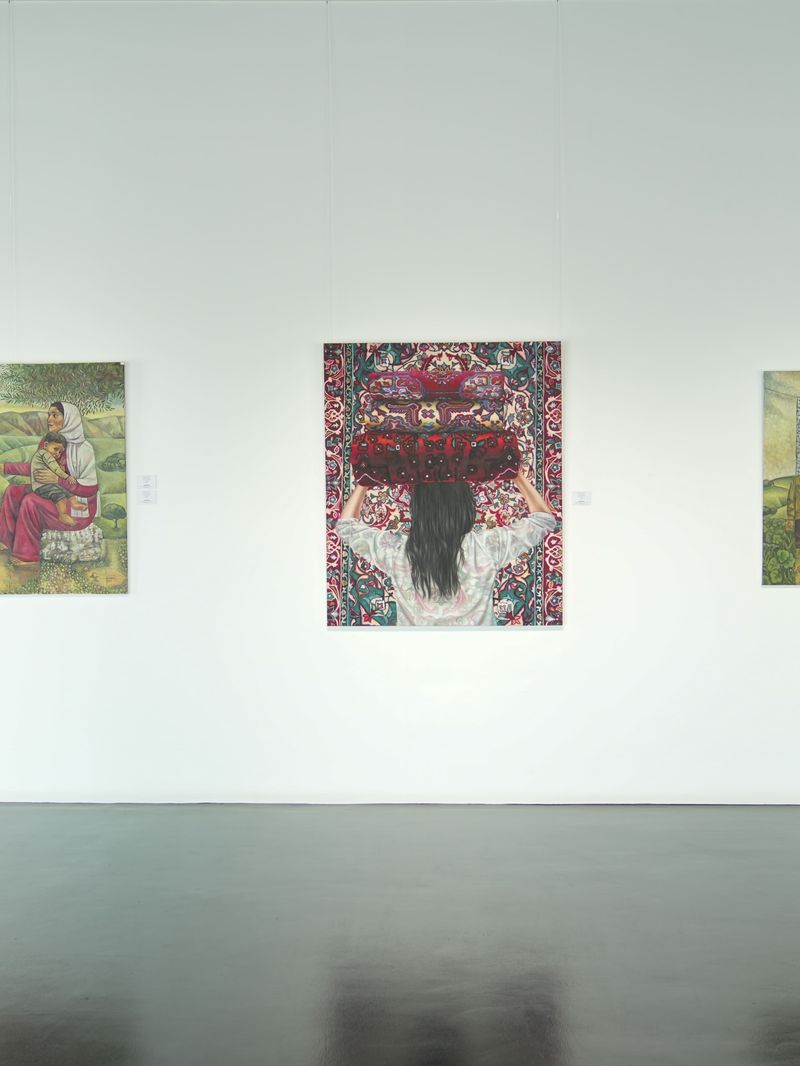
About the work
Acrylic on canvas
News by Exhibo
Editorial coverage on Exhibo

How to Write an Artist Bio
Third-person career paragraphs for websites, press packs and programmes, with length targets from fifty words to a short page
An artist bio is a short third-person career summary for websites, press and programmes. This guide covers bio versus statement versus CV, a draft method from verified facts to prose, length versions by context, edge cases for thin records and collaborations, how editors cut text, and when paid help is worth it.

How to Write an Artist Statement
A practical method for what, how and why texts that sit beside images, with length targets for applications, walls and websites
An artist statement explains the work, not the career. This hub guide covers a reusable what-how-why draft method, clear length targets for applications and walls, how statement differs from bio and CV, what busy panels actually skim for, and when mentoring or access support is worth paying for.

What Is a Condition Report?
A dated record of an artwork’s physical state for loans, sales, claims and intake, with the fields examiners actually fill
An art condition report records the physical state of a work at a named date, with photographs and controlled vocabulary. This practical guide covers when you need one, standard fields, CCI and Spectrum report types, who writes it, typical fees, and how the document differs from an appraisal or a treatment proposal.

How to Clean a Painting (and When Not To)
Owner-level soft-brush dusting for stable oil paintings, and the hard line where only a paintings conservator should work
Most “how to clean an oil painting” advice online invites irreversible damage. This guide draws the museum line: call a conservator for grime, varnish and any unstable paint; reserve soft natural-hair dusting for stable surfaces; and show what professionals do differently, what treatment costs, and when to stop.

The Danse Macabre
Cemetery murals and printed books in which Death takes pope, king and labourer in one chain, from Paris 1424 to Holbein.
The danse macabre is a late-medieval picture-and-verse formula: a ranked procession of the living paired with the dead. This guide stays with mural cycles and prints, names the lost Paris cemetery scheme that set the type, and then follows the motif through Lydgate, Marchant, Notke and Holbein.

How Paintings Are Restored
From examination to varnish: how conservators clean, fill and retouch easel paintings under the ethics of reversibility
Conservators restore paintings through examination, cleaning, filling, retouching and varnish, under codes that demand reversibility. This guide covers studio chemistry, the museum treatment sequence, how the profession formed, why old linings fail, and how private work is priced, without amateur solvent recipes.