
Arsenale di Venezia
The walled shipyard that built the fleets of the Venetian Republic, guarded by Greek lions and now home to the Biennale.
The shipyard of the Republic
The Arsenale was the great state shipyard of the Republic of Venice. It was founded in the early 12th century, traditionally in 1104, in the Castello district at the eastern end of the city. It grew through the 14th to 16th centuries into a walled industrial city of docks, slipways, rope works, foundries and stores. At its height thousands of workers built, armed and repaired the galleys of the Venetian fleet here. It was the largest centre of production in pre-industrial Venice and the base of the Republic's power at sea.
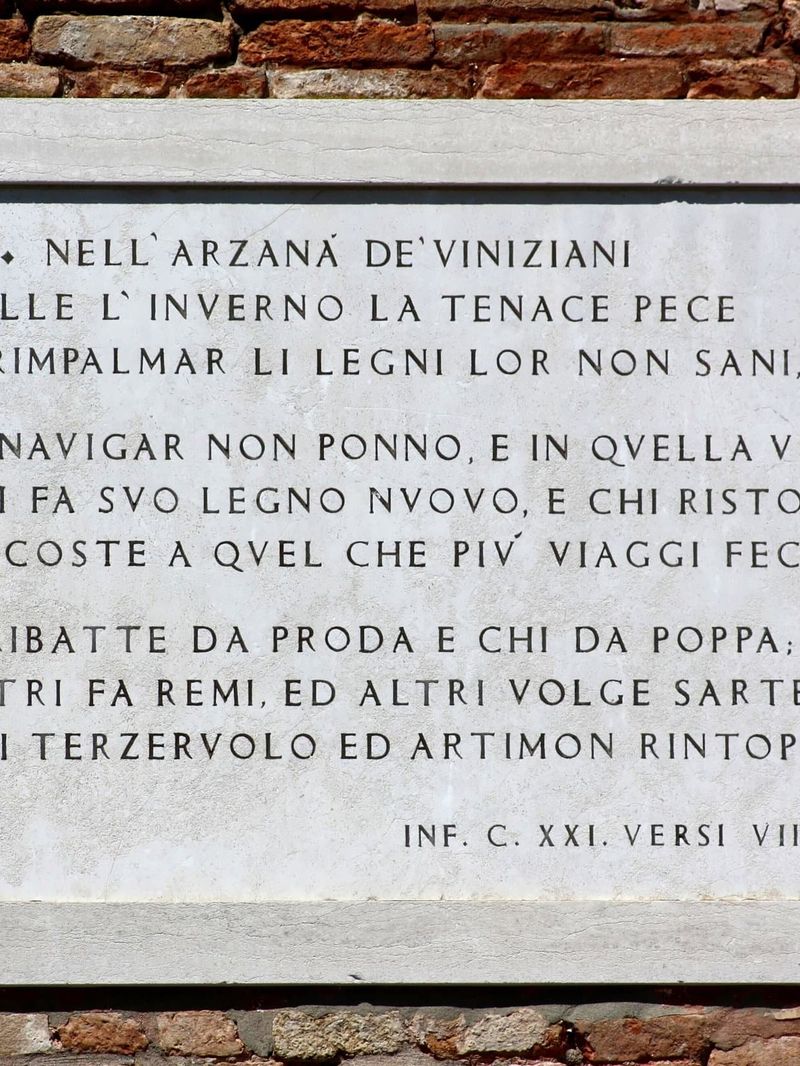
Dante saw it. In Canto XXI of the Inferno he compares a ditch of boiling pitch in Hell to the Arsenale in winter, where the Venetians boil tar to caulk their damaged ships. The lines are carved on a plaque beside the gate.
The Porta Magna and the lions
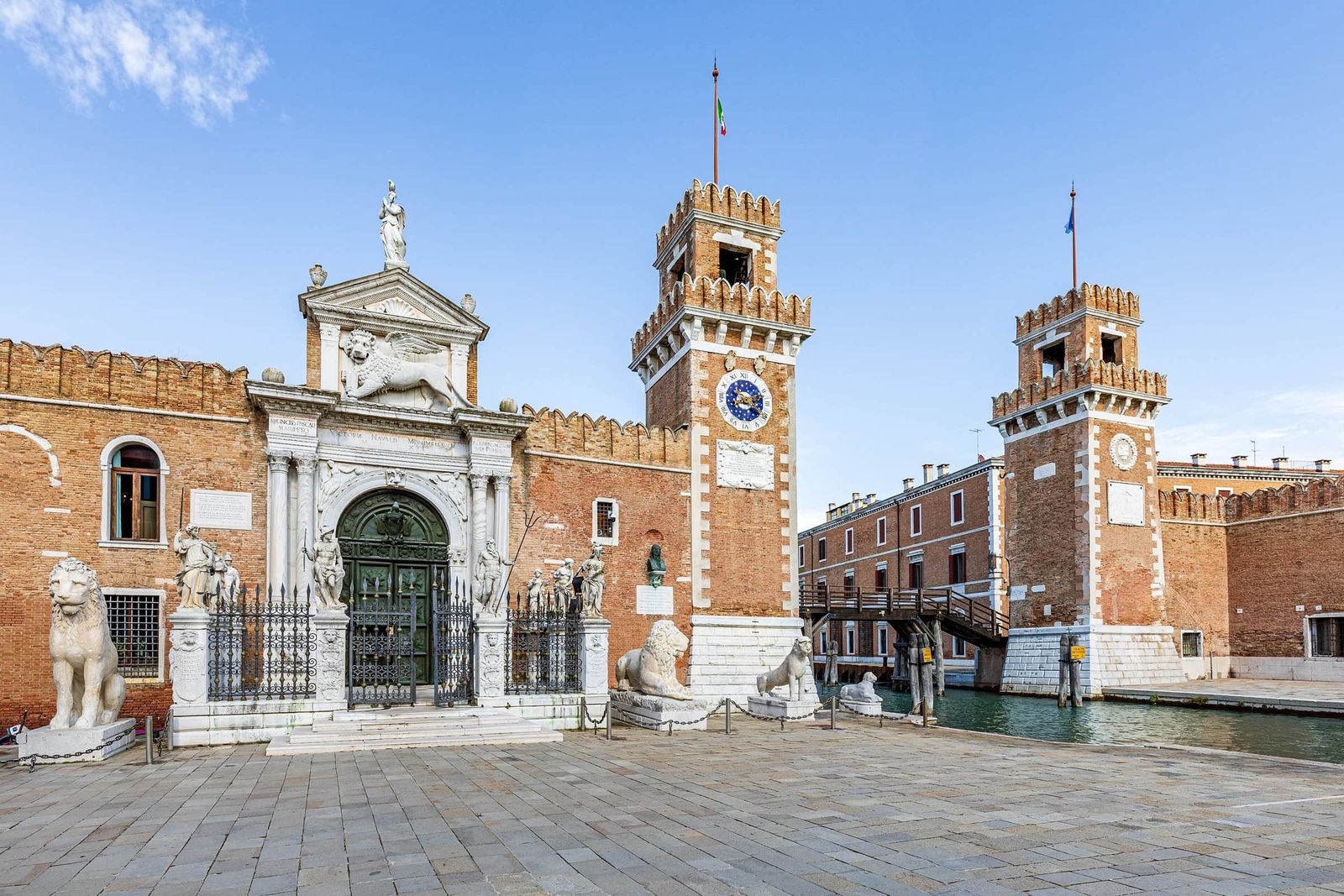
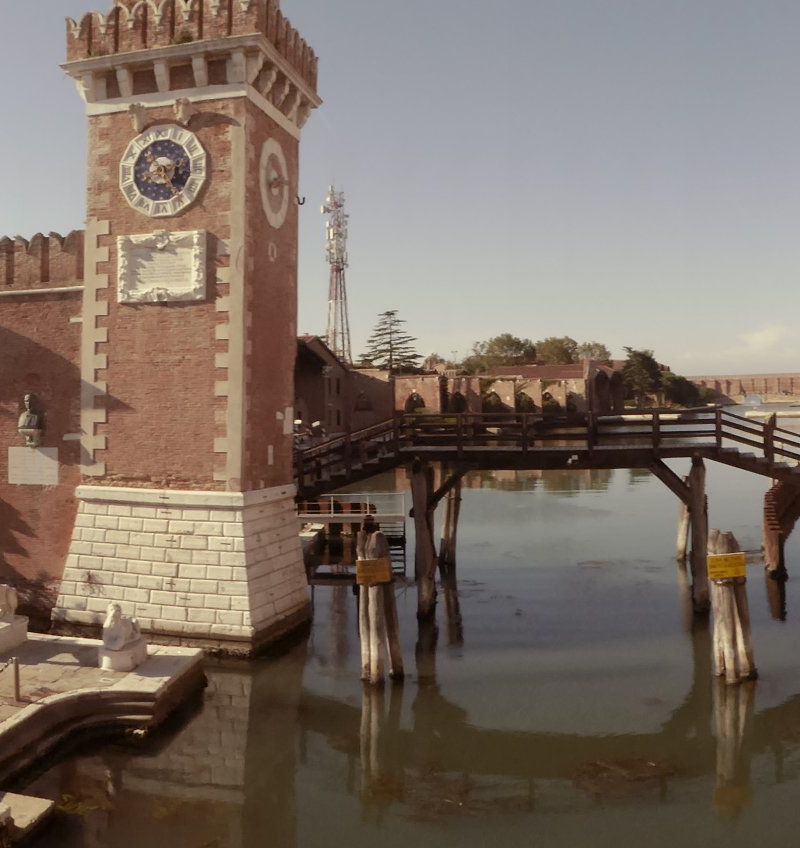
The land entrance, the Porta Magna, was built around 1460. It is one of the earliest works of Renaissance architecture in Venice, a triumphal arch with the winged lion of Saint Mark above it. Beside it, two tall towers guard the water entrance where ships passed in and out.
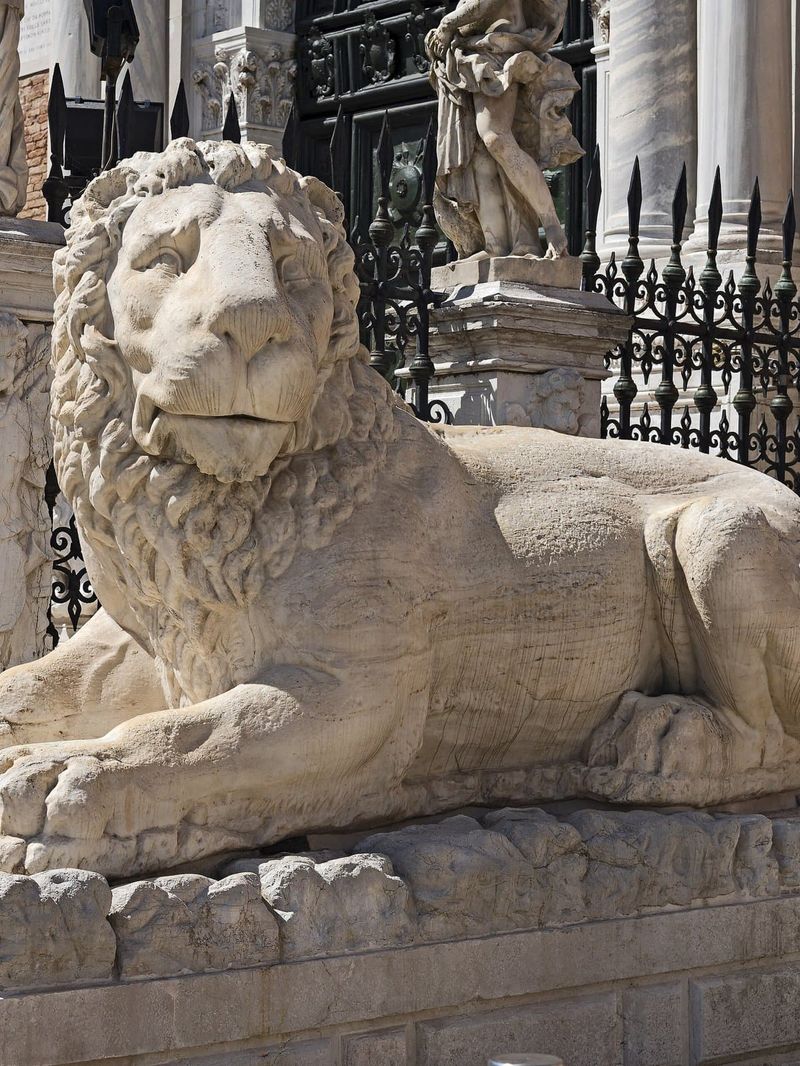
In front of the gate stand ancient stone lions. The largest came from Piraeus, the port of Athens. The Venetian commander Francesco Morosini carried it off in 1687 during his war against the Ottomans in Greece. Worn runic inscriptions are carved on its flanks, generally thought to be the work of Scandinavian soldiers in the service of Byzantium.
The Arsenale today
Part of the Arsenale is still used by the Italian navy. Another part has become one of the two main venues of the Venice Biennale. Since 1980 it has hosted the International Architecture Exhibition and the International Art Exhibition. The visitors walk through the Corderie, the rope works rebuilt between 1579 and 1585 by Antonio da Ponte, the architect of the Rialto Bridge. The building is 317 metres long. Beyond it lie the Artiglierie, the 16th-century covered docks of the Gaggiandre and the Giardino delle Vergini.
Exhibo editorial
Venice is usually described as a city of palaces and churches. The Arsenale is the reason it could afford them. Behind these crenellated walls the Republic turned shipbuilding into something close to an assembly line, centuries before the word existed.
Stand in the little campo in front of the gate. The lions, the towers and the wooden bridge over the canal look almost theatrical. Then think of the heat and noise Dante heard here. In a Biennale year walk the full length of the Corderie: the colonnade seems to have no end.
Gallery
How to find it
The Porta Magna is in the Campo de l'Arsenal in Castello, about 15 minutes' walk east of St Mark's Square along the Riva degli Schiavoni; turn inland at the Rio de l'Arsenal. The Arsenale vaporetto stop is a few minutes away. The gate, lions and canal entrance can be seen from the campo and the bridge at any time. The Biennale areas inside open only during the exhibitions, with Biennale tickets; the entrance is from Campo della Tana.
News by Exhibo
Editorial coverage on Exhibo
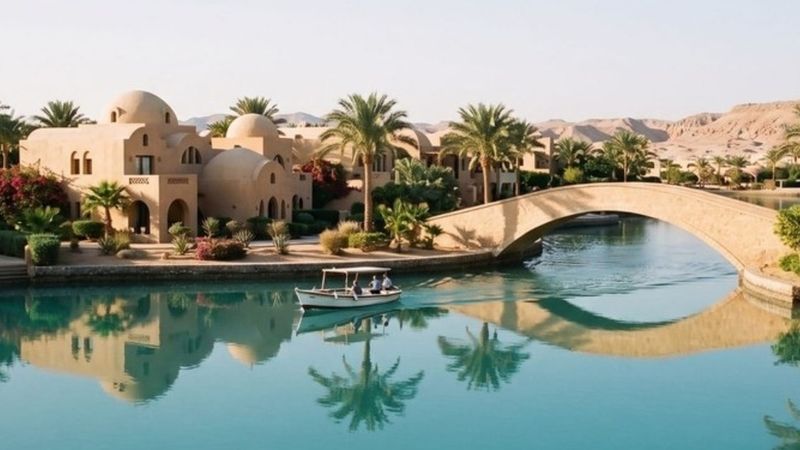
Why the Middle East Keeps Building Venice
From the Red Sea to the Gulf, canal towns keep getting called Venice. The water was usually about something else — and Venice was never quite Venice either.
The Middle East is full of “Venices”. Most began as a way to manufacture shoreline; the name usually arrived later, in English, from the people selling it.
The Angel Smithy of Murano
How Egidio Costantini paired modern masters with Venetian glassmakers
A new show at the Peggy Guggenheim Collection traces the overlooked network behind mid-century Venetian glass.

Fermata: Hong Kong in Venice
Exploring urban rhythms and forgotten details at the 61st Venice Biennale
A collateral presentation that maps the shared cadence of two coastal metropolises through site-specific installations and archival observation.