
Mount Sinai (Gebel Musa)
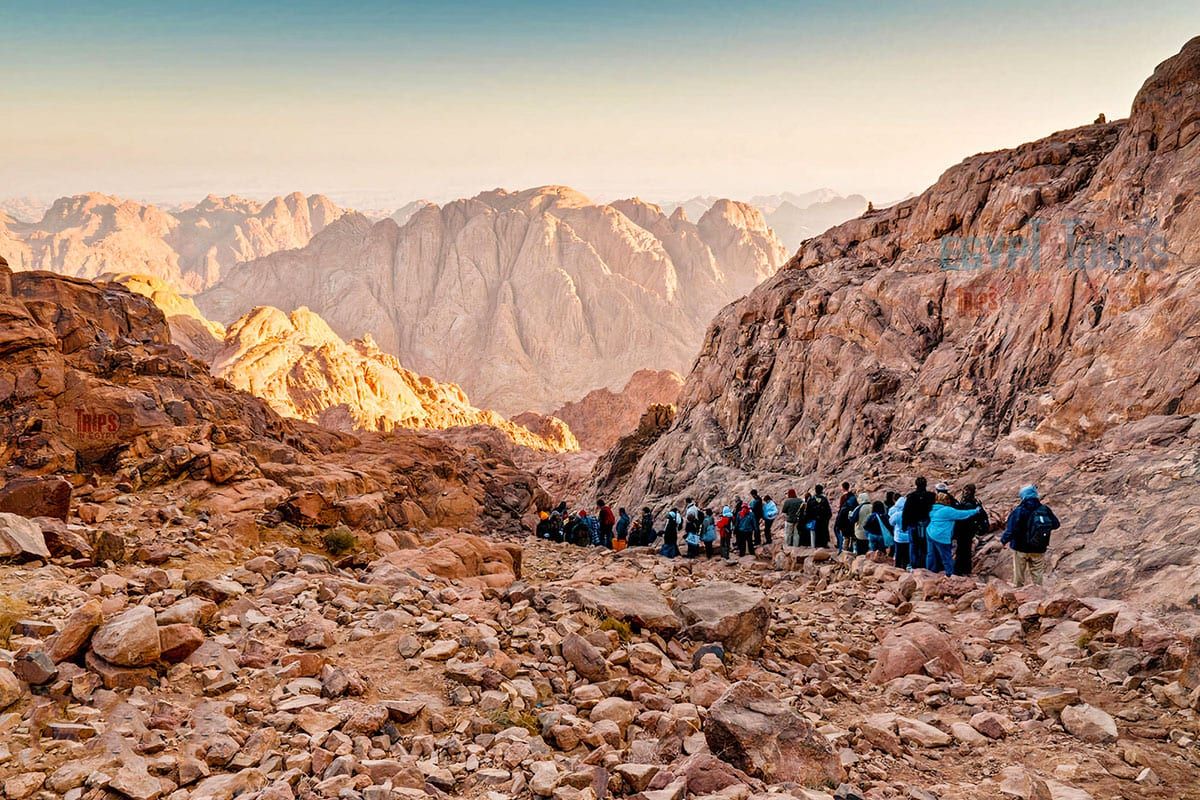
The mountain of Moses, climbed by night for sunrise from its 2,285-metre summit over the granite peaks of southern Sinai.
The mountain of the Law
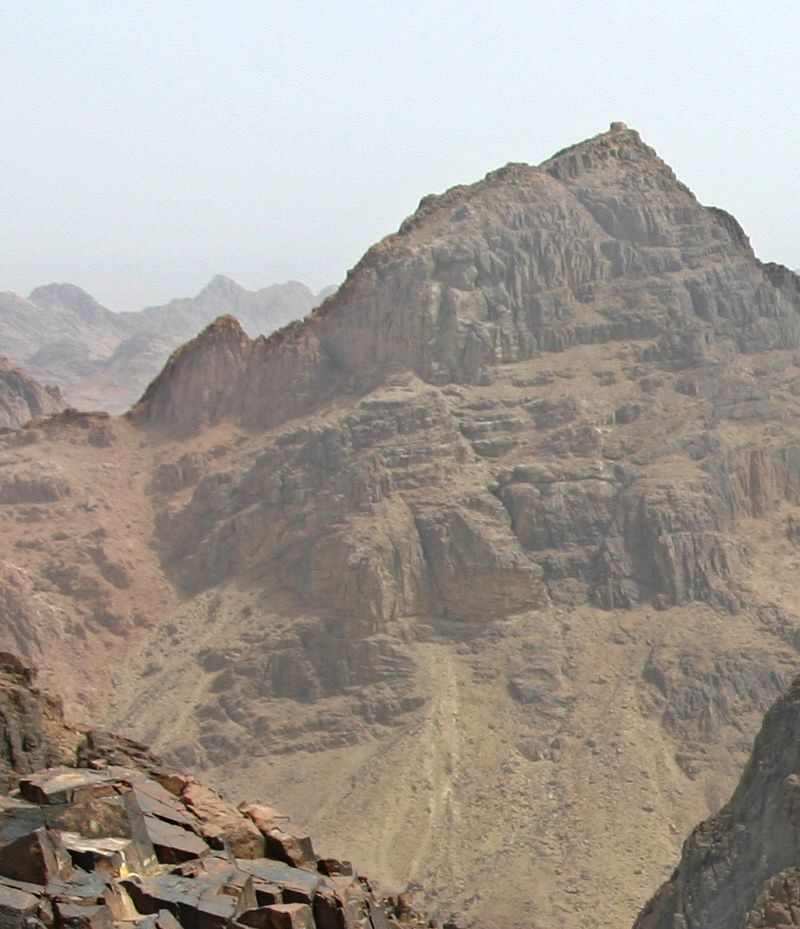
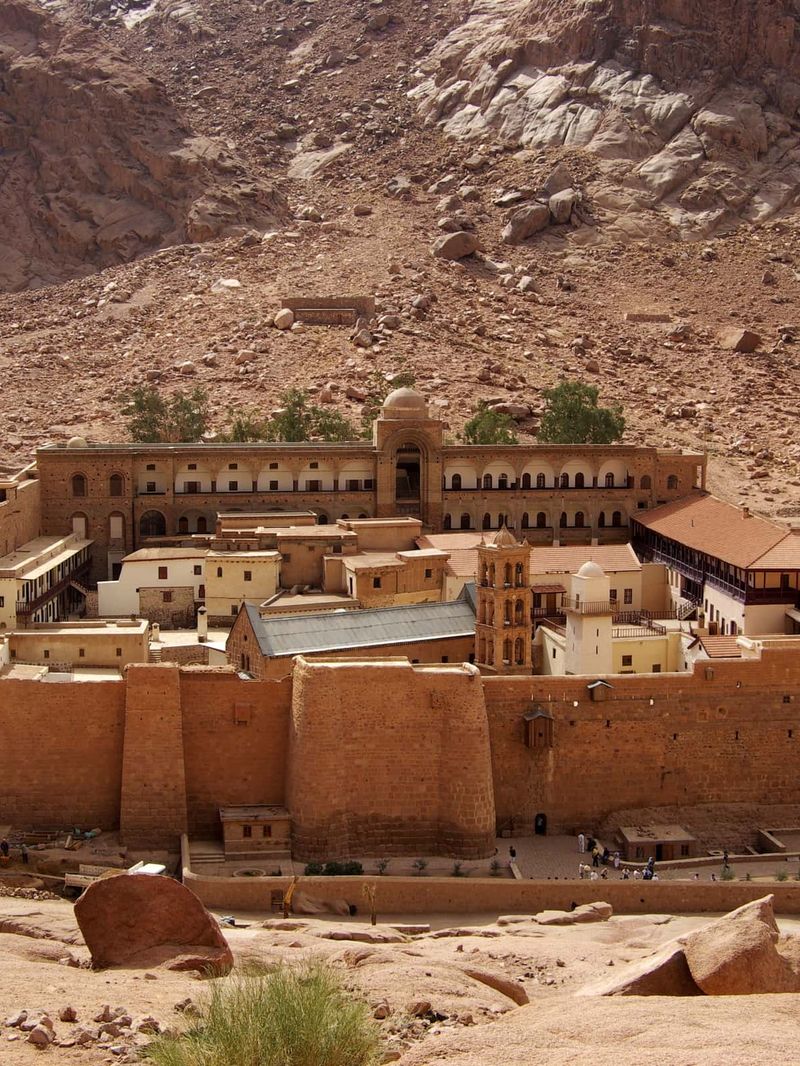
Mount Sinai, Gebel Musa ("the mountain of Moses") in Arabic, rises to about 2,285 metres above Saint Catherine's Monastery in the high mountains of southern Sinai. Since at least the fourth century, Christian tradition has identified it as the biblical mountain where God gave Moses the Ten Commandments, and it is revered by Jews, Christians and Muslims alike. Pilgrims have climbed it for some seventeen centuries.
Two ways up
There are two routes to the summit. The Camel Path, a broad trail built in the nineteenth century, winds up the mountainside in a long, gradual ascent, with Bedouin refreshment stalls along the way; camels can carry walkers part of the way. It joins the second route, the Steps of Repentance, a stairway of some 3,750 rough stone steps cut by monks, which climbs steeply from the monastery; the last 750 or so steps to the summit are common to both routes. Along the way stand a stone gateway where a monk once heard confessions, and Elijah's Basin, a hollow with a cypress tree and a small chapel.
At the summit
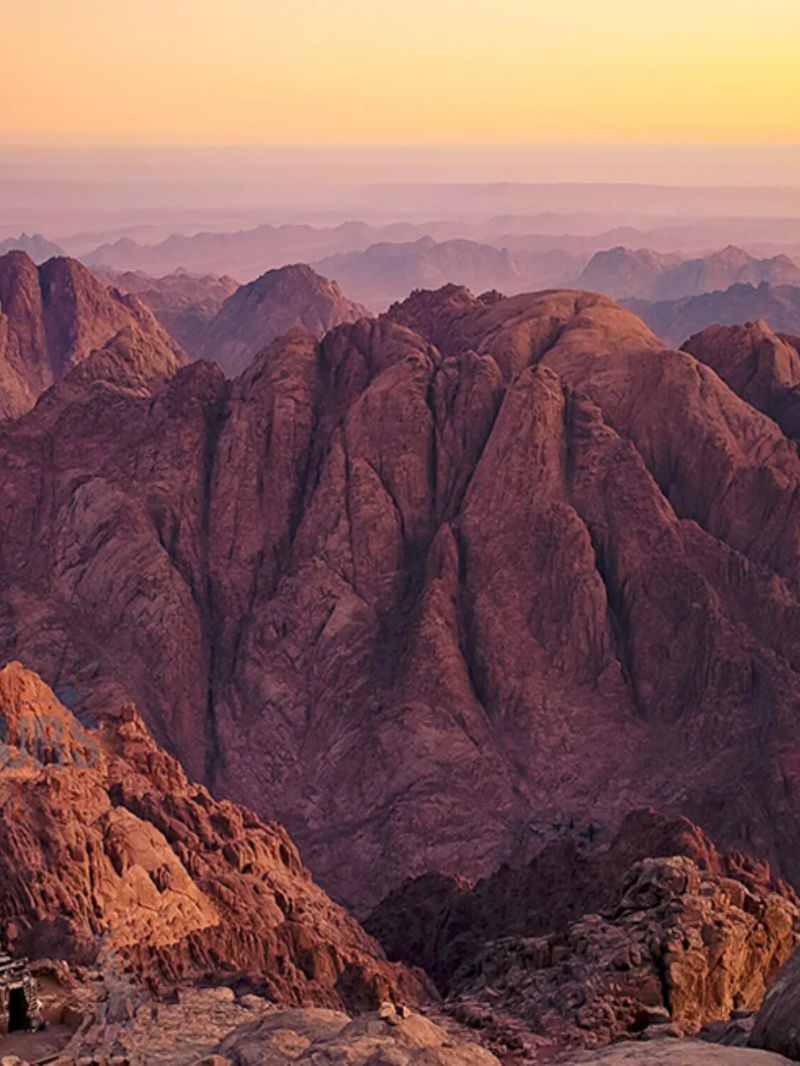
On the summit stand a small Greek Orthodox chapel of the Holy Trinity, built in the 1930s on the site of earlier churches, and a small mosque. Most visitors climb by night to arrive for sunrise, when the first light spreads over a sea of jagged granite peaks. The mountain is part of the UNESCO World Heritage Site of the Saint Catherine Area, and climbs must be made with a licensed Bedouin guide from the local Jebeliya tribe.
Exhibo editorial
You start in the dark, sometime after midnight, following a line of torches up the Camel Path, the stars blazing overhead, the Bedouin guide walking easily ahead. Near the top the steps begin, and then you are on the summit, wrapped in a blanket among strangers from every country, waiting. When the sun comes up, the whole of southern Sinai turns pink, orange and gold, peak after peak to the horizon.
It's cold up there even in summer, so bring warm layers; it's hard on the knees on the way down, so take the Steps of Repentance slowly and end at the monastery as its gates open. It is one of the great experiences of Egypt.
Gallery
How to find it
The trail starts behind Saint Catherine's Monastery, about 3 km from the town of Saint Catherine. Meet your Bedouin guide at the monastery car park, follow the Camel Path up the mountain (about 2.5–3 hours), and climb the final steps to the summit. Descend by the Steps of Repentance, which end at the monastery walls.
Similar places
All places
News by Exhibo
Editorial coverage on Exhibo
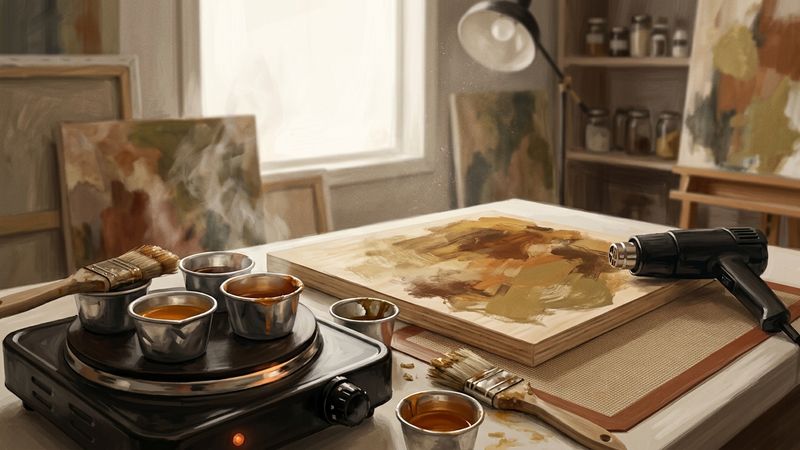
What Is Encaustic Painting?
Hot beeswax, damar resin and pigment on rigid panels: Fayum portraits, Jasper Johns, and how artists fuse, layer and conserve wax paint today
Encaustic painting binds dry pigment in heated beeswax (often with damar resin), applies it to a rigid support, and fuses each layer with a heat gun or iron. This guide walks materials, studio safety, layering and fusing, Roman Fayum portraits, Jasper Johns's Flag, and what makes wax film fail in heat or UV.
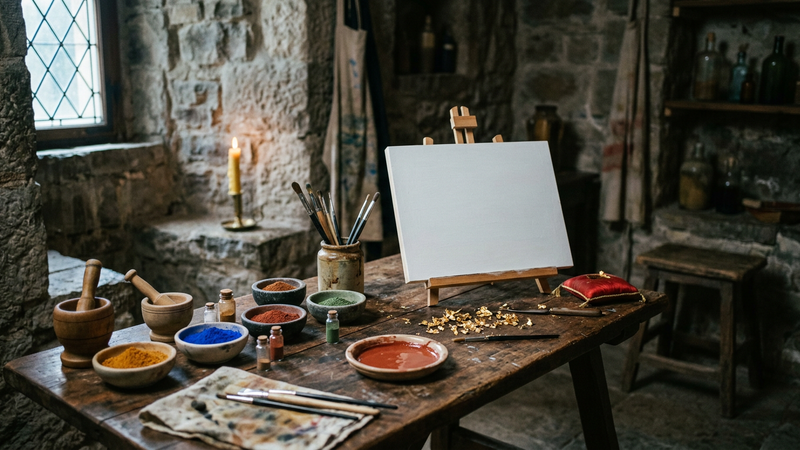
Icons and Icon Painting
How Byzantine sacred panels were made, used in liturgy, and argued over from Sinai workshops to the later Orthodox world.
A museum-led guide to Byzantine icons as practice and image theology: how panels and gold grounds work, what Iconoclasm changed after 843, four works to study at close range, and how the type travelled into Rus, the Balkans and Western painting without turning the piece into confessional debate.