Tomb of the Roman Soldier & Triclinium, Petra
A tomb, a colonnaded court and a feasting hall in Wadi Farasa, with the most vividly banded rock in Petra.
A funerary complex
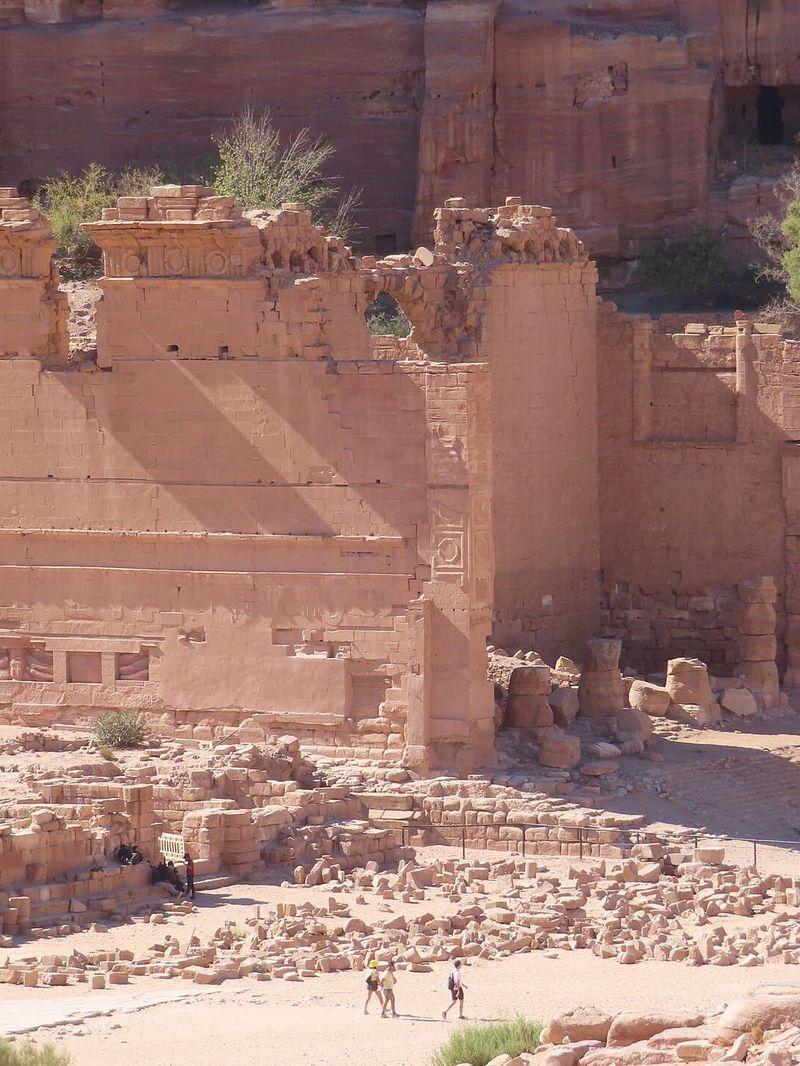
In Wadi Farasa, on the trail down from the High Place of Sacrifice, stands one of the most complete funerary groups in Petra. The Tomb of the Roman Soldier and the Triclinium face each other across a court that was once lined with columns. Tomb, court and hall were planned together for burial and for the meals held in memory of the dead.
The tomb
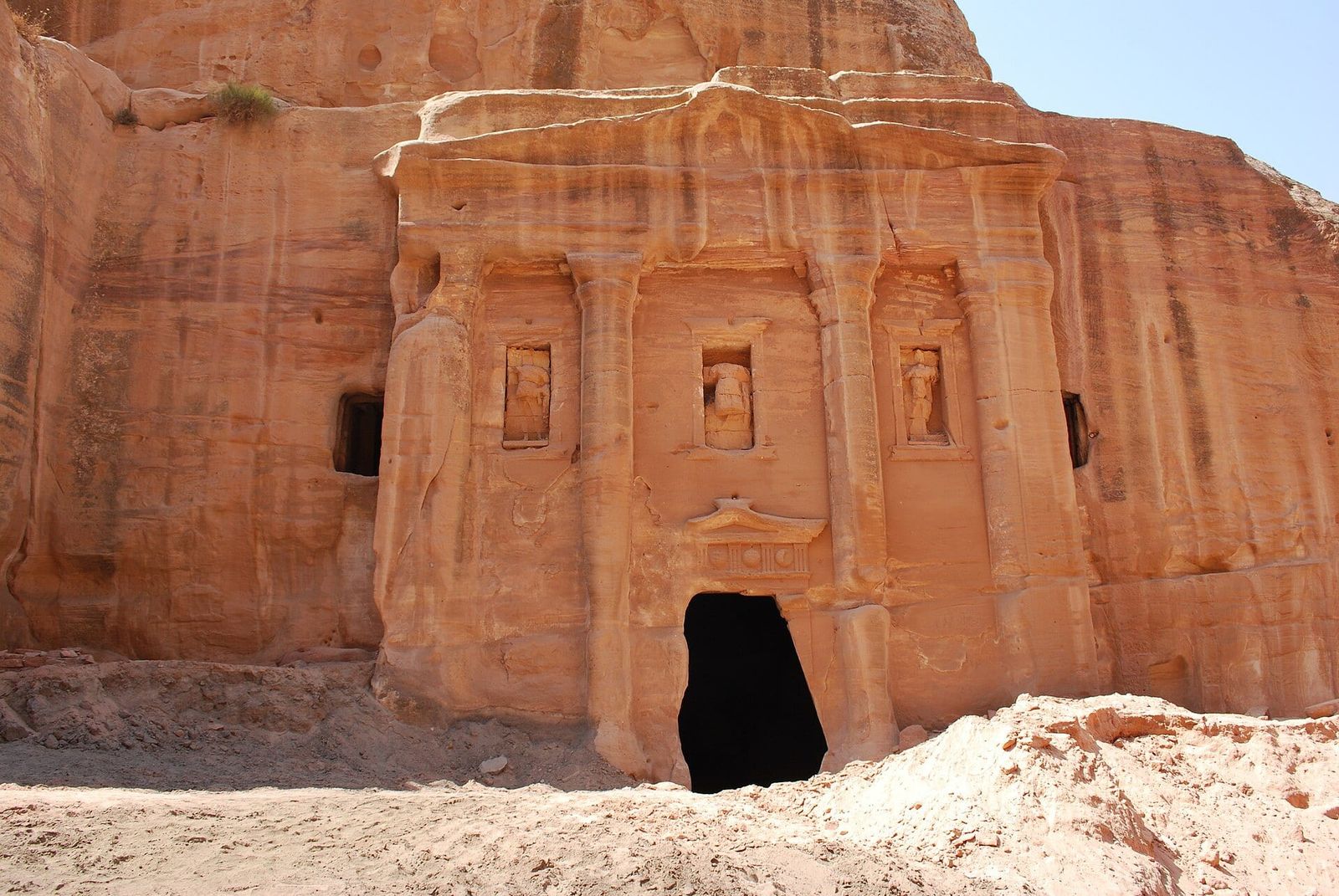
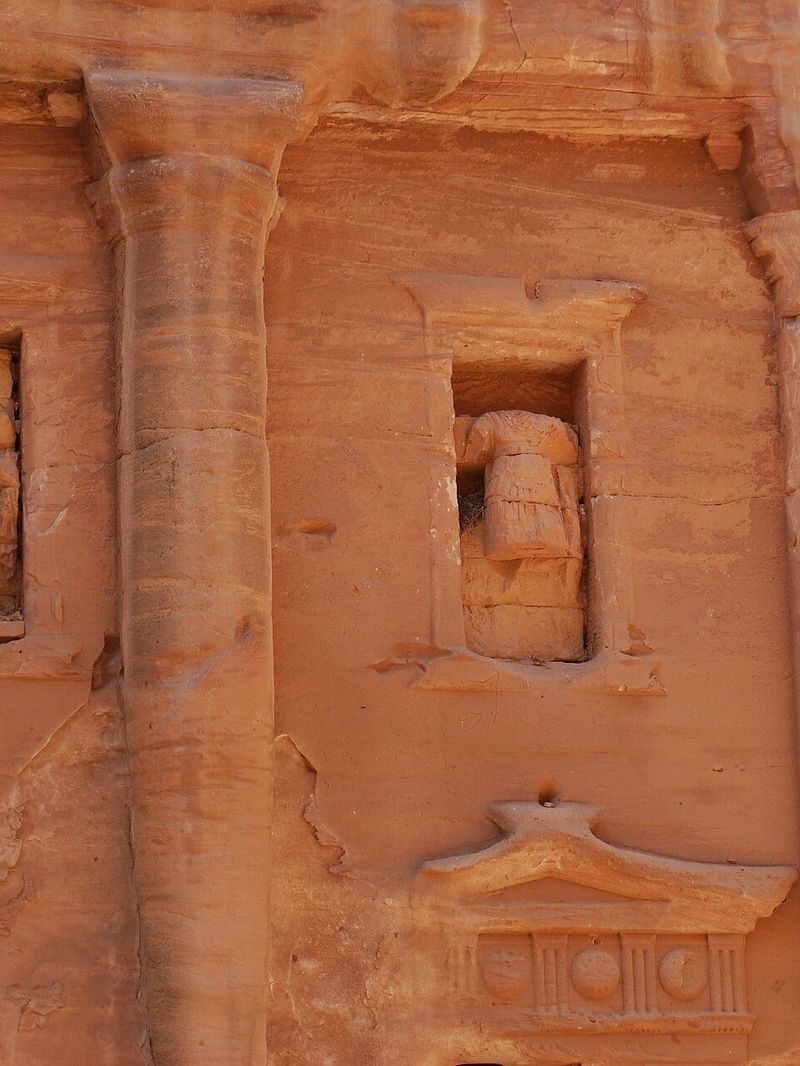
The facade dates to the first century AD or the early second. Four half-columns frame a doorway and three niches. The central niche holds a headless statue in Roman military dress, which gave the tomb its modern name. Inside is a burial chamber with recesses for the dead.
The Triclinium
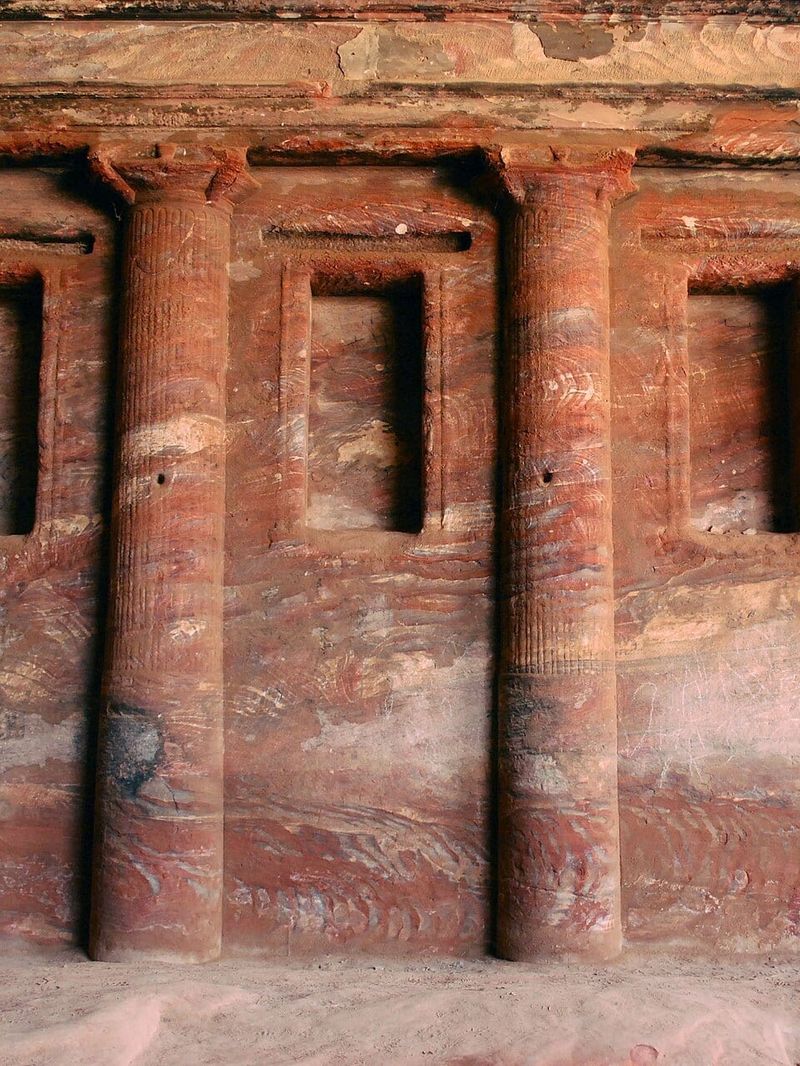
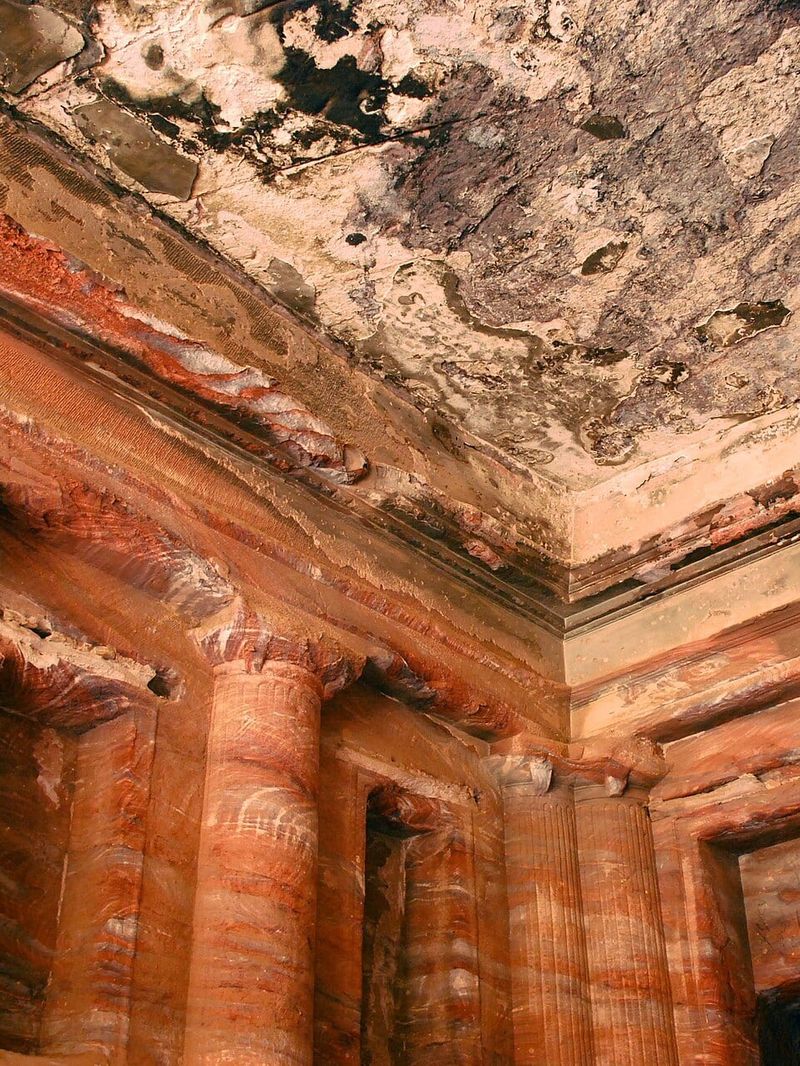
Across the court the Triclinium was cut as a banqueting hall, with stone benches on three sides. Its walls are carved with fluted half-columns and niches. The sandstone here is banded in red, ochre, violet and white in long regular waves, among the most striking colours in Petra.
Wadi Farasa
Further along the trail is the Renaissance Tomb, with its arched pediment. Next comes the Broken Pediment Tomb. The path comes out in the main valley near Qasr al-Bint.
Exhibo editorial
The Triclinium is the moment. You step in from the sun and the walls start to move: band after band of colour running across the rock so evenly that it looks painted. The room was cut for funeral feasts. Even empty it feels laid for guests.
Most visitors never come this way, because the tomb sits on the back trail from the High Place. That is the best reason to walk the loop. Petra's most beautiful interior is hidden behind its steepest climb.
Gallery
How to find it
On the Wadi Farasa trail, about 20 minutes down from the High Place of Sacrifice. It can also be reached from the main valley near Qasr al-Bint by following the signs for Wadi Farasa, about 20 minutes uphill.