Great Temple, Petra
Petra's largest free-standing complex, with elephant-headed capitals and a small theatre inside.
The largest building
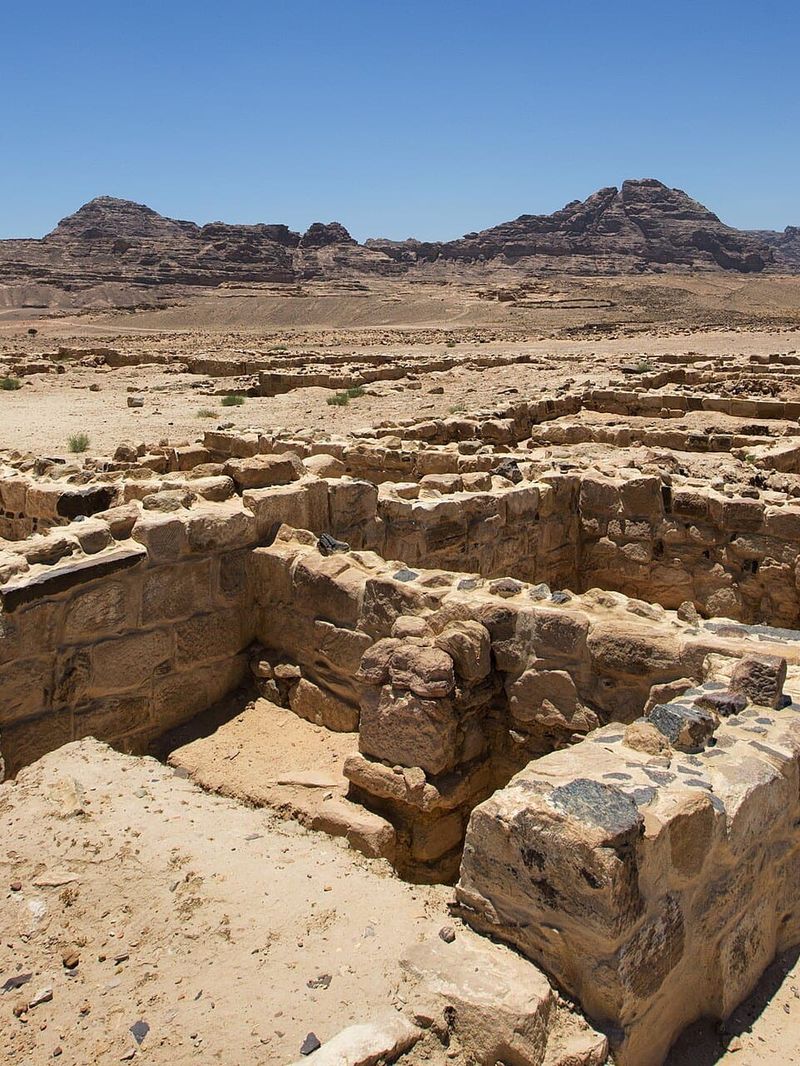
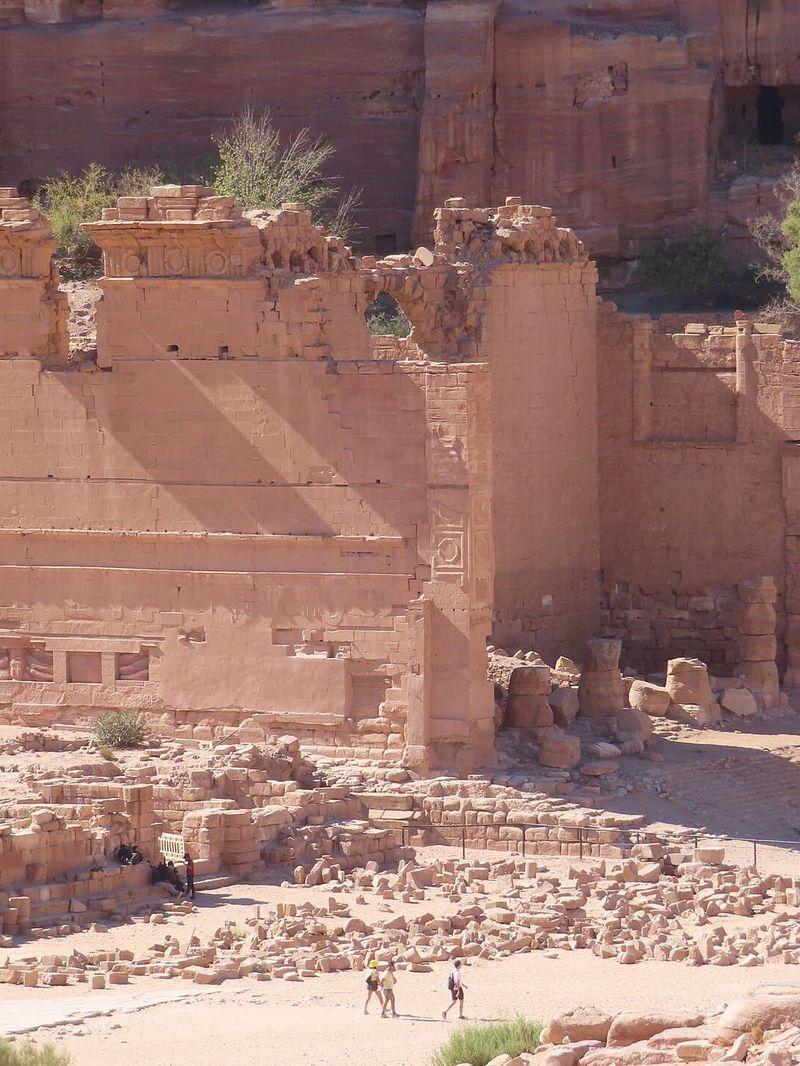
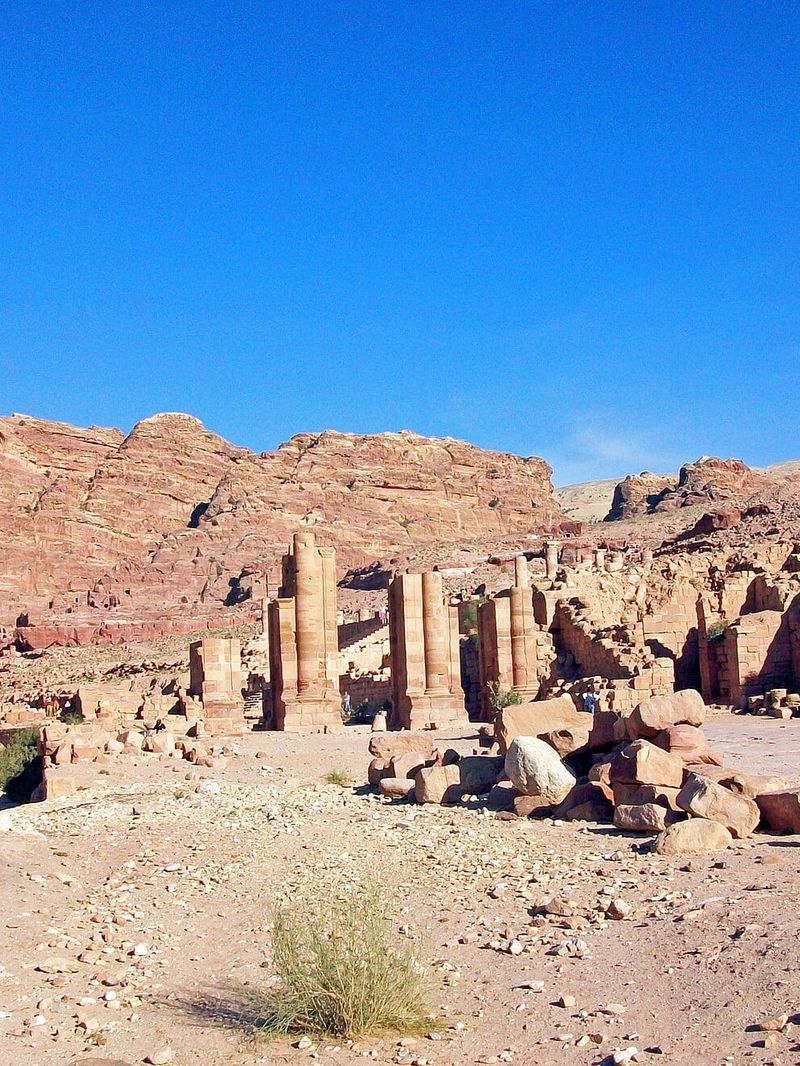
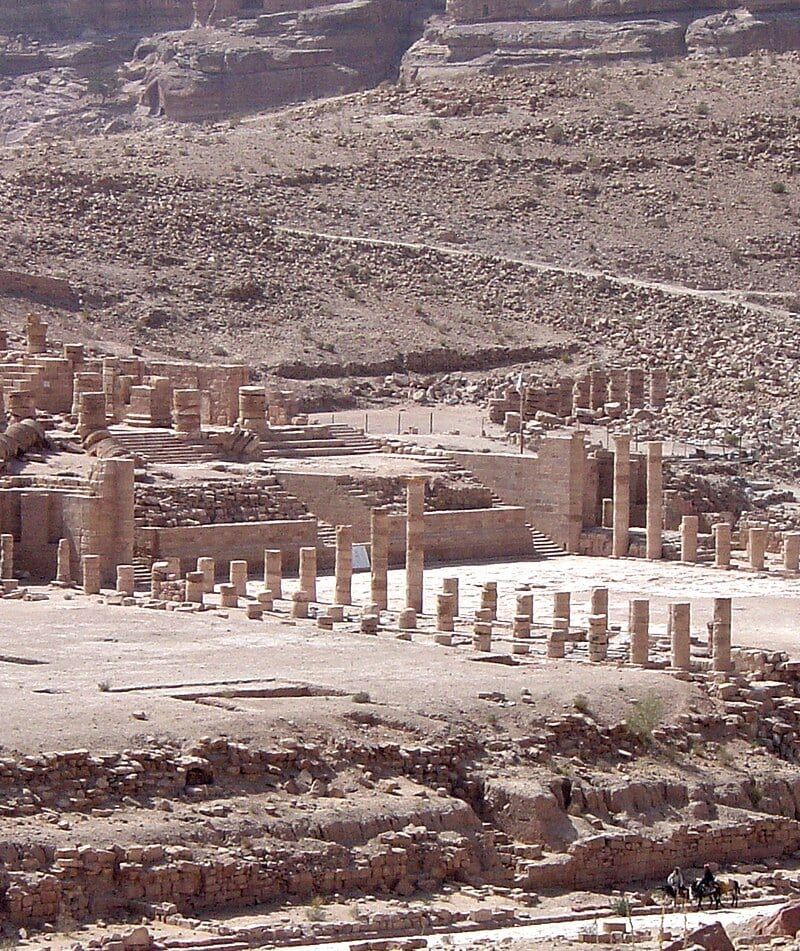
The Great Temple rises on the south side of the Colonnaded Street. Covering some 7,000 square metres, it is the largest free-standing building complex in Petra. It was built in the late first century BC or early first century AD.
Excavation
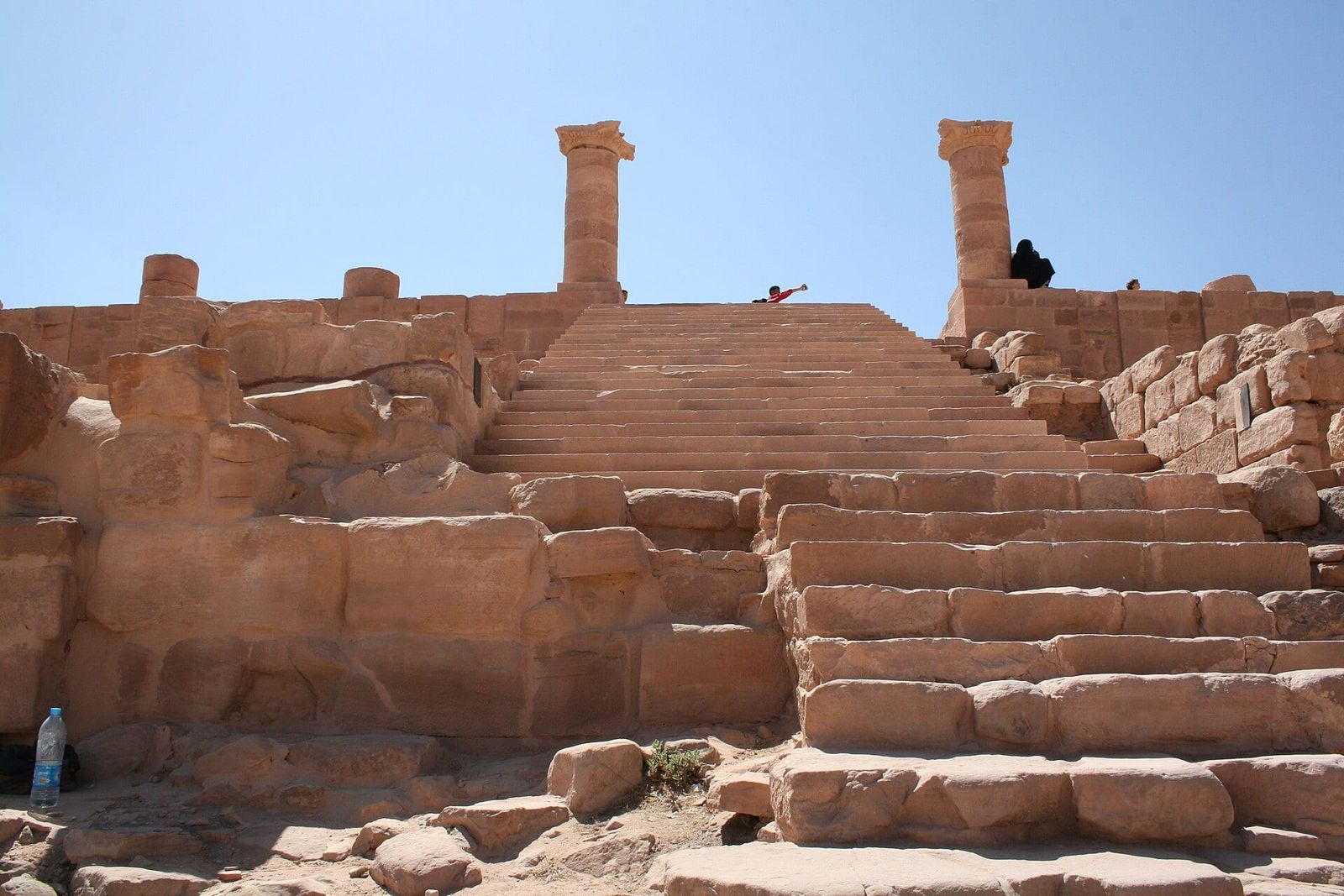
Brown University excavated it from 1993 under Martha Sharp Joukowsky. The complex has a monumental gateway and stairway, a lower courtyard with hexagonal paving and triple colonnades. The temple itself stands on a raised platform. The capitals of the courtyard columns carry carved elephant heads.
A theatre inside
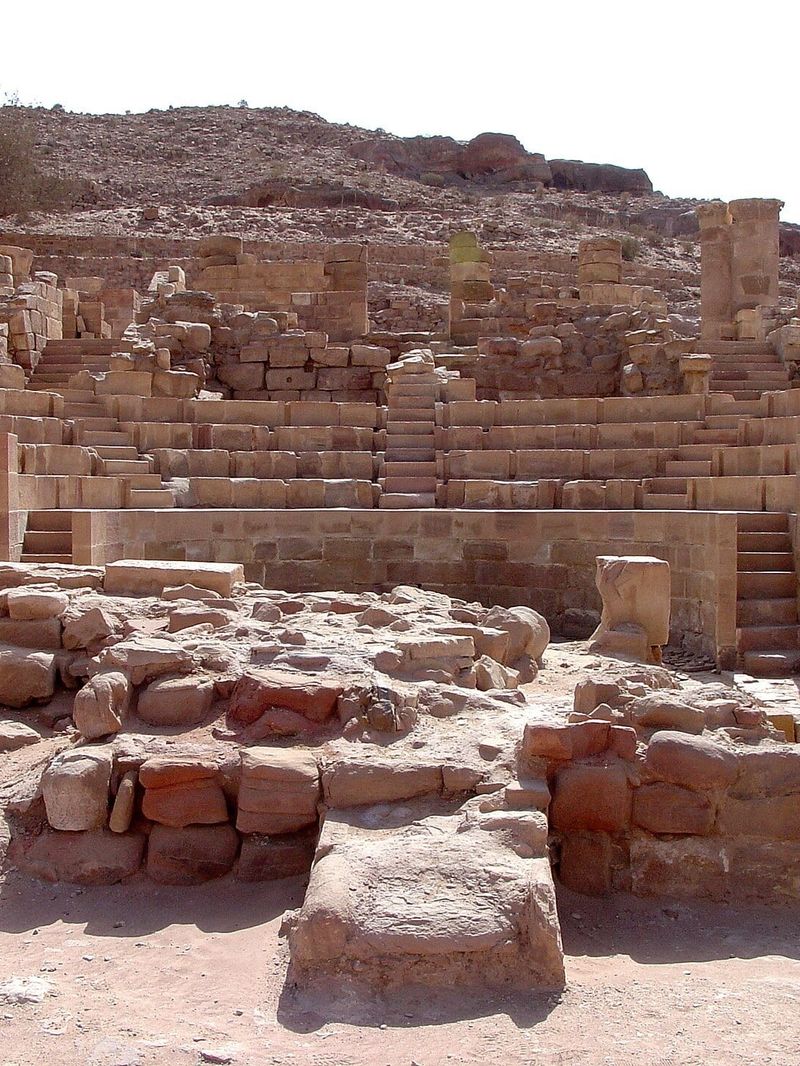
Within the temple the excavators found a small theatre of about 600 seats, built in a later phase. It suggests the building served for civic meetings, perhaps as a council chamber, as well as or instead of worship. Painted stucco, sculpture and elephant-head capitals from the site are shown in the Petra Museum.
Exhibo editorial
Look for the elephants. They sit on top of the column capitals, small and worn, trunks curled, a long way from any elephant. The Nabataeans traded with India and Egypt and their builders put the wider world into the decoration of their biggest building.
Then climb to the little theatre in the middle. Whether it was a council hall or a place for rites, it is a room built for people to sit and listen to each other, inside a city mostly remembered for its tombs.
Gallery
How to find it
On the south side of the Colonnaded Street, up the monumental stairway. Signposted from the main trail.