Tuna el-Gebel
The necropolis of Hermopolis — the Greco-Egyptian tomb of Petosiris, catacombs of sacred ibises and the tomb of Isadora.
The cemetery of Hermopolis
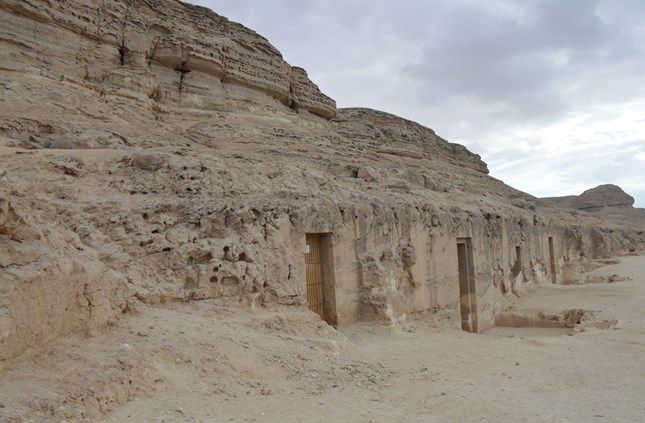
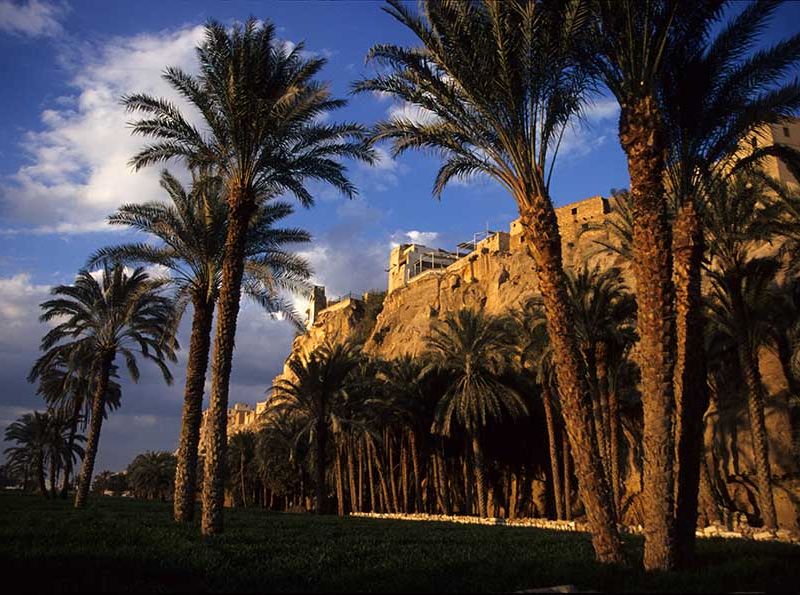
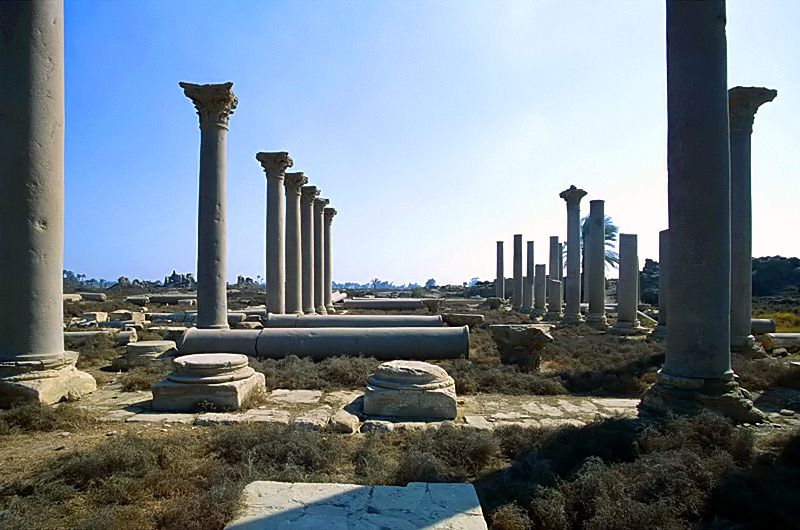
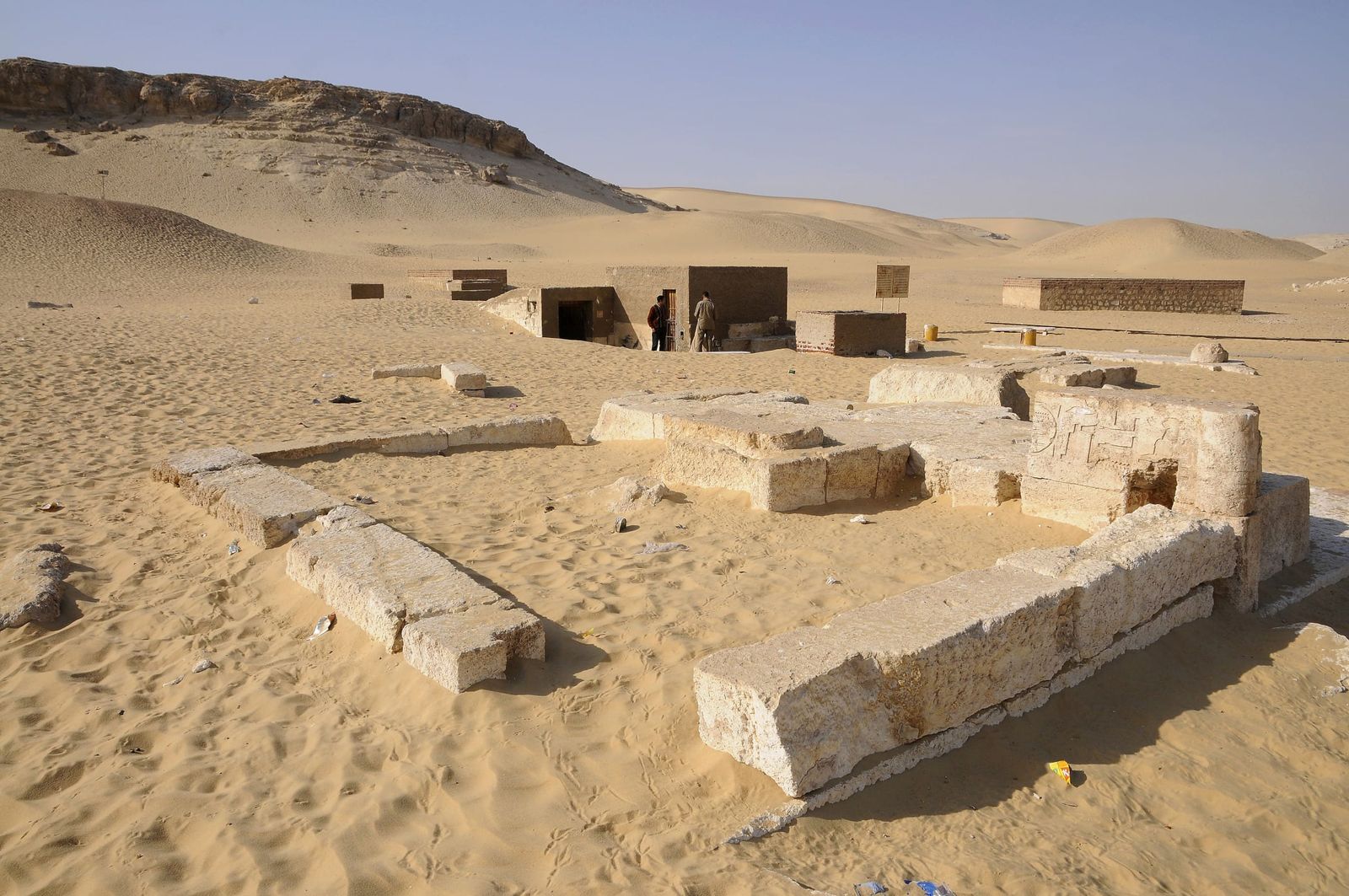
Tuna el-Gebel lies on the desert edge west of Mallawi, in Minya Governorate. It was the necropolis of Hermopolis Magna (Ashmunein), the city of Thoth, god of wisdom and writing, whose sacred animals were the ibis and the baboon. The site spans more than a thousand years, from the New Kingdom to the Roman period, and has a character all its own, where Egyptian and Greek traditions met.
The tomb of Petosiris
The best-known monument is the tomb of Petosiris, high priest of Thoth, built around 300 BC in the early Ptolemaic period. Shaped like a small temple, with a columned façade, it is decorated with reliefs that combine traditional Egyptian scenes — offerings, funerary rites, agriculture, crafts — with figures drawn in a Greek manner, wearing Greek clothes and posed in Greek styles. It is one of the most important monuments for understanding the encounter between Egyptian and Greek culture after Alexander the Great. Nearby are funerary houses of the Greco-Roman period, including the tomb of Isadora, a young woman who drowned in the Nile in the second century AD, whose mummy remains in her tomb and whose epitaph in Greek verse laments her death.
Catacombs and stela
Beneath the desert lie extensive underground galleries, the catacombs, where millions of mummified ibises and baboons sacred to Thoth were buried, along with remains of their cults. On the cliffs at the edge of the site stands one of Akhenaten's boundary stelae, marking the western limit of the territory of his capital at Amarna, carved with figures of the king, Nefertiti and their daughters worshipping the Aten.
Exhibo editorial
Tuna el-Gebel feels like nowhere else in Egypt: a necropolis of temple-tombs and funerary houses scattered across the sand, where Greek and Egyptian worlds overlap. In the tomb of Petosiris, Egyptian gods look on as craftsmen in Greek tunics work at their benches — two civilisations sharing a single wall.
Then go down into the catacombs, endless galleries of niches for mummified ibises and baboons, and visit Isadora, the drowned girl whose family wrote her a poem in Greek. It's a strange, poetic, deeply atmospheric place — combine it with the Mallawi Museum and the ruins of Hermopolis nearby.
How to find it
Tuna el-Gebel lies about 10 km west of Mallawi on the desert edge, reached by car through the village of Tuna. From the ticket office, the tomb of Petosiris and the funerary houses are a short walk; the entrance to the catacombs is signposted nearby, and Akhenaten's boundary stela stands on the cliffs to the north-west of the necropolis.