Gebel al-Tayr (Monastery of the Virgin)
A cliff-top monastery above the Nile near Samalut, where by tradition the Holy Family passed — with a church cut into the rock.
The mountain of the birds
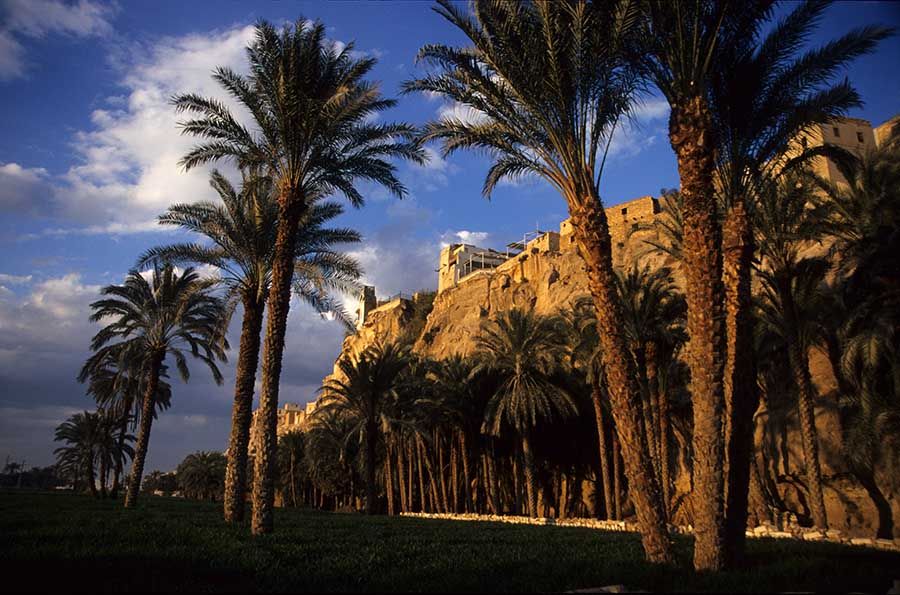
Gebel al-Tayr, "the mountain of the birds", is a limestone cliff on the east bank of the Nile opposite the town of Samalut, north of Minya. On its summit stands the Monastery of the Virgin Mary (Deir al-Adra), one of the most important stations of the Holy Family route in Egypt. According to Coptic tradition, the Holy Family, sailing along the Nile on their flight into Egypt, passed by this cliff, and a rock about to fall on their boat was held back by the infant Jesus, leaving the imprint of his hand.
The church in the rock
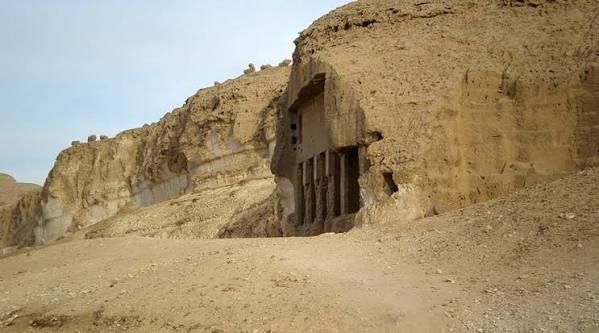
The heart of the monastery is the Church of the Virgin, partly cut into the rock of the cliff, which tradition attributes to the Empress Helena, mother of Constantine, in the fourth century. It has been rebuilt and restored many times; its oldest parts include rock-cut columns and a cave-like interior. Around it lies a village inhabited by Coptic families, and the cliff is reached by a road and a long flight of steps.
Pilgrimage
The monastery is the focus of a great annual pilgrimage, the mawlid of the Virgin, which draws large crowds. From the clifftop there are wide views over the Nile valley.
Exhibo editorial
High above the Nile, on a white cliff, the monastery seems to watch over the river as it has for some sixteen centuries. Climb up to the old rock-cut church, dim and cool after the glare, and you feel the weight of all the pilgrims who have come here before you.
Then step out onto the edge of the cliff for the view: the Nile, the fields, the villages, the desert beyond — and imagine a small boat passing below with a family on the run. It's an easy stop on the way to Minya, and a beautiful one.
How to find it
Gebel al-Tayr lies on the east bank of the Nile opposite Samalut, about 25 km north of Minya; cross the Nile by the bridge near Samalut and follow the road up to the clifftop village and monastery.