
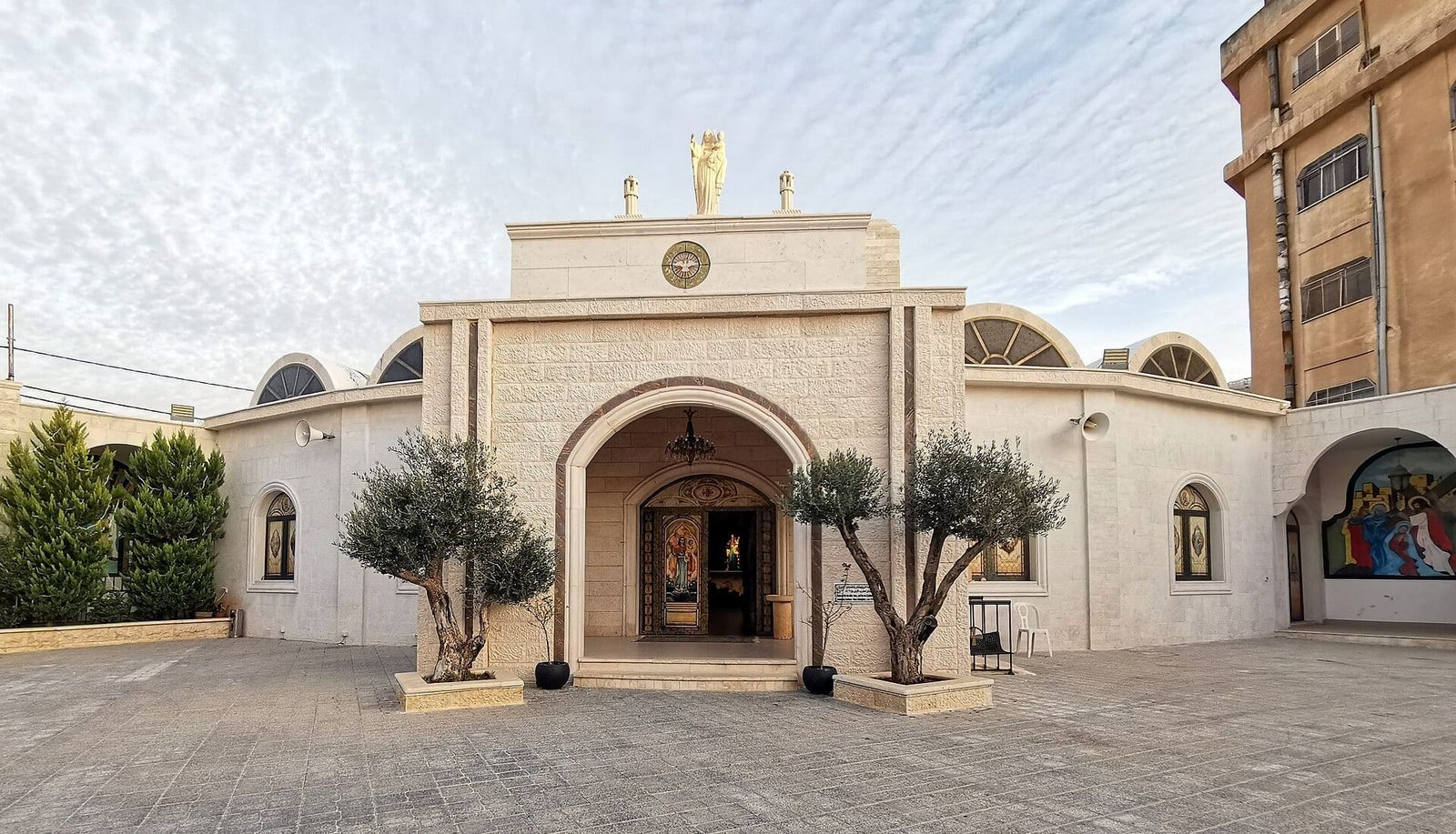
Our Lady of the Mountain Shrine, Anjara
A Catholic shrine in Anjara where tradition says Jesus, Mary and the disciples rested in a cave.
The shrine
The Shrine of Our Lady of the Mountain stands in the town of Anjara, a few kilometres south of Ajloun. Local tradition holds that Jesus, his mother and the disciples rested in a cave here on their way through Gilead between Galilee and Jerusalem.
The church and the cave
The shrine belongs to the Latin parish of Anjara. It brings together the parish church, a small cave chapel built of stone in the church courtyard and a statue of the Virgin known as Our Lady of the Mountain. The shrine was renewed in the early twenty-first century.
Pilgrimage
In the Jubilee Year 2000 Pope John Paul II approved it as one of five pilgrimage sites in Jordan, with Tell Mar Elias, the Baptism Site, Mount Nebo and Mukawir. Each June the Latin Patriarch of Jerusalem leads an annual pilgrimage here, attended by thousands.
Exhibo editorial
It is a modest place: a parish church and a small cave chapel in a busy hill town. No columns, no ticket office. That is what makes it moving.
Come quietly, on the way to or from Ajloun. Jordan's Christian story is not only in ruins. Here it is local and still prayed in.
Gallery
How to find it
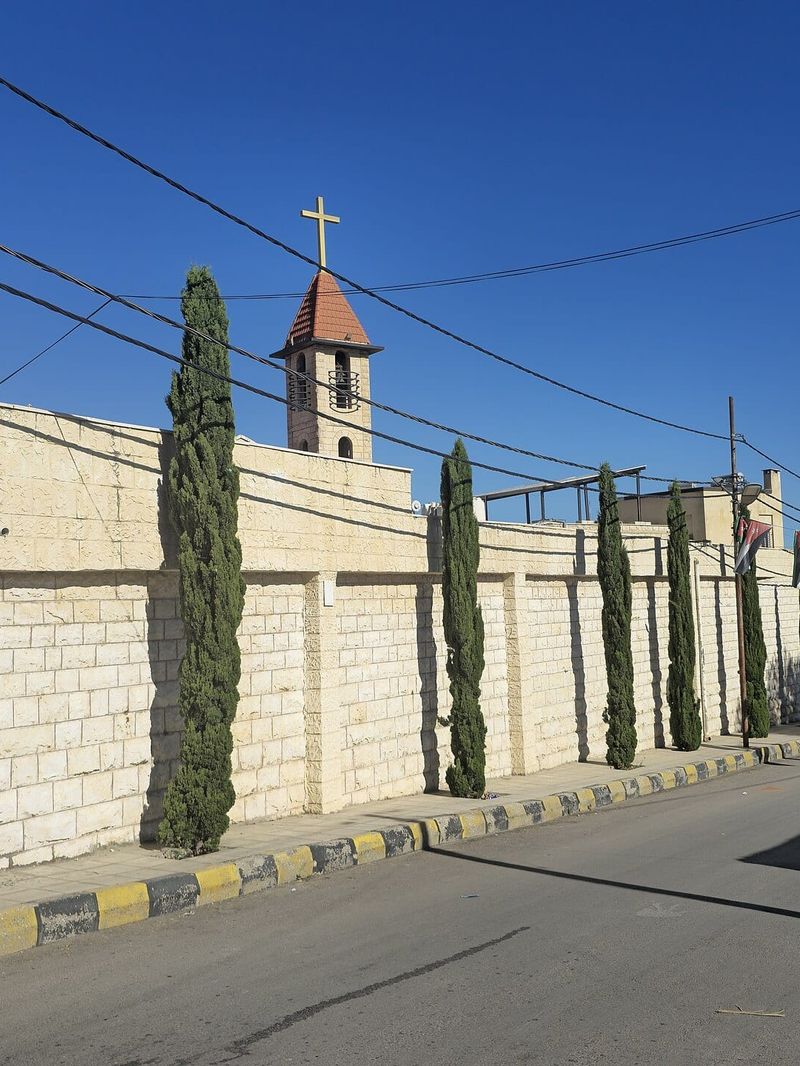
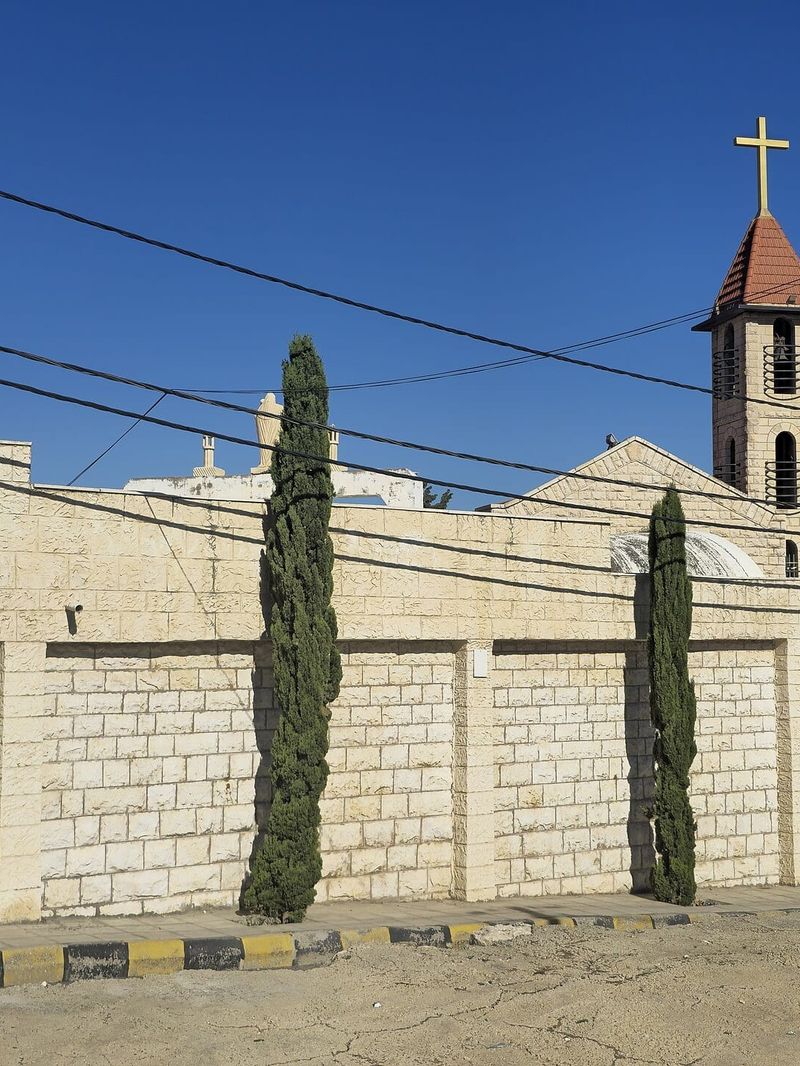
In the centre of Anjara, about 5 km south of Ajloun on the road towards Jerash. The church stands behind a long stone wall with a bell tower. The cave chapel is in the courtyard.
Similar places
All places
News by Exhibo
Editorial coverage on Exhibo
Russian Art: Icons to the Avant-Garde
A museum map from Orthodox panels through Imperial academism and the Wanderers to the first years of Russian modernism
Russian art history runs from Byzantine-trained icon workshops to Academy history painting, Peredvizhniki realism and the first abstract experiments of the 1910s. This survey ties named works in Moscow, St Petersburg and Western museums to the institutions that made them, without becoming an icons manual or a Suprematism essay.
Baroque Art, Explained
Rome, Antwerp, Madrid and Amsterdam: the seventeenth-century visual language built to move bodies, faith and courts.
Baroque art pushed figures into your space and stacked diagonals for drama. This guide covers Counter-Reformation roots, key painters and sculptors from Rome to the Dutch Republic, four close readings of major works, and how the style spread, drew criticism, and still shapes museum rooms today.