Ajloun Castle (Qal'at ar-Rabad)
A twelfth-century Ayyubid fortress on a hilltop above Ajloun, looking over pine forest to the Jordan Valley.
The castle
Ajloun Castle, Qal'at ar-Rabad, crowns Jabal Awf above the town of Ajloun in the wooded hills of northern Jordan, about 25 km north-west of Jerash. It is one of the best-preserved examples of medieval Islamic military architecture in the region.
History
Izz al-Din Usama, a commander of Saladin, built the castle in 1184. It guarded the iron mines of Ajloun and the routes between Damascus and Egypt. It also faced the Crusader castles across the Jordan. It was part of a chain of fortresses and signal posts across the region. In 1214 to 1215 Aybak ibn Abdullah enlarged it with a new tower, recorded in an inscription. The Mongols damaged the castle in 1260. After the Mamluk victory at Ain Jalut the sultan Baybars repaired it and cleared its moat. Earthquakes in 1837 and 1927 caused serious damage. The Department of Antiquities has since restored the walls and rebuilt the bridge over the moat.
What to see
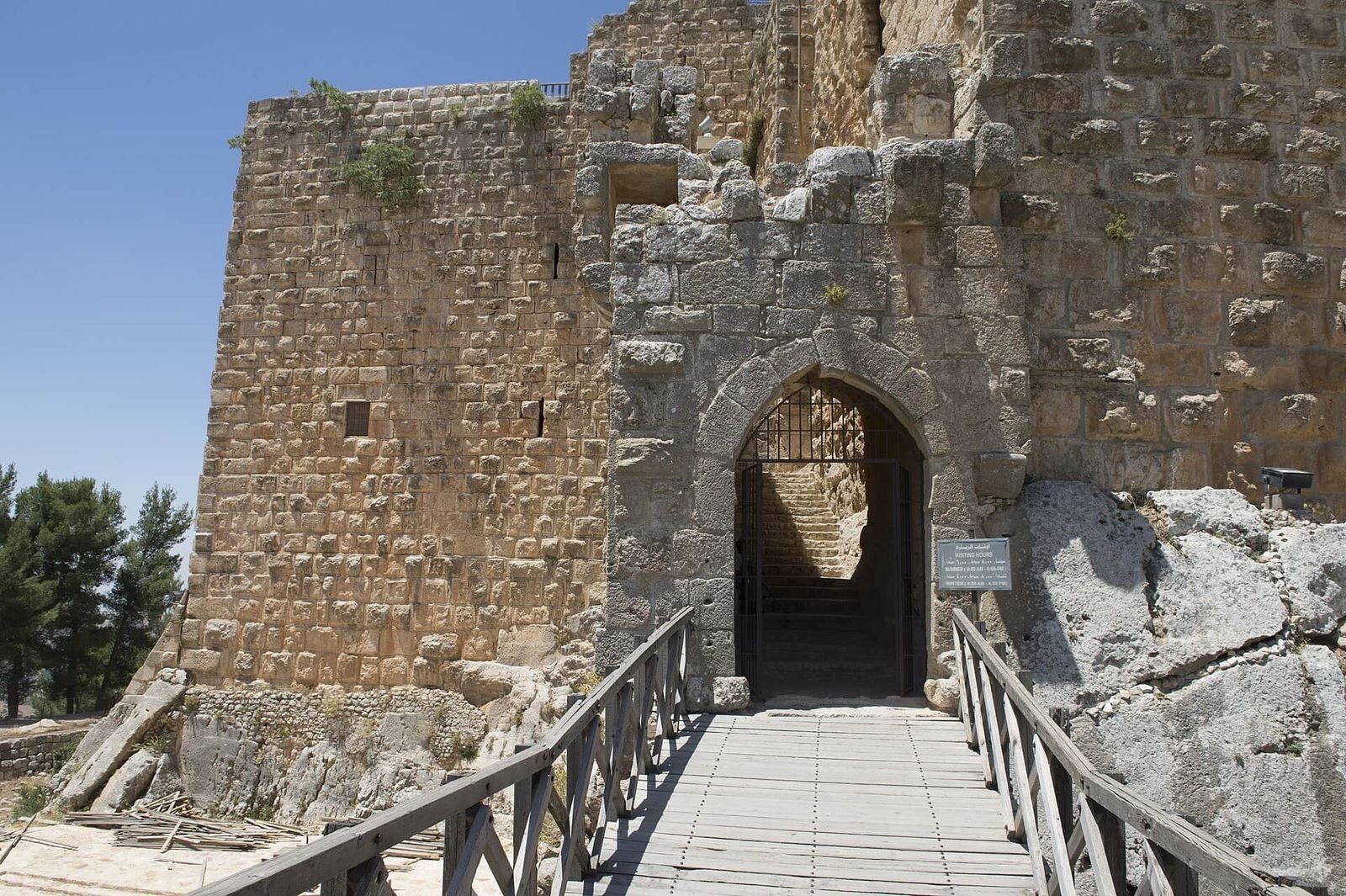
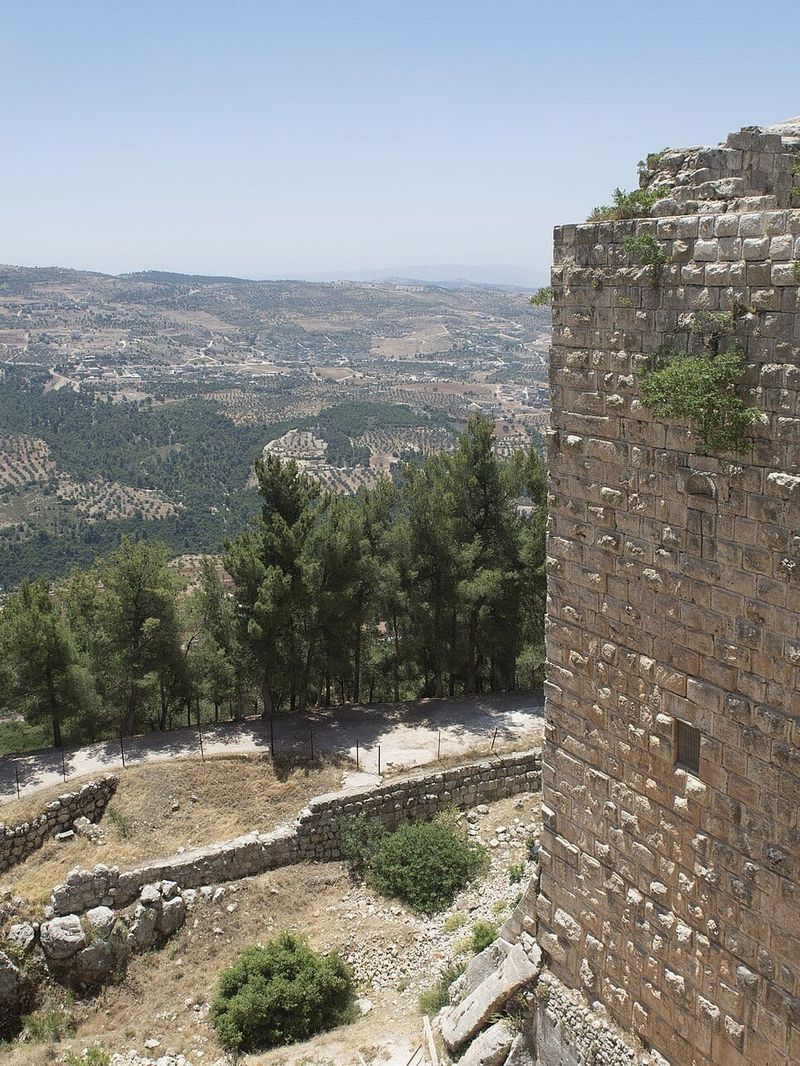
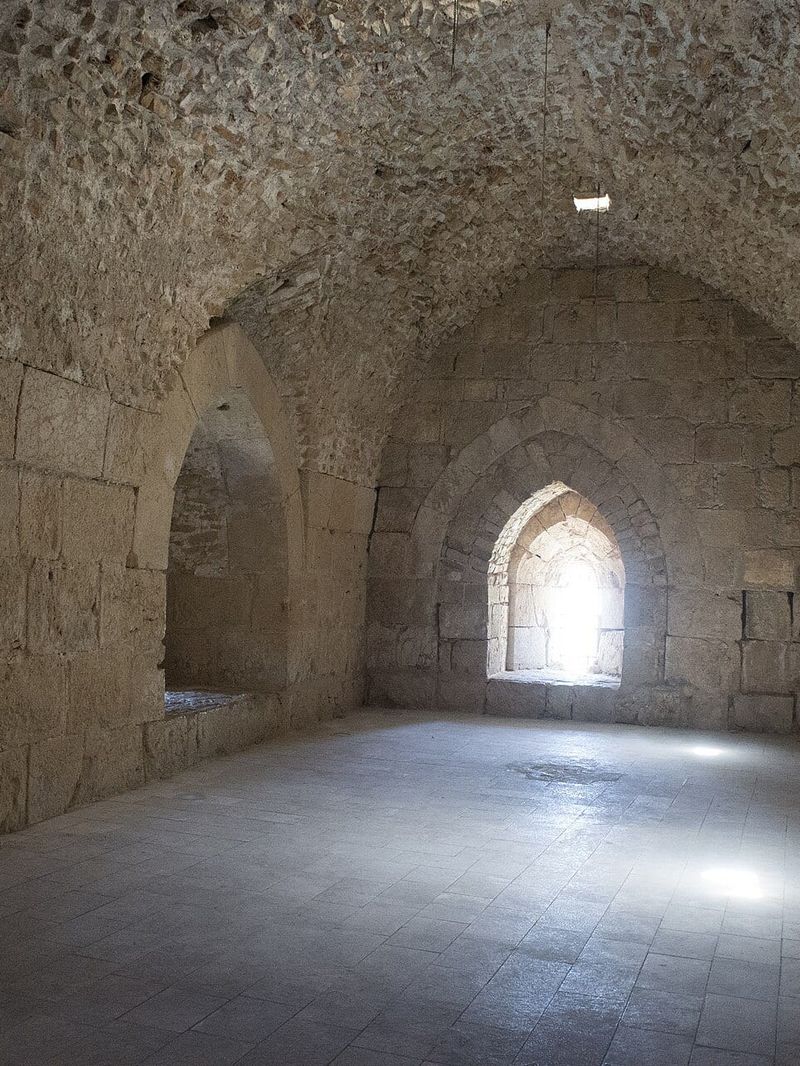
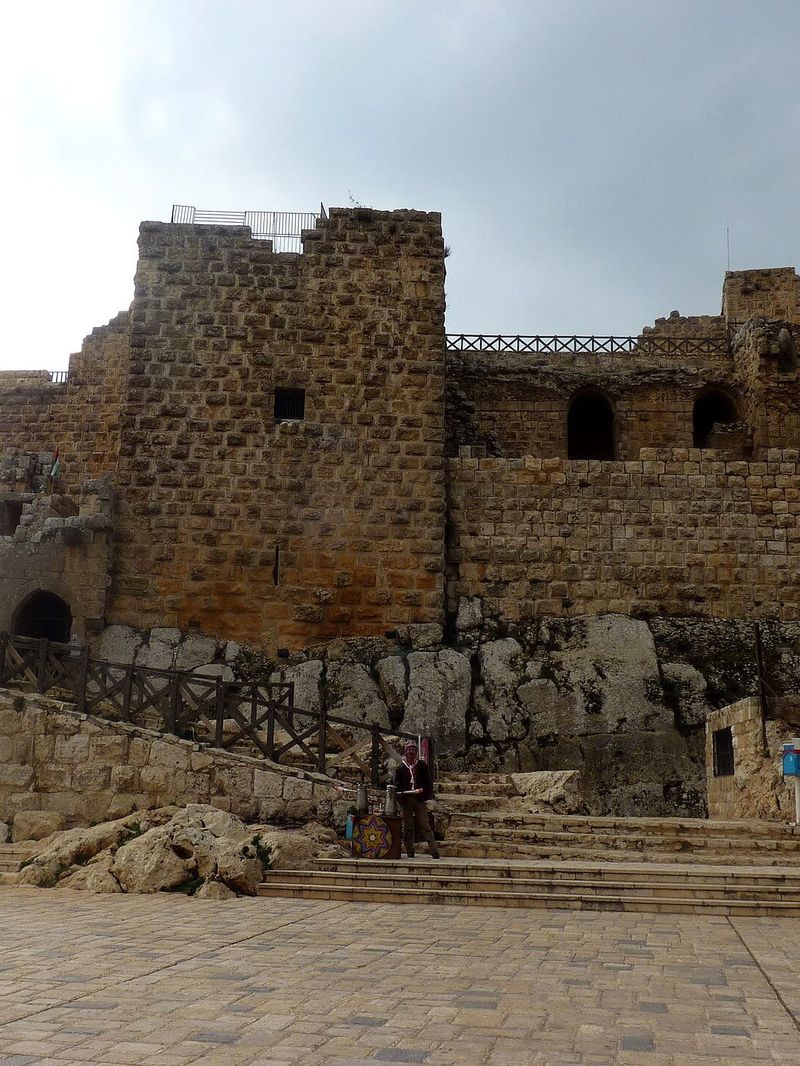
A bridge crosses the rock-cut moat to the gate. Inside, vaulted halls, stairways and towers climb on several levels. A small museum displays pottery, coins and finds from the region. From the upper towers the view reaches over olive groves and pine forest to the Jordan Valley.
Exhibo editorial
Ajloun surprises people who think Jordan is all desert. The road climbs through pines and olive groves and the castle appears on the summit, solid and square, above a green valley.
Climb all the way up. On a clear day the Jordan Valley spreads below and the reason for the castle is obvious. From this hill nothing could move on the roads without being seen.
Gallery
How to find it
About 3 km west of Ajloun town centre, up a winding road to the summit car park. Walk up past the visitor centre and cross the bridge over the moat to the gate. Steps inside are steep and uneven.