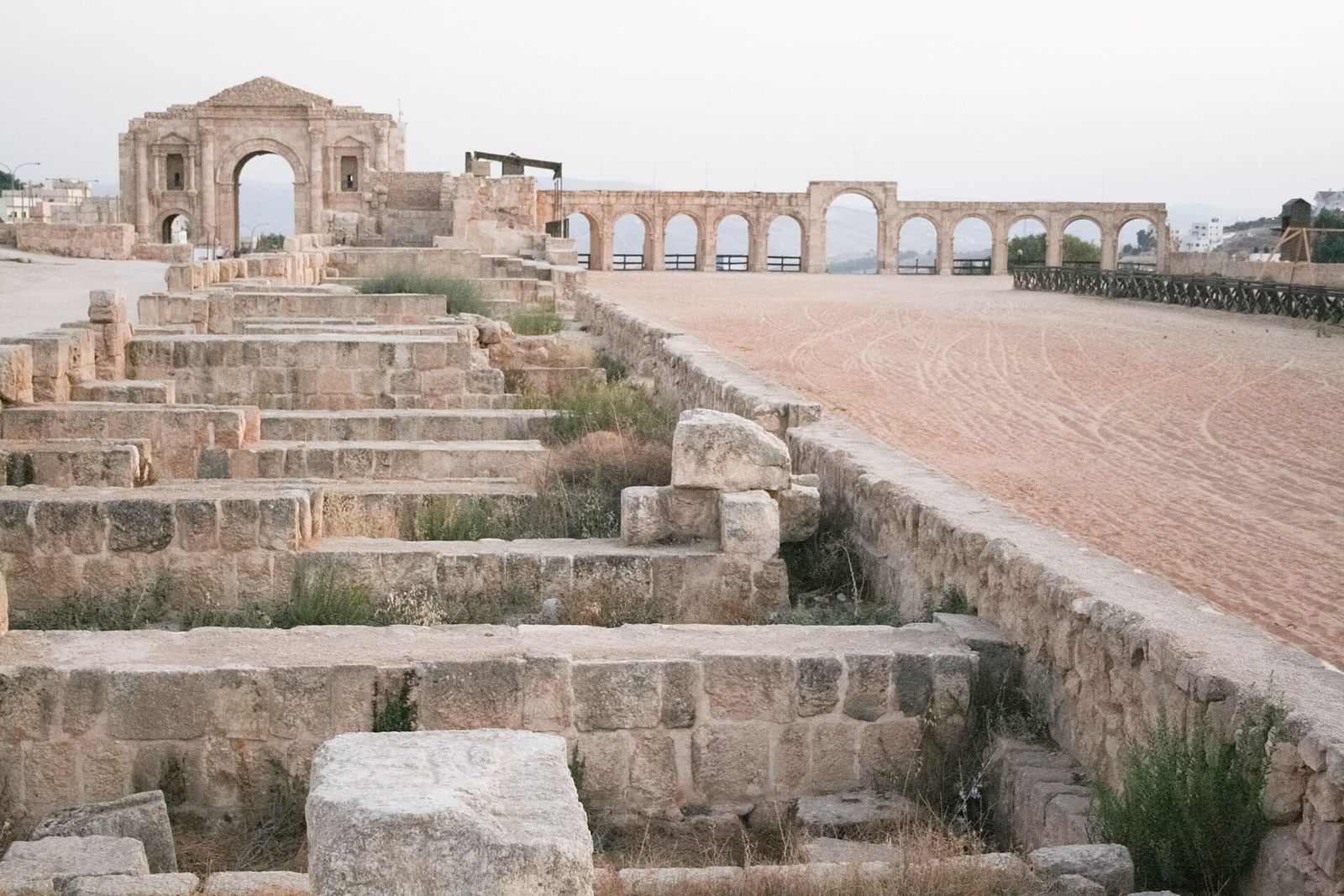
Hippodrome, Jerash
A Roman chariot-racing track of the second century, the smallest known in the empire and among the best preserved.
The arena
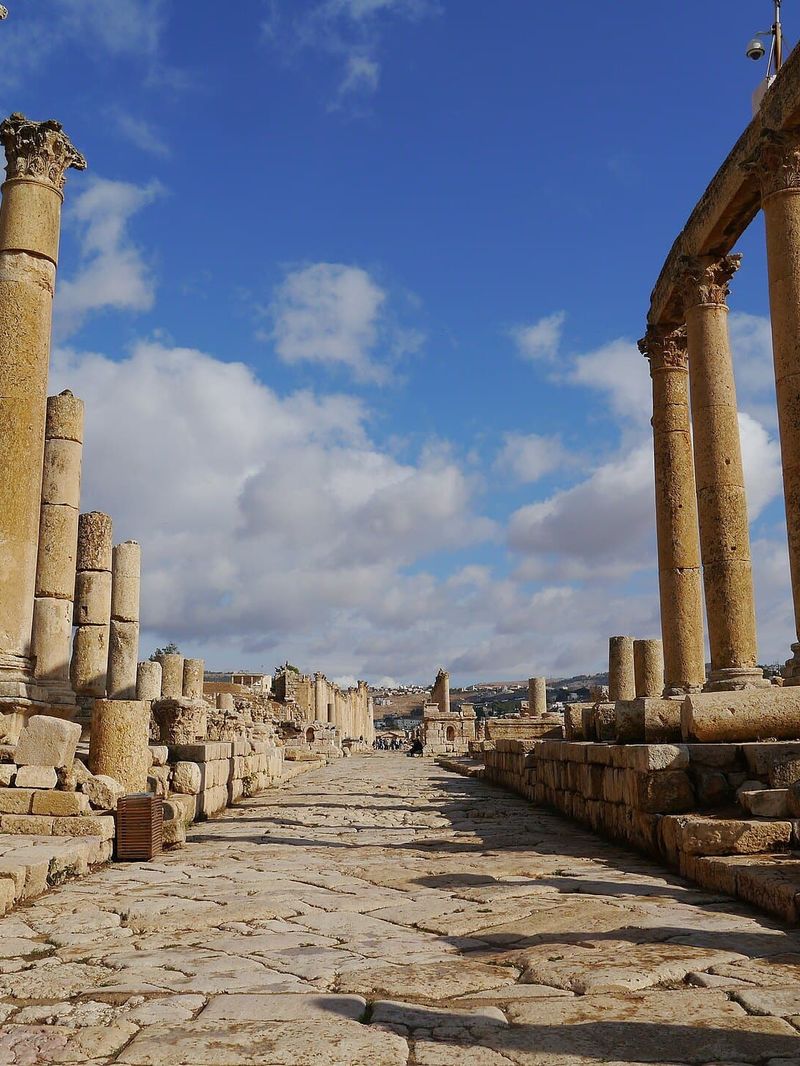
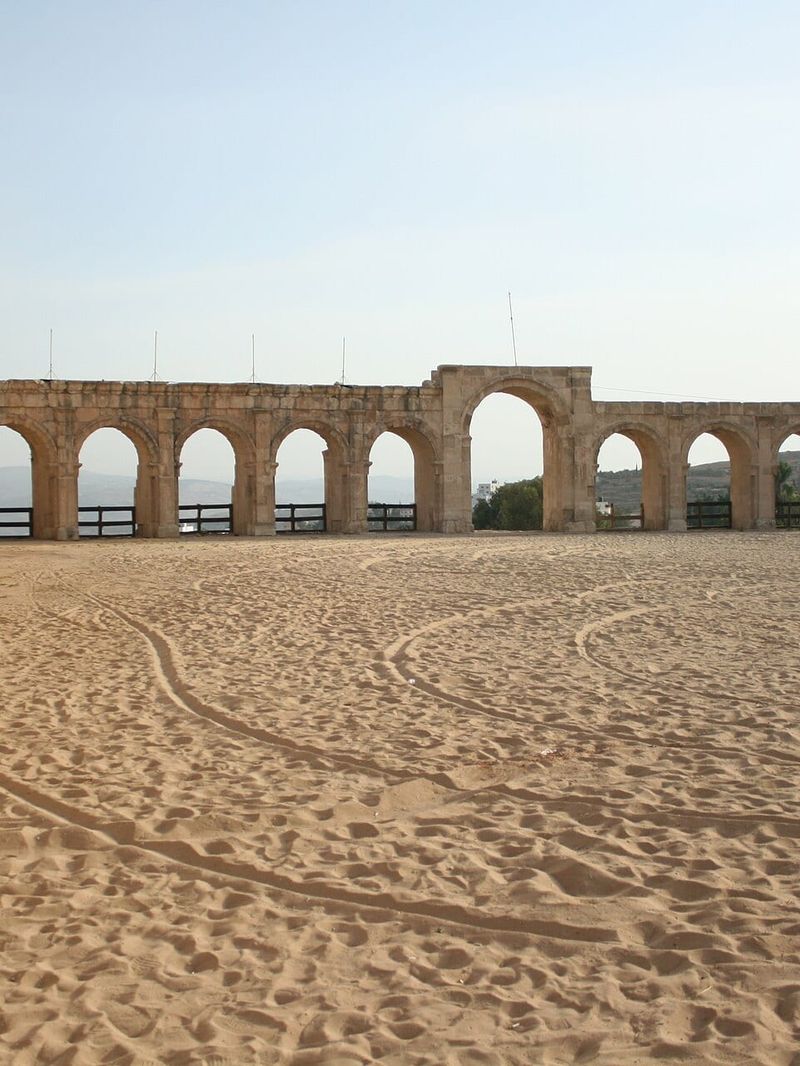
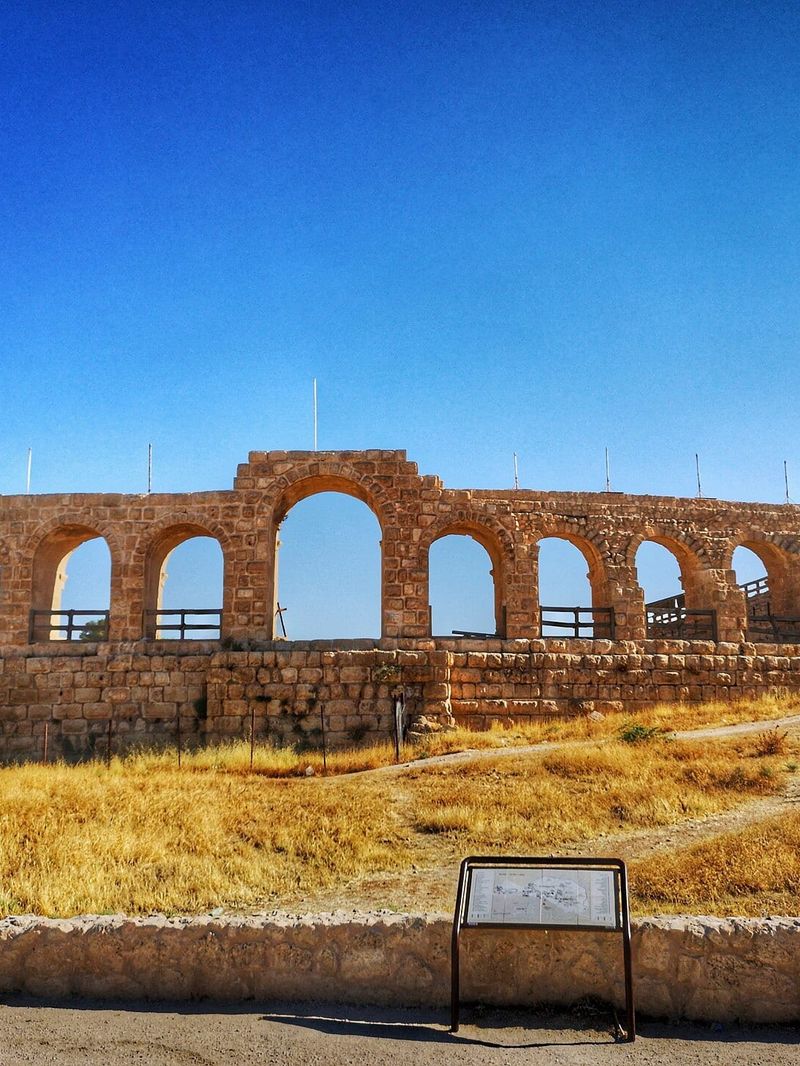
The Hippodrome of Gerasa lies just inside Hadrian's Arch, on the left of the path into Jerash. Built in the second century AD for chariot races and athletic games, the track is about 244 metres long and roughly 50 metres wide. It is the smallest known hippodrome of the Roman world and one of the best preserved. Its stands are estimated to have held up to 15,000 spectators.
Structure
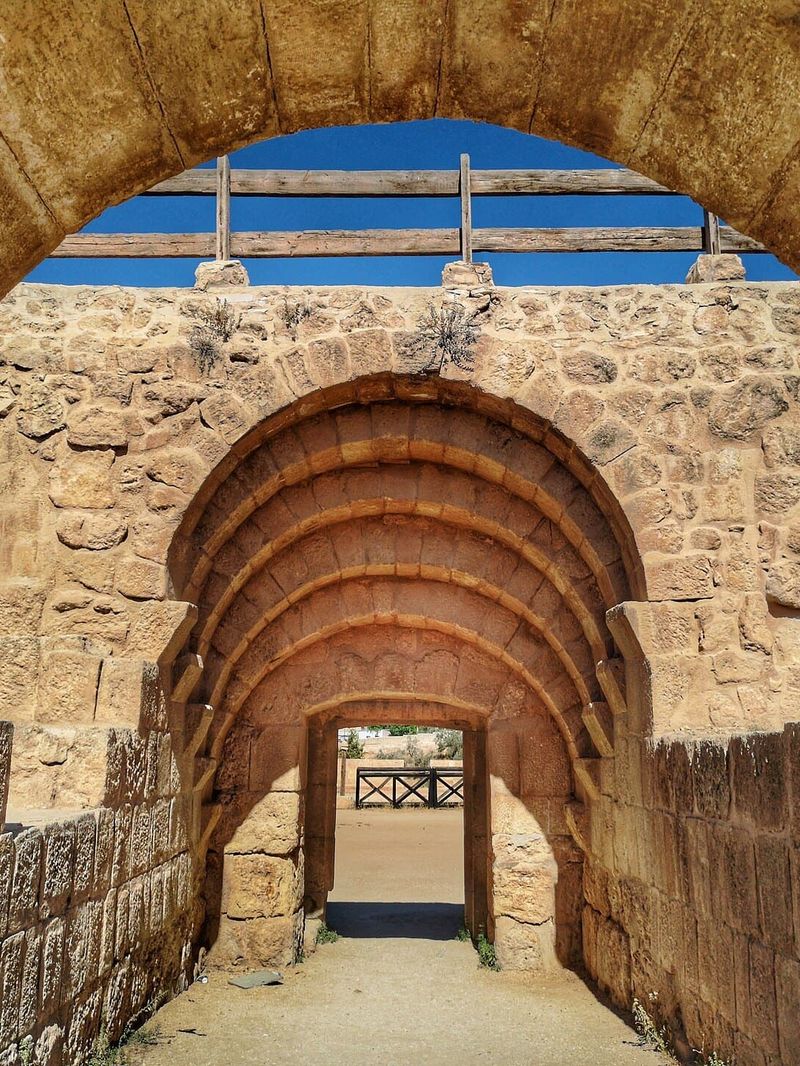
At the northern end the arched starting gates, the carceres, have been reconstructed, along with stretches of the tiered seating on vaulted substructures. An inscription at the western entrance to the Temple of Artemis honours athletes and horse breeders of the city.
Later lives
From the late fourth century the northern end was turned into an amphitheatre, while potters moved into the abandoned southern half. Between the sixth and eighth centuries the structure served as a quarry for the city wall and dyers set up workshops in its ruins. Excavation and restoration in recent decades have brought the arena back into view.
Exhibo editorial
Stand at the starting gates and look down the track. It is long enough to feel fast and short enough to see the far end, which is exactly what fifteen thousand people needed.
Gerasa was a provincial city on the edge of the desert. It built itself a racecourse anyway. That confidence is the most Roman thing about it.
Gallery
How to find it
Immediately north of Hadrian's Arch, on the left of the path from the visitor centre to the South Gate. The reconstructed starting gates face the path at the northern end.