
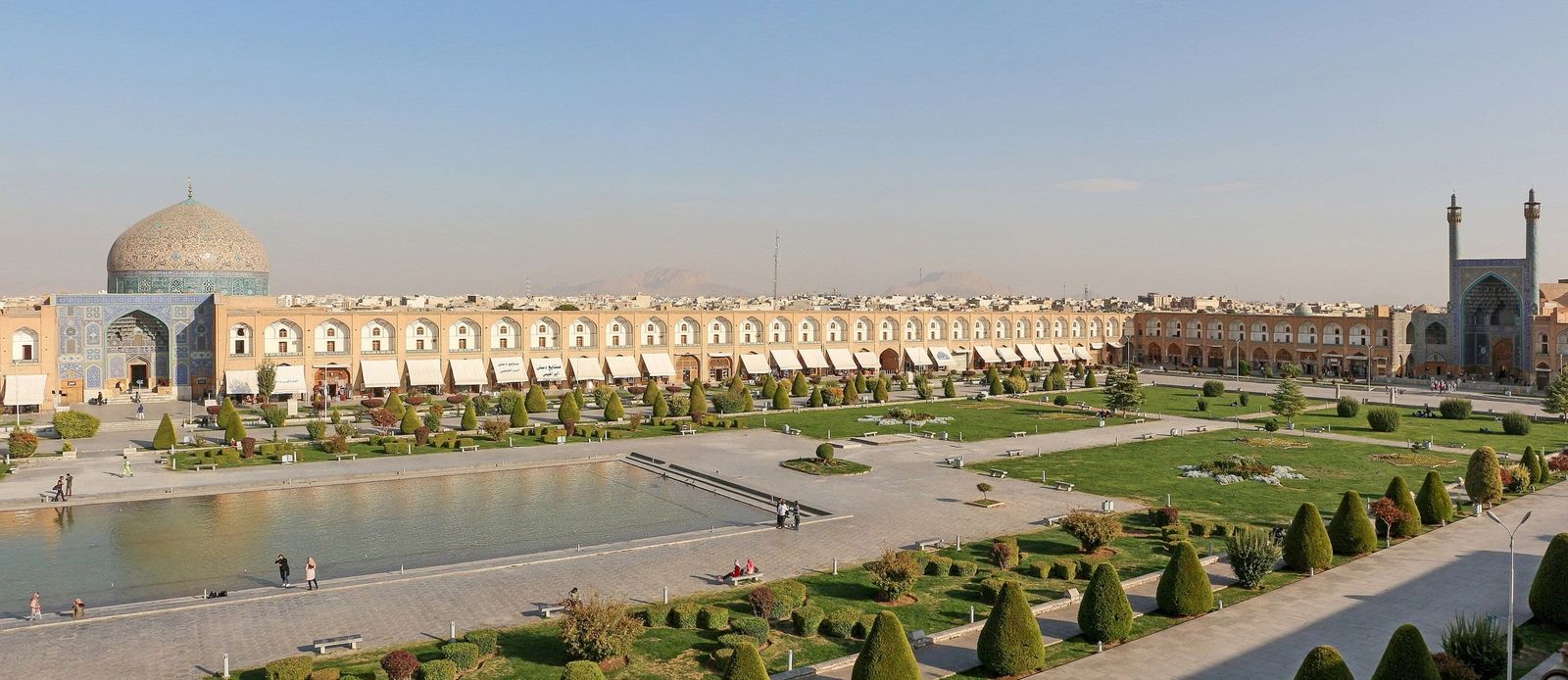
Naqsh-e Jahan Square (Meydan-e Emam), Isfahan
Shah Abbas's 'Image of the World': a royal square of nine hectares framed by two mosques, a palace and the gate of the bazaar.
The heart of a Safavid capital
In 1598 Shah Abbas I, the greatest of the Safavid rulers, made Isfahan the capital of Persia. At the centre of his new city he laid out a vast public square. It was called Naqsh-e Jahan, the Image of the World. It was also known as Meydan-e Shah, the Royal Square. After the revolution of 1979 it was renamed Meydan-e Emam. UNESCO inscribed it on the World Heritage List the same year.
The square is 560 metres long and 160 metres wide, almost 9 hectares, one of the largest city squares in the world. A continuous two-storey arcade of shops runs round all four sides. Behind its arches the merchants of Isfahan still sell carpets and the handicrafts of the city.
Four buildings, four powers
Each side of the square is anchored by a great building. To the south rises the Shah Mosque, now the Imam Mosque, begun in 1611 for the people of the city. Its entrance portal faces the square, but the mosque behind it turns at an angle to face Mecca. Tile mosaics in blue and yellow cover its domes, minarets and courtyards.
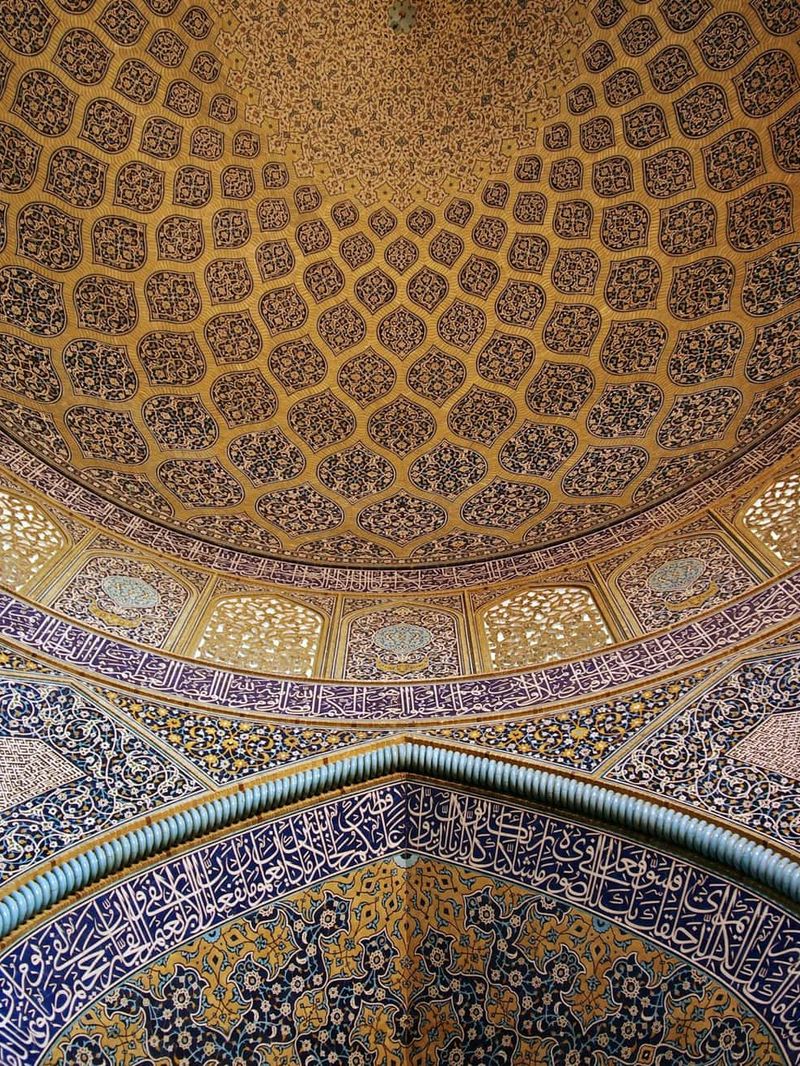
To the east stands the Sheikh Lotfollah Mosque, built between about 1603 and 1619 as a private mosque for the royal court. It has no minarets. Its cream-coloured dome and the patterned ceiling of its prayer hall are among the masterpieces of Safavid architecture.
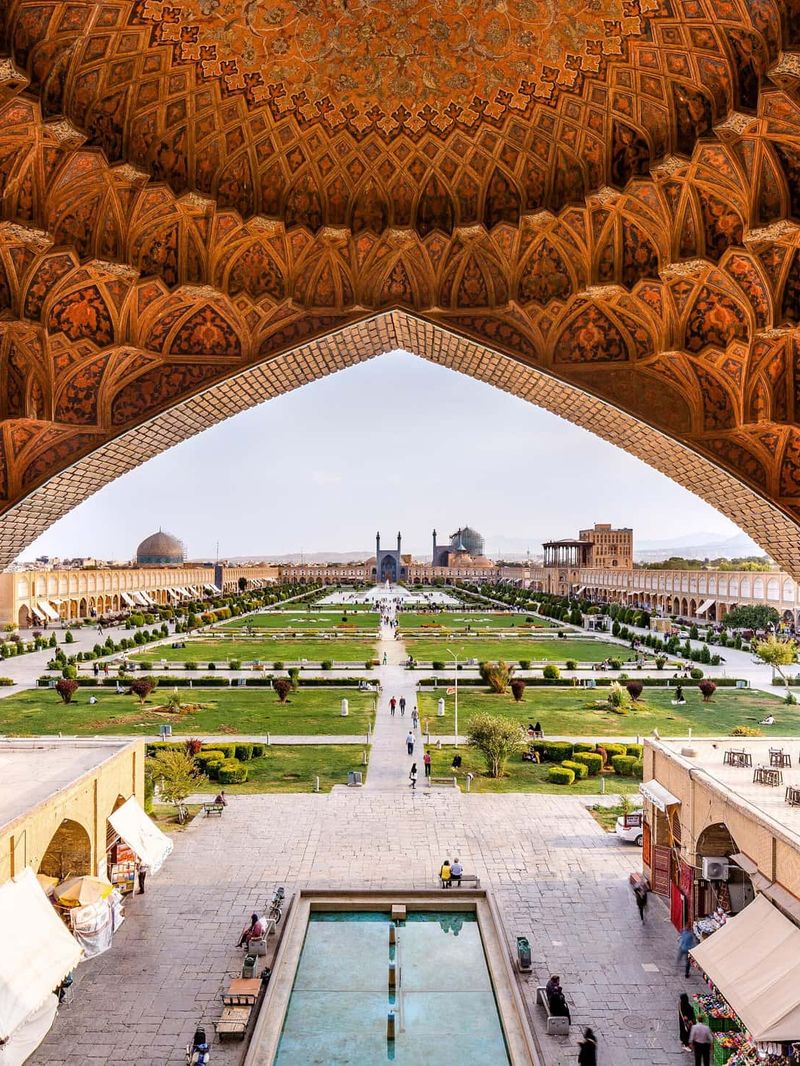
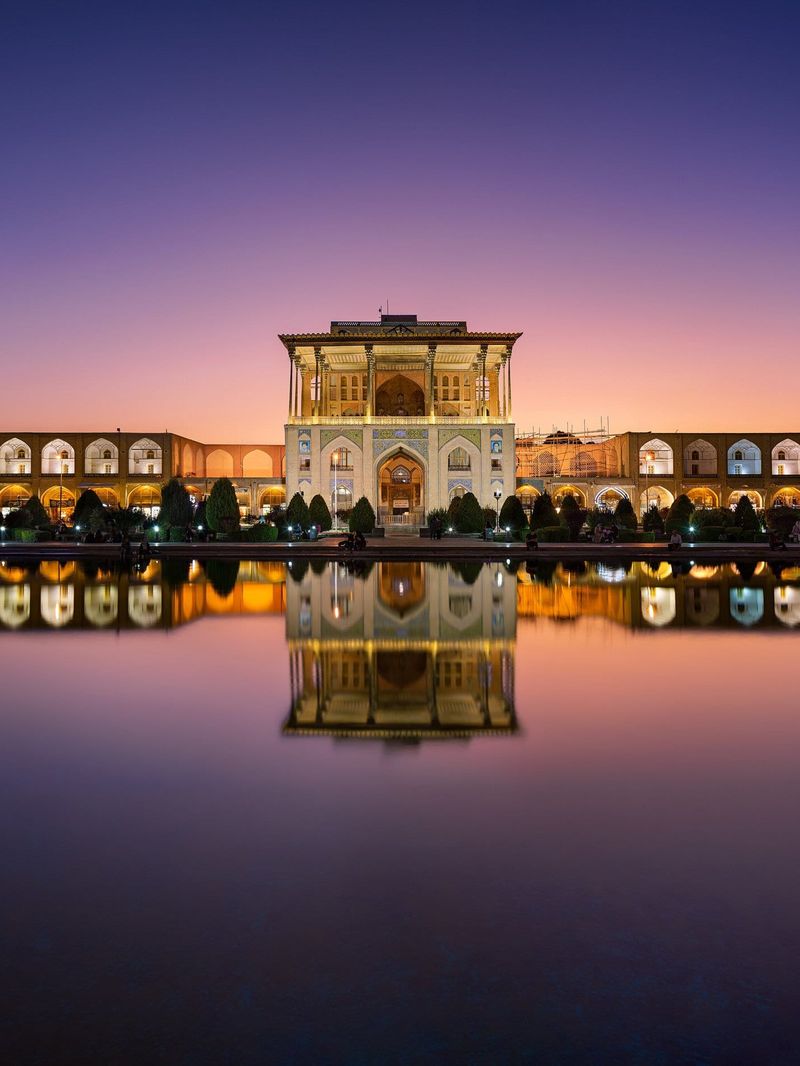
To the west is the Ali Qapu, the High Gate, the entrance to the royal palaces and gardens behind. Shah Abbas raised it into a palace of several storeys with a covered terrace, the talar, from which the court watched events in the square. To the north the portal of the Qeysariyeh opens into the Grand Bazaar of Isfahan, which runs for some 2 km through the old city.
A square for everything
The open ground was used for markets, festivals, military parades and executions. It was also the royal polo field. The stone goalposts still stand at both ends of the square. Today the sandy esplanade has become gardens with a long pool and fountains. The square is a favourite evening meeting place for the people of Isfahan.
Exhibo editorial
Persian cities were built close and inward, lanes and courtyards out of the sun. Then Shah Abbas opened up this enormous space in the middle of his capital. The mosque, the palace and the market faced each other across it, so that faith, power and money could all be seen from one spot.
Come before sunset and stay. The tiles lose their glare, the fountains come on, families spread rugs on the grass and the horse carriages start their slow rounds. Then the arcades light up and the square becomes the city's living room.
Gallery
How to find it
The square is in the centre of Isfahan, a short walk north of Chahar Bagh Abbasi Avenue. The square itself is open at all hours. The Imam Mosque, the Sheikh Lotfollah Mosque and the Ali Qapu each have their own opening hours and tickets.
News by Exhibo
Editorial coverage on Exhibo
Where Is Agrabah? The City Disney Assembled From Real Places
Agrabah was going to be Baghdad. A war made it fictional — and then Disney built it back out of real places, from a tomb in Agra to a valley in Jordan that usually plays Mars.
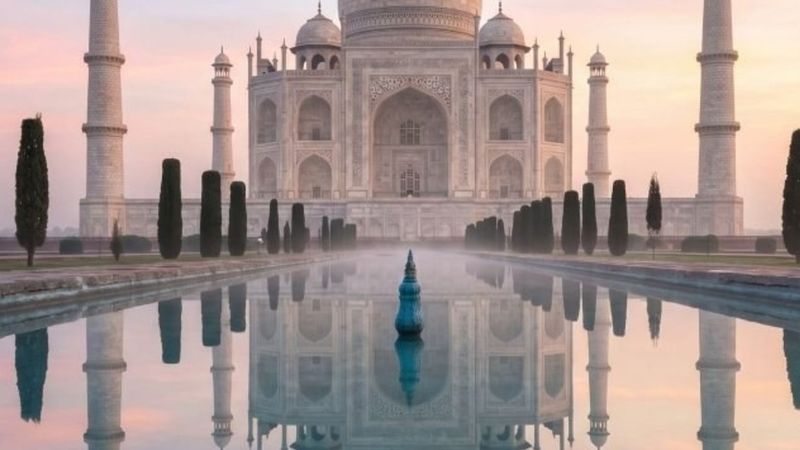
The Sultan's palace where Princess Jasmine feels trapped has the silhouette of the Taj Mahal — which is not a palace at all, but a tomb. That is how Agrabah works. Disney's fairy-tale city was going to be Baghdad, until the Gulf War made the name impossible; the studio invented a place that could not be found on a map, then quietly rebuilt it out of real ones — Isfahan and Agra, Marrakesh and Mandalay, a Jordanian desert that has played both Arabia and Mars.
Why Disney Made the Genie Blue
The long material and colonial history behind the most recognizable blue body in popular culture.
Almost everyone remembers that Disney's genie is blue. Fewer ask why. The answer runs backward through five thousand years — Egyptian blue standing in for lapis, cobalt on a Mongol palace, the eye that guards against envy, the last color most languages learned to name, and a layout artist photographing Isfahan just before a war — to a color that was rarely, in this part of the world, quite what it claimed to be.