Tunis Village Pottery
The Fayoum village transformed by a Swiss potter into Egypt's pottery capital — workshops, a pottery school and lake views.
A village of potters
Tunis is a village on a hillside above the southern shore of Lake Qarun, in the north-west of the Fayoum. Until the mid-twentieth century it was a small farming and fishing community. In the 1960s, the Swiss potter Evelyne Porret and her husband, the Egyptian poet Sayed Hegab, discovered the village, and Porret built a mud-brick house and studio there, its domes and vaults inspired by Nubian and Hassan Fathy-style architecture. In the 1980s she founded the Fayoum Pottery School, teaching village children to work with clay. Over the following decades, more than a hundred local potters trained under her and went on to open their own workshops, turning Tunis into Egypt's best-known pottery village.
Fayoum pottery
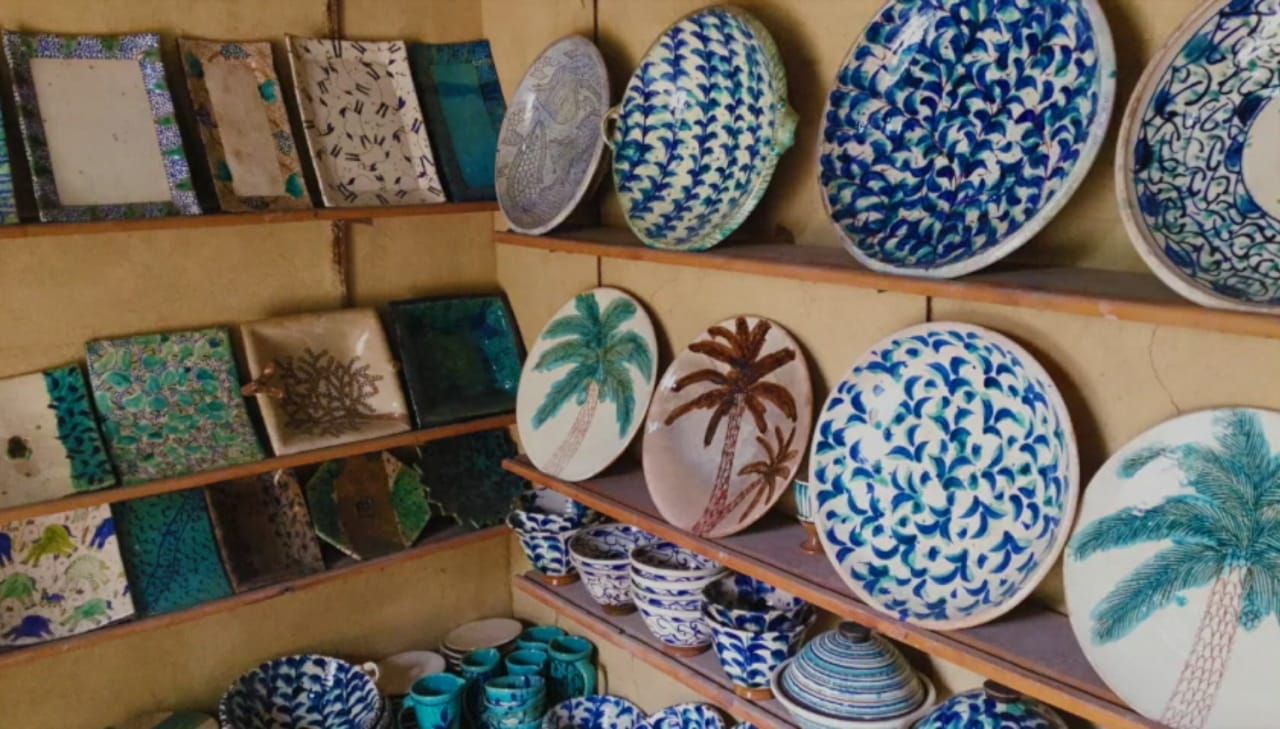
Tunis pottery is hand-made on the wheel and decorated with colourful glazes and painted motifs — birds, fish, flowers, village scenes and animals of the oasis — drawing on the long tradition of Fayoum ceramics. The village's main street, renamed Evelyne Street after Porret's death in 2021, is lined with workshops, studios and shops where visitors can watch potters at work, take classes and buy directly from the artisans. An annual pottery festival, founded in 2011, brings potters and visitors together each year.
A creative retreat
The distinctive mud-brick architecture, the views over the lake and the creative atmosphere have also attracted artists, writers and eco-lodges. The Fayoum Art Center, founded by the painter Mohamed Abla, and its Caricature Museum are in the village, and Tunis is a natural base for visiting Wadi el-Rayan, Wadi el-Hitan and Qasr Qarun.
Exhibo editorial
Tunis is the gentlest place in the Fayoum: dusty lanes, domed mud-brick houses covered in bougainvillea, cats asleep on doorsteps, and every few metres a pottery workshop with plates and bowls glowing in blues, greens and yellows. Down the hill, Lake Qarun shimmers silver.
It's a village built by one woman's passion and carried on by the children she taught, now grown-up masters with their own studios. Take a class, buy something made by the person who sells it to you, stay the night in an eco-lodge and watch the sun set over the lake. It's the best antidote to Cairo there is.
How to find it
Tunis lies about 2 hours by car south-west of Cairo, on the hillside above the southern shore of Lake Qarun, past Fayoum city. Follow the signs to Tunis village; the main street, Evelyne Street, runs through the centre, lined with workshops, and the Fayoum Pottery School is near Evelyne Porret's former house.