Karanis (Kom Aushim)
A Greco-Roman farming town on the edge of the Fayoum, with crocodile-god temples and the houses where thousands of papyri were found.
A town of veterans and farmers
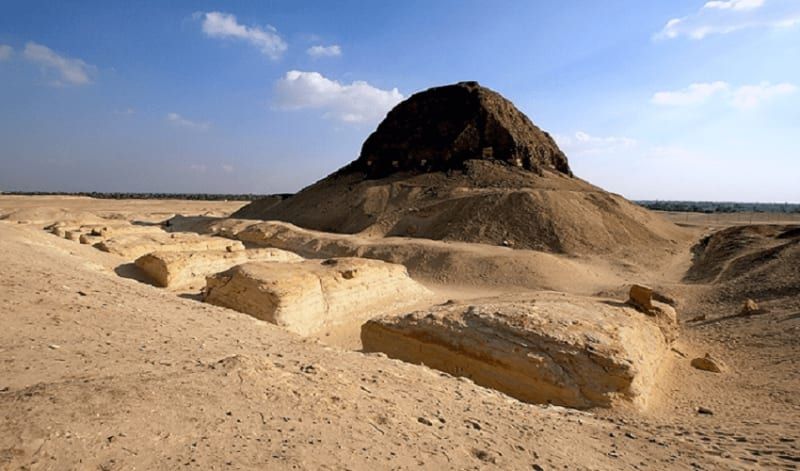
Karanis, at Kom Aushim on the north-eastern edge of the Fayoum, was founded in the third century BC under Ptolemy II, when the Ptolemaic kings reclaimed land around Lake Moeris and settled Greek veterans and Egyptian farmers in new towns. It flourished for some seven centuries as an agricultural town of several thousand inhabitants, growing wheat and other crops, until it was abandoned in the fifth century AD as the irrigation canals failed and the desert advanced.
Temples and houses
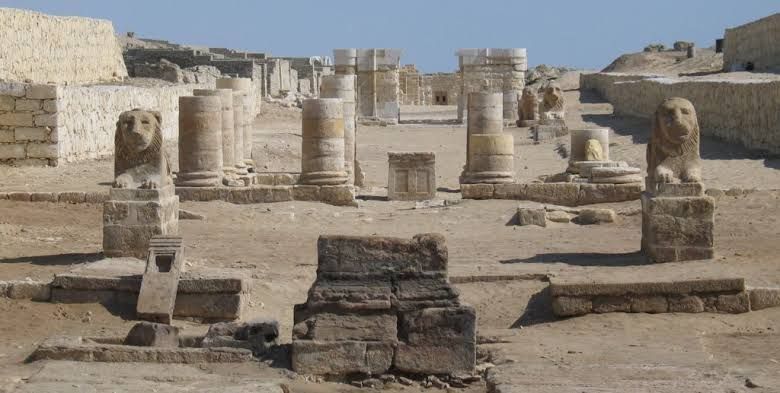
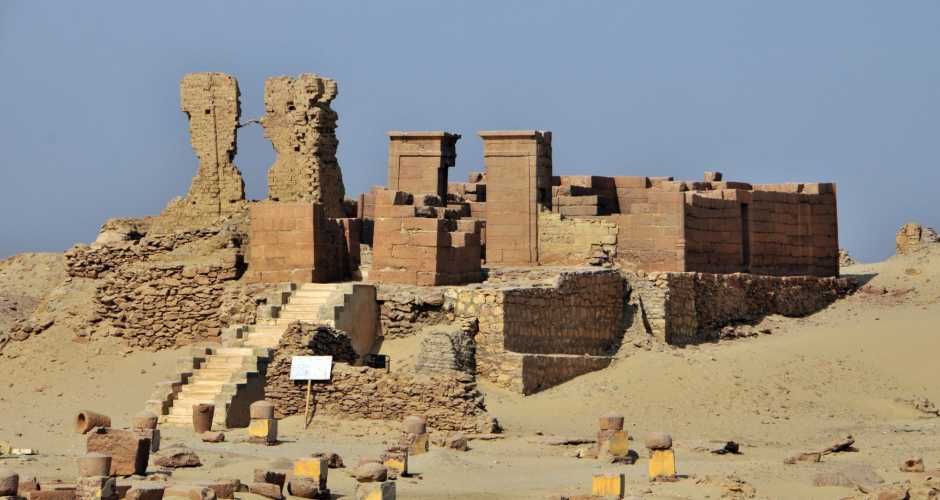
The town's two main temples were dedicated to local forms of the crocodile god Sobek, Pnepheros and Petesuchos. The southern temple, of limestone, still stands with its gateway, courtyard and inner rooms, including a niche where the mummified sacred crocodiles may have been kept. Around it lie the remains of streets, granaries, baths and hundreds of mud-brick houses, many of them several storeys high.
The Michigan excavations
Between 1924 and 1935, the University of Michigan excavated large parts of Karanis, uncovering an extraordinary quantity of everyday objects — tools, toys, textiles, baskets, glass, coins — and thousands of papyri in Greek, Latin, Demotic and Coptic, including tax records, letters, contracts and petitions, which make Karanis one of the best-documented towns of Roman Egypt. Many of these finds are now at the Kelsey Museum of Archaeology in Ann Arbor. The Kom Aushim Museum at the entrance to the site presents the history of the Fayoum.
Exhibo editorial
Karanis is a town you can walk through: lanes between crumbling mud-brick houses, the stairs of a granary, a doorway leading nowhere, the stone temple of the crocodile gods at the centre. In the low afternoon light, with the desert on one side and the green fields of the Fayoum on the other, it's easy to imagine farmers coming home from the canals.
Much of what we know about ordinary life in Roman Egypt — what people paid in taxes, what they wrote to their families, what they argued about in court — comes from the papers found in these houses. Start in the small museum at the gate, then wander.
How to find it
Karanis lies beside the Cairo–Fayoum desert road at Kom Aushim, about 1.5 hours from Cairo, at the north-eastern entrance to the Fayoum. Stop at the Kom Aushim Museum by the road, then walk into the site behind it; the southern stone temple is a few minutes' walk along the main path.