Hawara Pyramid
The mud-brick pyramid of Amenemhat III, the site of Herodotus's Labyrinth and the cemetery of the Fayoum portraits.
The pyramid of Amenemhat III
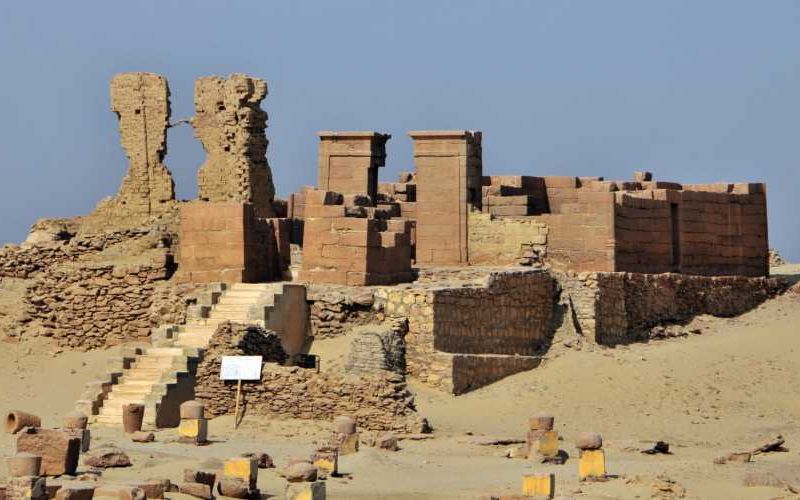
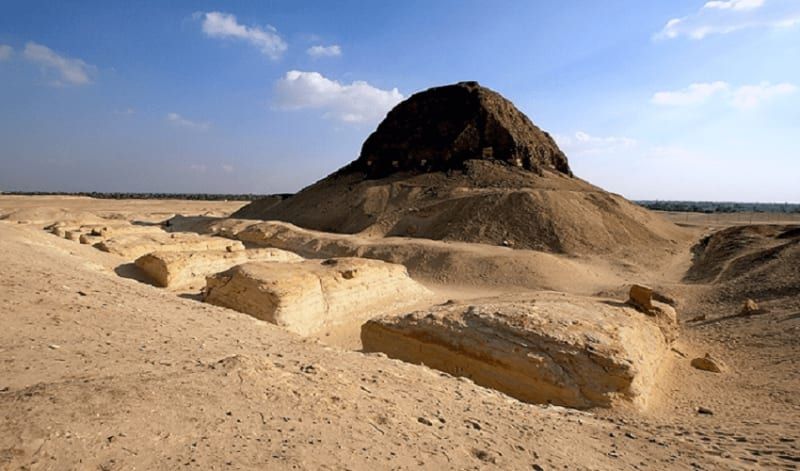
Hawara lies at the south-eastern entrance to the Fayoum, near the town of Fayoum. Here Amenemhat III, one of the great kings of the Twelfth Dynasty in the nineteenth century BC, who did much to develop the Fayoum, built his second pyramid (his first, at Dahshur, had structural problems). Built of mud brick around a stone core and once cased in limestone, it is now a weathered mound, but inside it contained an ingenious system of hidden passages, false corridors and blocking stones designed to defeat robbers, and a burial chamber cut from a single enormous block of quartzite.
The Labyrinth
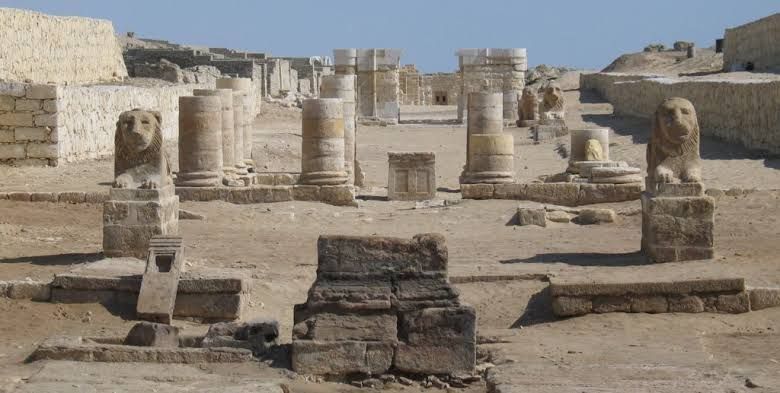
To the south of the pyramid lay the king's mortuary temple, an immense complex that Greek and Roman writers described as the Labyrinth. Herodotus, who visited it in the fifth century BC, claimed it surpassed even the pyramids, with thousands of rooms above and below ground. Very little of it survives today beyond scattered fragments and foundations, quarried away in Roman and later times, but the site has fascinated travellers and archaeologists for centuries.
The Fayoum portraits
In 1888 the British archaeologist Flinders Petrie excavated the Roman-period cemetery at Hawara, discovering dozens of mummies bearing painted portraits on wooden panels, now known as Fayoum portraits. Painted in encaustic or tempera in the first to third centuries AD, they show the faces of the inhabitants of Roman Egypt with striking realism, and are regarded as the earliest surviving tradition of portrait painting and a forerunner of Byzantine icons. They are now in museums around the world.
Exhibo editorial
At first sight Hawara is a disappointment: a slumped mud-brick hill in the desert. Then you remember what lies around it. Somewhere under the sand to the south was the Labyrinth that astonished Herodotus; and in the cemetery here, Petrie found the painted faces of Roman Egypt — young men with curly beards, women with gold earrings, looking back at us with unsettling directness.
Come for the story more than the sight, walk round the pyramid and over the field of the Labyrinth, and then go and see the portraits in Cairo or in a museum abroad. You will never look at them the same way again.
How to find it
Hawara lies about 10 km south-east of Fayoum city, off the road towards Beni Suef, reached by car. From the ticket office, a short walk leads to the pyramid; the area of the Labyrinth lies to its south.