Philae Temple (Temple of Isis)
The island sanctuary of Isis, rescued from the rising Nile and rebuilt on Agilkia — the last stronghold of the ancient Egyptian religion.
The island of Isis
Philae was the great sanctuary of the goddess Isis in the south of Egypt, on an island in the Nile just above the First Cataract near Aswan. Isis — the devoted wife of Osiris and mother of Horus, the great magician and protector — was worshipped across the Mediterranean world, and Philae became one of her most important pilgrimage centres. Most of the temples visible today were built under the Ptolemies and the Roman emperors, between the third century BC and the third century AD, on a site already sacred under the last native pharaohs.
The last temple
Philae was the last place where the old Egyptian religion was openly practised. Pilgrims from Nubia continued to worship Isis here long after Christianity had become the religion of the empire, and the last known inscription in Egyptian hieroglyphs, dated 394 AD, was carved on its walls; demotic graffiti continued into the fifth century. The temple was finally closed under the emperor Justinian in the sixth century and part of it was converted into a church, whose Coptic crosses can still be seen carved into the reliefs.
Monuments
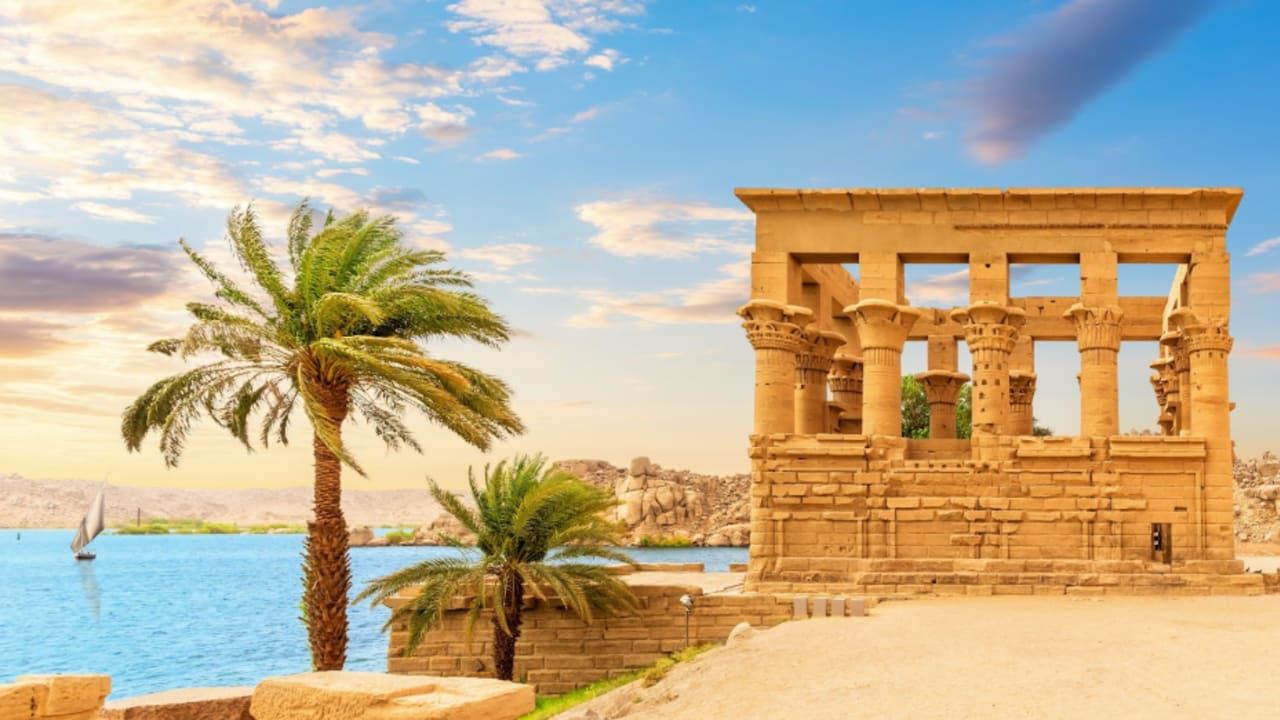
The main Temple of Isis is entered through a great pylon carved with reliefs of Ptolemy XII smiting enemies, leading to a forecourt, a birth house (mammisi) and a second pylon before the inner sanctuary. Around it stand the elegant Kiosk of Trajan — an unfinished open pavilion with fourteen columns that has become the emblem of Philae — the Temple of Hathor, the Gate of Hadrian with a relief of the source of the Nile, and colonnades along the water.
Saved from the flood
After the construction of the first Aswan Dam in 1902, Philae was flooded for much of each year, and after the High Dam was built it would have been submerged permanently. In one of the great achievements of the UNESCO International Campaign to Save the Monuments of Nubia, the temples were dismantled into tens of thousands of blocks between 1977 and 1980 and rebuilt on the higher island of Agilkia nearby, landscaped to resemble the original. Philae is part of the UNESCO World Heritage Site of the Nubian Monuments from Abu Simbel to Philae.
Exhibo editorial
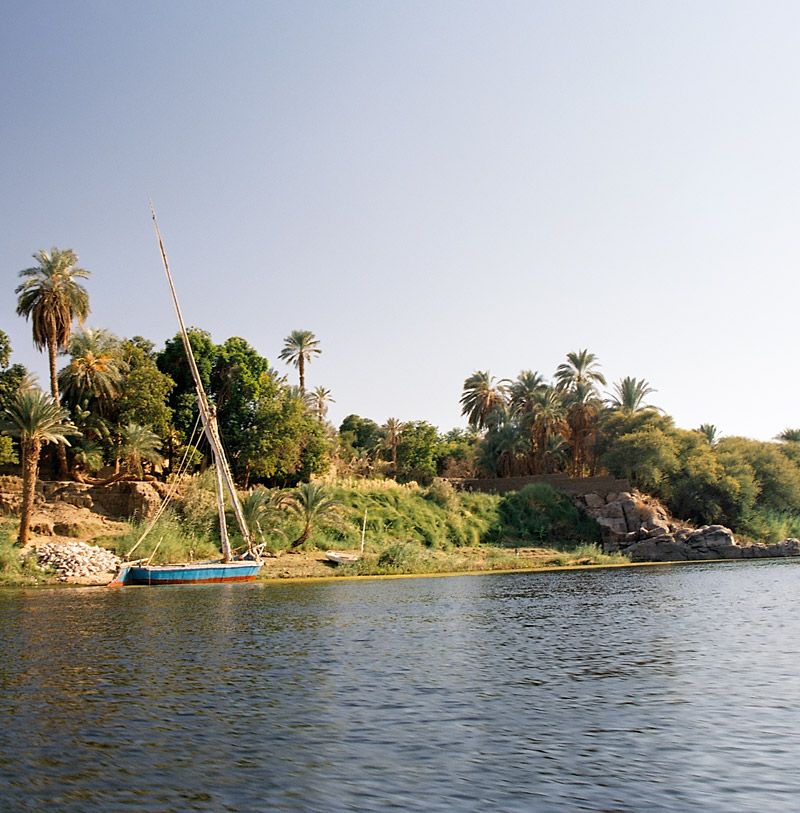
The approach is the magic: a small motorboat across the dark water of the reservoir, granite boulders on every side, and then the colonnades of Philae rising from the island like a mirage. No other temple in Egypt is arrived at like this, and none sits more beautifully in its landscape.
Walk to Trajan's Kiosk at the water's edge, then look for the Coptic crosses carved over the reliefs inside — the precise moment when one religion gave way to another, written on the walls. Come early in the morning, before the light gets hard, and let the boatman take the long way round on the return so you can see the island from every side.
How to find it
Take a taxi from Aswan (about 20 minutes) to the Marina Philae landing at Shellal, between the old Aswan Dam and the High Dam. Buy your temple ticket at the kiosk, then hire a motorboat at the official rate for the round trip to Agilkia Island; agree the waiting time with the boatman. From the landing, walk up to the first pylon of the Temple of Isis; Trajan's Kiosk is on the eastern shore of the island.