Kalabsha Temple and Beit el-Wali
The largest free-standing temple of Nubia, moved stone by stone beside the High Dam — with a rock temple of Ramesses II.
A Nubian god under Augustus
The Temple of Kalabsha was built in the reign of the Roman emperor Augustus, in the late first century BC, on a site where earlier temples had stood, at Talmis (Bab al-Kalabsha) in Lower Nubia, some 50 kilometres south of Aswan. It was dedicated to Mandulis, a Nubian sun god, and is the largest free-standing temple in Egyptian Nubia. Its pylon, courtyard, hypostyle hall and sanctuary follow the classic plan of Egyptian temples, and its walls preserve reliefs of the emperor as pharaoh before Mandulis, Isis and Osiris, as well as later inscriptions recording the history of Nubia under Roman rule.
Moved to safety
With the construction of the Aswan High Dam, Kalabsha was among the first monuments to be rescued in the UNESCO International Campaign to Save the Monuments of Nubia: between 1961 and 1963 a team funded by West Germany dismantled it into some 13,000 blocks and rebuilt it on a promontory near the High Dam, at New Kalabsha. In gratitude, Egypt gave Germany one of the temple's gateways, now displayed in the Egyptian Museum in Berlin.
Beit el-Wali and Qertassi
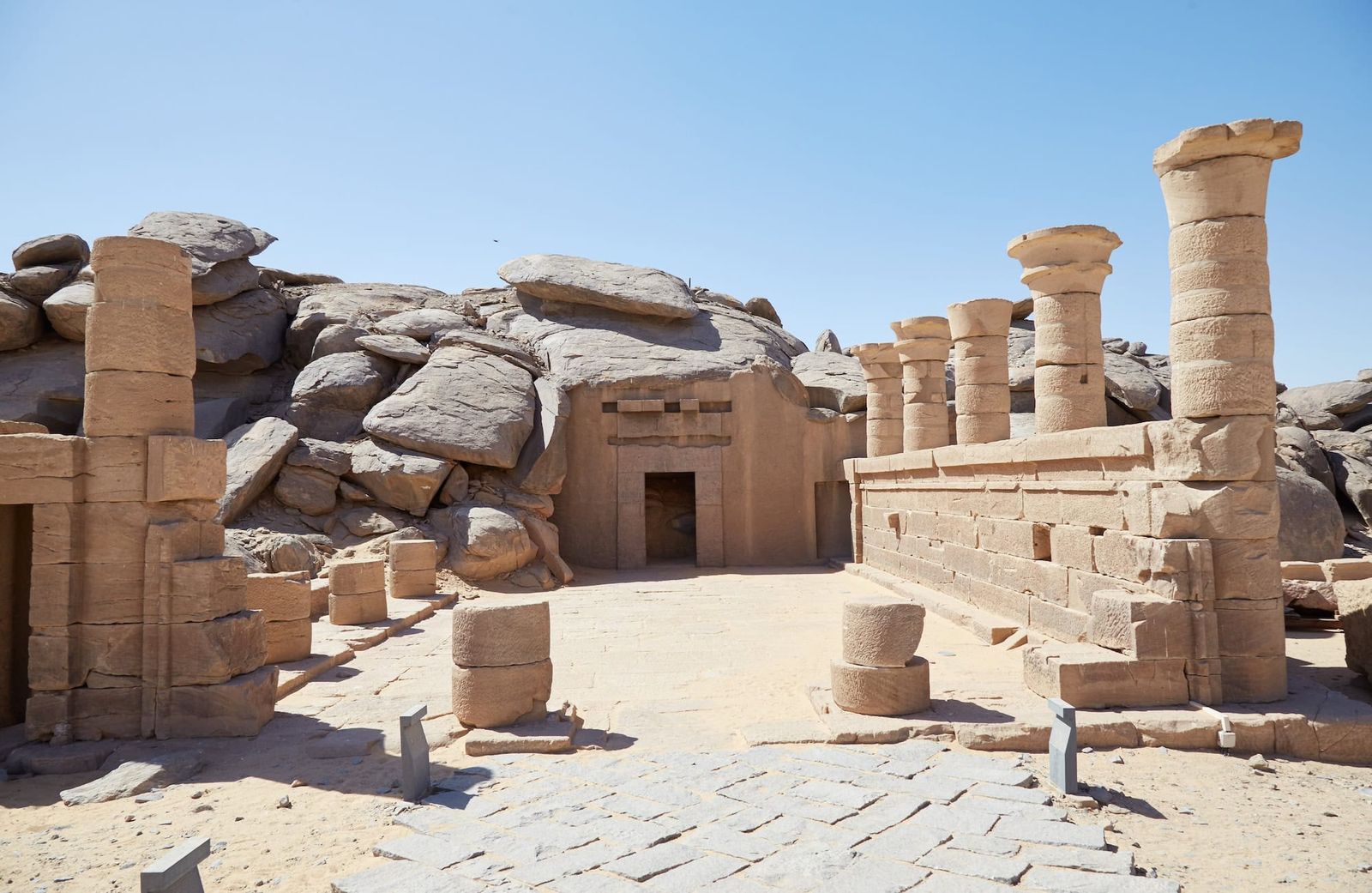
Beside Kalabsha stand other rescued monuments: the small rock-cut temple of Beit el-Wali, built for Ramesses II and decorated with lively, colourful reliefs of his wars against Nubians and Libyans and of Nubians bringing tribute — animals, ebony, gold — and the elegant Kiosk of Qertassi, a Roman pavilion with Hathor-headed columns. Also nearby are rock inscriptions and smaller monuments moved from flooded sites.
Visiting
The site is reached by boat from the High Dam's western harbour and receives few visitors, making it one of the quietest and most atmospheric ancient sites around Aswan. It is part of the UNESCO World Heritage Site of the Nubian Monuments from Abu Simbel to Philae.
Exhibo editorial
Few travellers make it here, which is exactly why you should. A short boat ride from the High Dam drops you on a rocky peninsula where a full-sized Roman-era temple stands alone above the lake, its pylon catching the morning light, with the rescued kiosks and chapels of drowned Nubia scattered around it.
Don't miss Beit el-Wali, a tiny rock temple whose reliefs of Nubian tribute — giraffes, monkeys, leopard skins, rings of gold — are as fresh and lively as a picture book. It's an hour or two of near-solitude, and one of the most poignant reminders of everything the lake swallowed.
How to find it
Take a taxi from Aswan to the western end of the High Dam and the harbour below it, where boatmen take visitors across to the New Kalabsha promontory. The Temple of Kalabsha is the large building on the peninsula; Beit el-Wali is cut into the rock a short walk uphill behind it, and the Kiosk of Qertassi stands near the shore.