Directory listing — not yet managed by the museum. Spotted something wrong? Suggest an edit →

The Fitzwilliam Museum

The Fitzwilliam Museum

hackneyLondon

University of Cambridge museum of art and antiquities, from Egyptian coffins to Titian and Monet (about 80 km north of London)

About

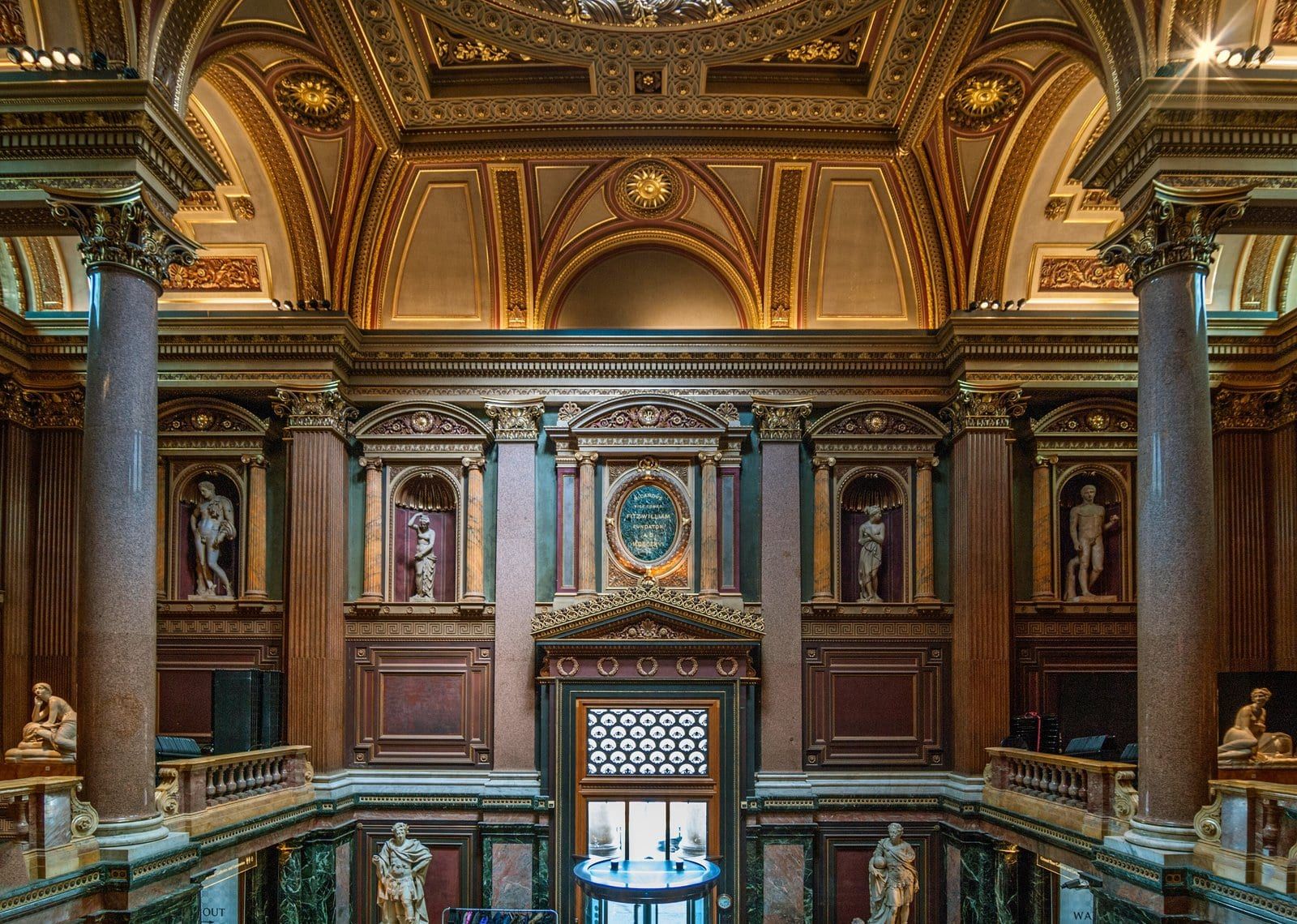
The Fitzwilliam Museum is the art and antiquities museum of the University of Cambridge. It stands on Trumpington Street in the centre of Cambridge, about 80 km north of London. Its collections run from ancient Egypt and Greece to modern and contemporary art. They include paintings, drawings, prints, illuminated manuscripts, coins and medals, ceramics, arms and armour. The museum was founded in 1816 by the bequest of Richard FitzWilliam, 7th Viscount FitzWilliam of Merrion. He left the university his paintings, prints, books and music manuscripts along with money for a building to house them. The neoclassical Founder's Building was designed by George Basevi and begun in 1837. After Basevi's death it was completed by C. R. Cockerell; the entrance hall was finished later by E. M. Barry. Its giant Corinthian portico faces the street. The painting galleries hold works by Titian, Veronese, Rubens, Van Dyck, Rembrandt, Gainsborough, Constable, Monet, Renoir and Cézanne. The Egyptian galleries show coffins, sculpture and objects of daily life. The museum is also known for its illuminated manuscripts, its English and Chinese ceramics and one of the largest coin collections in Britain. The Fitzwilliam is open Tuesday to Saturday from 10:00 to 17:00 and on Sunday from 12:00 to 17:00. It is closed on Mondays and over Christmas and New Year. Entry is free.

Why this museum matters

Exhibo editorial

Stand in the entrance hall first and look up. It is Victorian decoration at its richest: coloured marble, gilding and a glazed dome. Then go to the Egyptian galleries. Painted coffins, sculpture and everyday objects fill several rooms. It is one of the best places in Britain outside London to see Egyptian art. Cambridge is an easy day trip from London by train. Combine the museum with a walk along the Backs behind the colleges. Remember that the doors stay shut on Mondays.

Visit

Hours, tickets, and directions for The Fitzwilliam Museum.

Address

Trumpington Street, Cambridge CB2 1RB, United Kingdom (about 80 km north of London)

Opening hours

Monday
Closed
Tuesday
10:00 – 17:00
Wednesday
10:00 – 17:00
Thursday
10:00 – 17:00
Friday
10:00 – 17:00
Saturday
10:00 – 17:00
Sunday
12:00 – 17:00

Tuesday to Saturday 10:00–17:00, Sunday 12:00–17:00, closed Mondays. Closed 24–26 and 28 December, 31 December and 1 January. Free entry.

News by Exhibo

Editorial coverage on Exhibo

All articles →
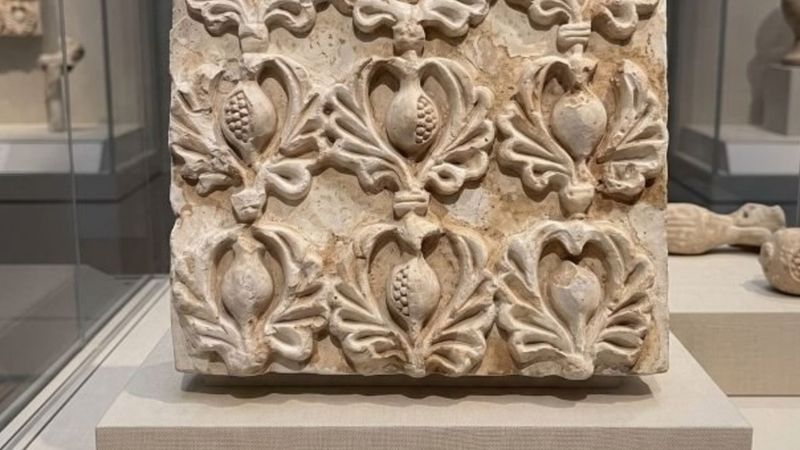
Sixth-century Sasanian moulded stucco panel showing a repeating pomegranate-in-palmette design, excavated near Ctesiphon, in the Metropolitan Museum of Art.
Editorial

The Fruit We Are Sure We Recognize

How the pomegranate became one of the most confidently named motifs in Islamic ornament — and one of the least confidently identified — across a thousand years of tile, silk and stucco, with meanings we mostly attached later.

A slab of sixth-century plaster in the Met shows a fruit you recognise at a glance: a pomegranate, and surely it means paradise. Hold that certainty up to the light and it dissolves. Across a thousand years of tile, silk and stucco, the pomegranate is the shape we name most confidently and identify least — blurring into the artichoke and the palmette, its meanings attached by later viewers, its very name partly a nineteenth-century invention