Directory listing — not yet managed by the museum. Spotted something wrong? Suggest an edit →

Crocodile Museum

Crocodile Museum

Kom Ombo

The crocodile god Sobek and the mummified crocodiles of Kom Ombo

About

A museum of the crocodile god Sobek beside the temple of Kom Ombo, with mummified Nile crocodiles from the cemetery of Shutb.

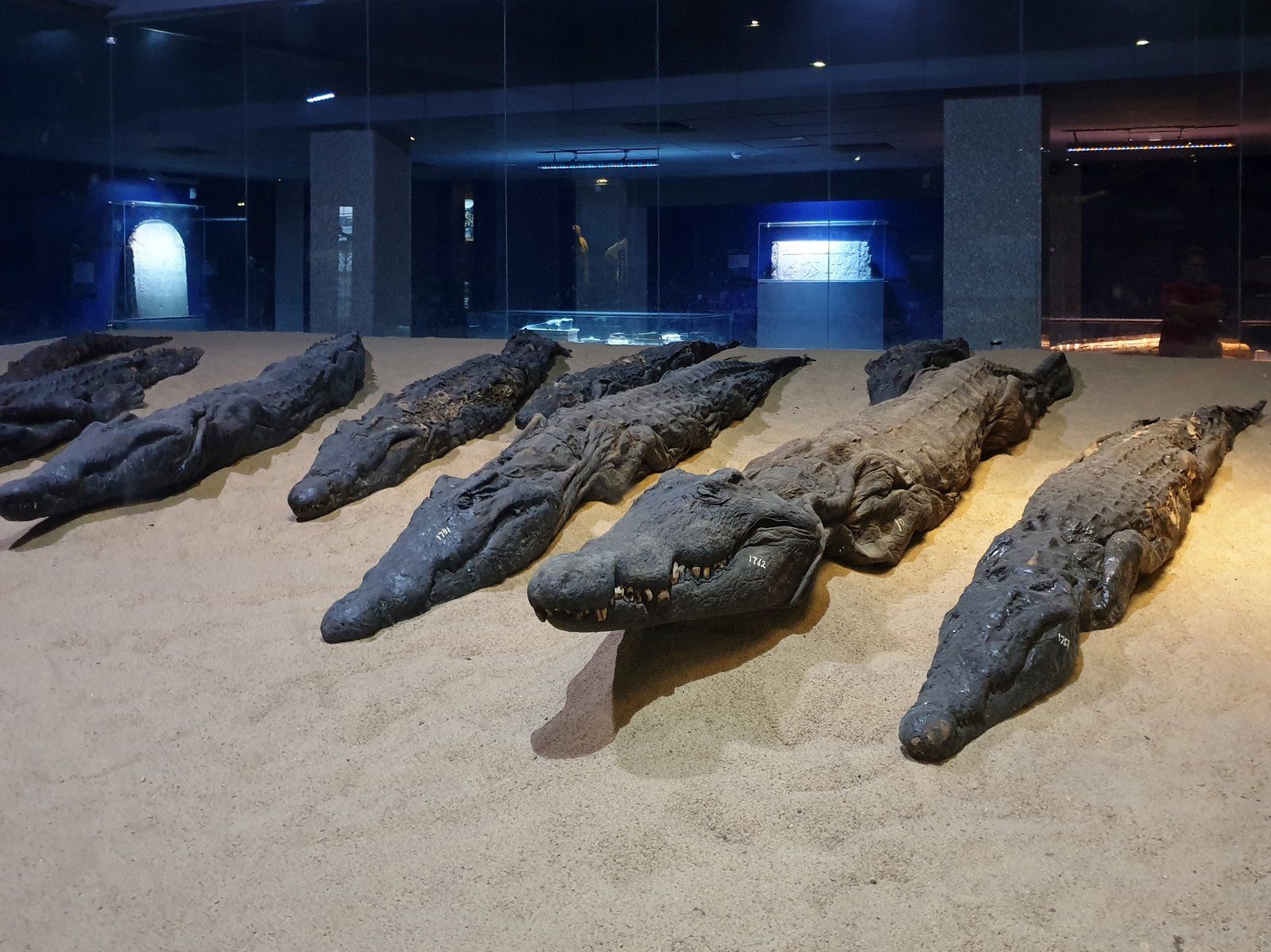
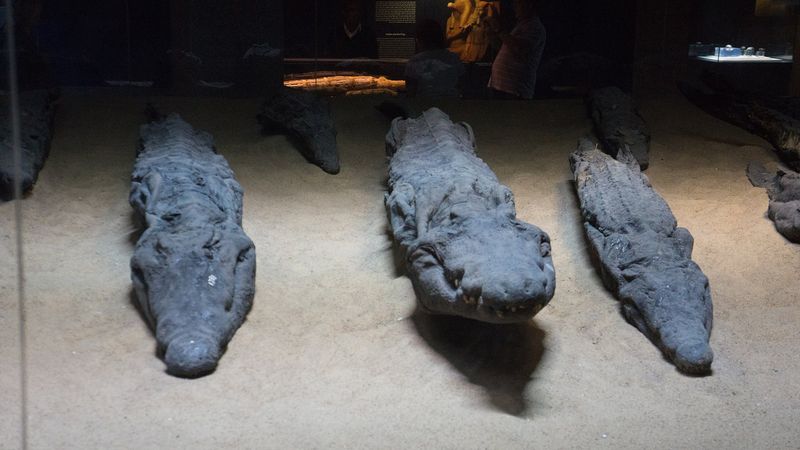
The Crocodile Museum stands beside the temple of Kom Ombo on the east bank of the Nile, north of Aswan. It is devoted to Sobek, the crocodile god worshipped at Kom Ombo. It also shows the sacred crocodiles that were mummified and buried in his name. The Ministry of Antiquities opened it on 31 January 2012 and the museum marks that date every year. The main hall is dark, lit from within the cases. Its centre is a bed of sand with mummified Nile crocodiles laid out in rows. The longest is 4.30 metres, the smallest 2 metres. Some still carry their linen wrappings. Around them are crocodile eggs and embryos, artificial eyes and gilded and ivory teeth fitted to the mummies, statues of Sobek of different sizes and votive stelae left by worshippers. Most of the crocodiles came from the cemetery of Shutb near Kom Ombo. Excavations there found a burial ground used from the beginning of the Middle Kingdom to the Graeco-Roman period, with nearly 80 crocodiles together with mummified fish, dogs and falcons. Most tombs had been robbed in antiquity. A full-size model in the museum reconstructs one tomb with the pottery coffins that held the animals. Sobek was a creator god and a god of fertility, linked with the Nile and its flood. He was worshipped above all in the Fayoum and at Kom Ombo. His cult is mentioned in the Pyramid Texts of the Old Kingdom, reached a high point in the Middle Kingdom under Amenemhat III and lasted into the Graeco-Roman period, when he was also joined with the sun god as Sobek-Ra. He was shown as a man with a crocodile head wearing plumes and a sun disc, or simply as a crocodile. The temple next door, built mostly under the Ptolemies, is unusual in Egypt because it is double. Two parallel axes lead to two sanctuaries: the southern one for Sobek, the northern one for Haroeris, Horus the Elder. Visitors usually see the temple and the museum on a single ticket.

Why this museum matters

Exhibo editorial

Recent studies found something the guidebooks rarely mention: many of these crocodiles were mummified with their organs left inside. Other sacred animals usually had their entrails removed before embalming. The crocodile was wrapped in linen whole, with artificial eyes set in place before burial. Walk the dark hall slowly. The rows of mummies on the sand are the reason people come, but the small cases hold the stranger details: crocodile eggs, curled embryos, eyes made for animals that had none left, teeth covered in gold. Then step outside to the temple and find Sobek on the walls, crocodile-headed under his plumes and sun disc. The reliefs show the god. The museum shows the animals people actually prayed over. Come late in the day if you can. The museum stays open until 9 pm, long after the midday heat has gone.

Visit

Hours, tickets, and directions for Crocodile Museum.

Address

Beside Kom Ombo Temple, Kom Ombo, Aswan

Opening hours

Monday
07:00 – 21:00
Tuesday
07:00 – 21:00
Wednesday
07:00 – 21:00
Thursday
07:00 – 21:00
Friday
07:00 – 21:00
Saturday
07:00 – 21:00
Sunday
07:00 – 21:00

Daily 7:00 to 21:00, ticket office closes at 20:00 (Ministry of Tourism and Antiquities). Ramadan 9:00 to 15:00. One ticket covers the Kom Ombo temple and the Crocodile Museum.

Admission

  • Foreign adult — E£450

    Kom Ombo Temple and Crocodile Museum

  • Foreign student — E£225

    Kom Ombo Temple and Crocodile Museum

  • Egyptian adult — E£40

    Kom Ombo Temple and Crocodile Museum

  • Egyptian student — E£20

    Kom Ombo Temple and Crocodile Museum