
Dubai · 23/09/2026
Amir Khojasteh: May the Tree No Longer Burn When I Wake
The artist's first body of work developed after leaving Iran
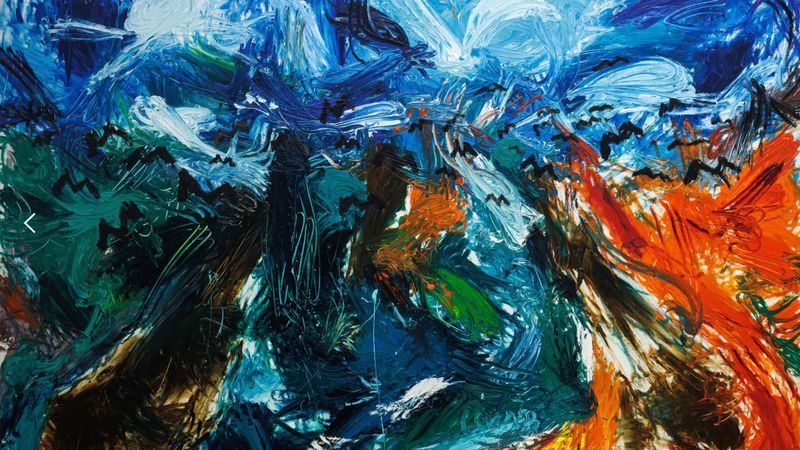
'From where I stand, I see ashes. The ground is as I've known it, yet it is hard to see what will become of the ones born out of this blackness.' In May the Tree No Longer Burn When I Wake at Carbon 12, Amir Khojasteh presents his first body of work made after leaving his home country, Iran. In this period the Persian garden took on new meaning for him: a garden in a barren land, protected by walls, resonated deeply with his experience of departure and distance. In his previous exhibition, Living in a Burning House, he spoke as an insider; now he speaks from afar. 'I am standing on a hill and watching the fire slowly settle,' he says. 'What remains is ash, the solid remnants left behind by the flames.' Ash runs conceptually through the show, signalling destruction while also making new forms possible. A storyteller at heart, Khojasteh unfolds a narrative across the gallery through paintings, sculptures and installations. If the gallery walls are imagined as those enclosing a Persian garden, we enter a distorted version of that space — a garden whose windows look out onto a doomed landscape. Limbless, powerless figures recline at leisure, gazing at the scenes beyond, while soft bodies sit upright along the walls wearing quiet, senseless smiles. The doomed landscapes take their cue from Vincent van Gogh's Wheatfield with Crows (1890), an image that returned to the artist's mind during the Woman, Life, Freedom movement in Iran. Its broken horizon, paths that lead nowhere, crows as dark interruptions and charged, unstable colours spoke to him of his surroundings. He stretched the painting, covered it and reworked it until it became his own. Although his work has long centred on figures and faces, here there is no single focal point — only a continuous surface repeatedly marked by his hand, leaving visible traces across canvases and sculptures. At the centre of the space, reclining figures lie on the floor. They descend from the idealised marble bodies of Renaissance sculpture, historically tied to masculinity, perfection and authority. In clay, however, these bodies soften; reborn through the artist's hands, they become mutable. The seated figures on the walls share this lineage, their posture echoing a man on a throne, yet here too authority dissolves as the forms change and slacken, and their role in the story grows uncertain. Their ambiguous smiles and soft, fingerprinted bodies invite conflicting readings. Are they figures of former power — those who caused the chaos and the fire — now lying back and quietly smiling at what they have done? Or are they bodies born from the ashes, exhausted and stripped of agency, left only to stare? Suspended between ruler and witness, perpetrator and survivor, they hold the uncertainty at the heart of the exhibition and ask what kinds of bodies emerge after the fire. In this landscape of aftermath nothing is resolved: making and unmaking happen at once, in the moment when the smoke has cleared but the future has yet to take shape. Historically, the Persian garden was imagined as an earthly paradise within the harsh desert climate — a place of order created through enclosure, where walls separate inside from outside and life is watered, tended and carefully sustained.


