
Abu Dhabi · 16/05/2025
The Other Side of the Moon
Abu Dhabi
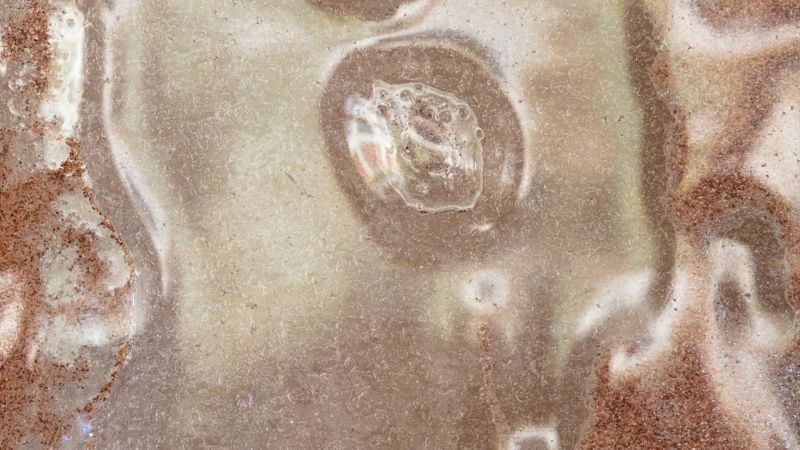
The Other Side of the Moon marks the grand opening of a new cultural space in Abu Dhabi, inaugurated by Baró Galeria in collaboration with O-Contemporary. This group exhibition gathers ten artists from seven nations, guiding visitors on a trajectory that moves from the immediate landscapes surrounding us to the distant realms of the cosmos. Featuring works by Abdus Salaam (b. 1989, South Africa), Latifa Saeed (b. 1985, United Arab Emirates), Mano Penalva (b. 1987, Brazil), Jorge Rosano Gamboa (b. 1984, Mexico), Tamara Kalo (b. 1992, United Arab Emirates), Adrian Pepe (b. 1984, Lebanon/Canada), Elias Crespin (b. 1965, Venezuela), Gary Hill (b. 1951, United States), Eduardo Kac (b. 1962, Brazil), Néstor García (b. 1985, Spain), and Rasheed Araeen (b. 1935, Pakistan), the exhibition unfolds across three interconnected chapters. These progress from the immediacy of sand, desert, and surrounding terrain, through the human experience of wonder and searching, and finally towards the mysteries of the Moon and the universe beyond. At the heart of the exhibition lies the concept of Insān — the human being as a seeker, defined by a constant quest for the unknown. Through sculpture, installation, video, and mixed media, the participating artists explore how this restless impulse shapes our relationship with the environment, memory, and the cosmos. In the first chapter, visitors encounter works that engage directly with the tangible, examining the materiality of sand, the tension of gravitational forces, and the vastness of the desert. As the exhibition progresses, the focus shifts inward toward human perception and longing, considering how we construct meaning through exploration, and how absence, memory, and imagination shape what we see. Finally, the exhibition expands outward again, turning its gaze to the sky — to the Moon as both a real celestial body and an enduring symbol of distance, dreams, and discovery. Set in Abu Dhabi, under the light of the very Moon that has inspired poets, scientists, and dreamers for millennia, The Other Side of the Moon invites viewers to reflect on what connects the known and the unknown. Echoing quietly but insistently the spirit of exploration and reflection, the exhibition operates within a subtle tension between technology and poetry, between outer space and inner gravity. It ultimately challenges us to reconsider what we choose to illuminate, and what we leave in shadow.
Participants
Works

Malus Sieversii

Mother & Child

Shawwal III

The Arrowheart

The Weight

Portals

Dust Devil III [Air]

Diminishing Landscapes

Bisel III: como arredondar quinas

Kisses

SLS 3, from the series Adsum

Regex Redux 7, from the series Adsum

Contrails 1, from series Adsum

CIRB 3, from the series Adsum

adsum@orion 2 Adsum series

Adsum (Landed on the Moon in 2025) from the series Adsum

Big Legs Don't Cry

Termodinámica, Versión Tropical

Las Palmeras y lo Tropical Inventarios y tipologías: Las Palmeras y lo Tropical

Nenepilli. Old Blood Tongue

Nenepilli. New Blood Tongue

Trianguconcéntricos Alu Rouge 50

Weaver, Machinist, Upholsterer, Garbage Man

PERFECT DRY CLEANERS ON 2B ST
News by Exhibo
Editorial coverage on Exhibo
How to Approach a Gallery
Research, soft approaches, cold-email etiquette and timing for artists who want a gallery conversation without burning bridges
Galleries decide on fit, capacity and trust more than abstract talent. This guide covers how artists research programmes and price bands, read submission policies, build warm contact, write a short outreach email, prepare materials, time follow-ups, and spot pay-to-exhibit traps, without promising representation.

The Principles of Design in Art
How artists organise line, colour and mass: the classroom lists that disagree on five to eight names, mapped with museum pictures
Principles of design are the organising jobs artists apply to the elements of art: balance, contrast, emphasis, movement, unity, and, depending on the sheet, rhythm, pattern, proportion or variety. This hub maps the disputed census, reads dated works from Raphael to Riley, and sends each named job to its own page.

Infrared and X-Ray Imaging of Paintings
How infrared reflectography, IR photography, X-radiography and MA-XRF record underdrawings, paint structure and elemental maps
Carbon drawing absorbs infrared; lead white blocks X-rays; calcium and mercury light up on elemental maps. This guide sets infrared reflectography beside IR photography, X-radiography and MA-XRF: physics, a study protocol, the people who built the kit, and campaigns at the NGA, Rijksmuseum, Getty and Met.
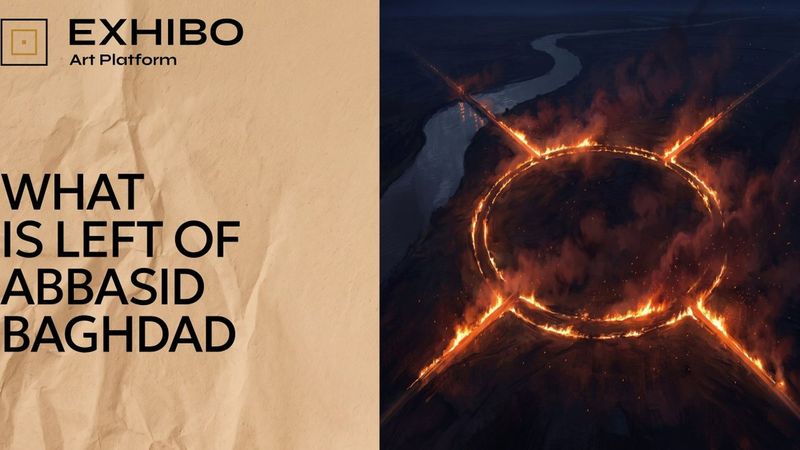
The City With No Ruins: What Is Left of Abbasid Baghdad
A caliph drew his capital in fire, the Mongols erased it, and a video game rebuilt it out of Isfahan and Samarkand. What actually survives of Abbasid Baghdad, where it is, and who else has tried to put it back.
Climb a viewpoint in Assassin's Creed Mirage and you see the Round City whole — double walls, four gates, the green dome at the centre. Nobody has ever seen that view. No excavated remains have been securely identified as any of it. This is what is actually left of ninth-century Baghdad, where you would have to go to stand in it, and why Ubisoft was the second team to rebuild a city that no longer exists.
The Civilisation That Bought Itself Back: A Field Guide to Collecting Arab Art
A field guide to collecting Arab and Middle Eastern art — who buys, what it costs, why prices lag cultural significance, and where collectors are looking now.
How the Arab world went from selling its art history to the West to building the fastest-growing market for Middle Eastern art on earth — who buys, why, what it costs, and where the smart money is looking now