
Exhibo Editorial
Tate Britain and Turner Contemporary push ecological ambitions beyond the gallery
A new riverside garden and a marine-focused conference signal how UK institutions are embedding sustainability into their public mission
Gallery walls are no longer the limit
It has become routine for public museums to audit their carbon footprint, rethink lighting, or green their programming. A more ambitious turn is now visible in the UK, where two prominent institutions are pushing ecological thinking into their surrounding environment. Tate Britain is developing a major permanent garden along the Thames, while Turner Contemporary is turning its attention to the sea with a new weekend conference devoted to marine issues.
Both projects suggest that sustainability is no longer a box-ticking exercise but a way of rethinking how a museum sits in its neighbourhood and relates to its audiences.
A new garden rises on the Thames
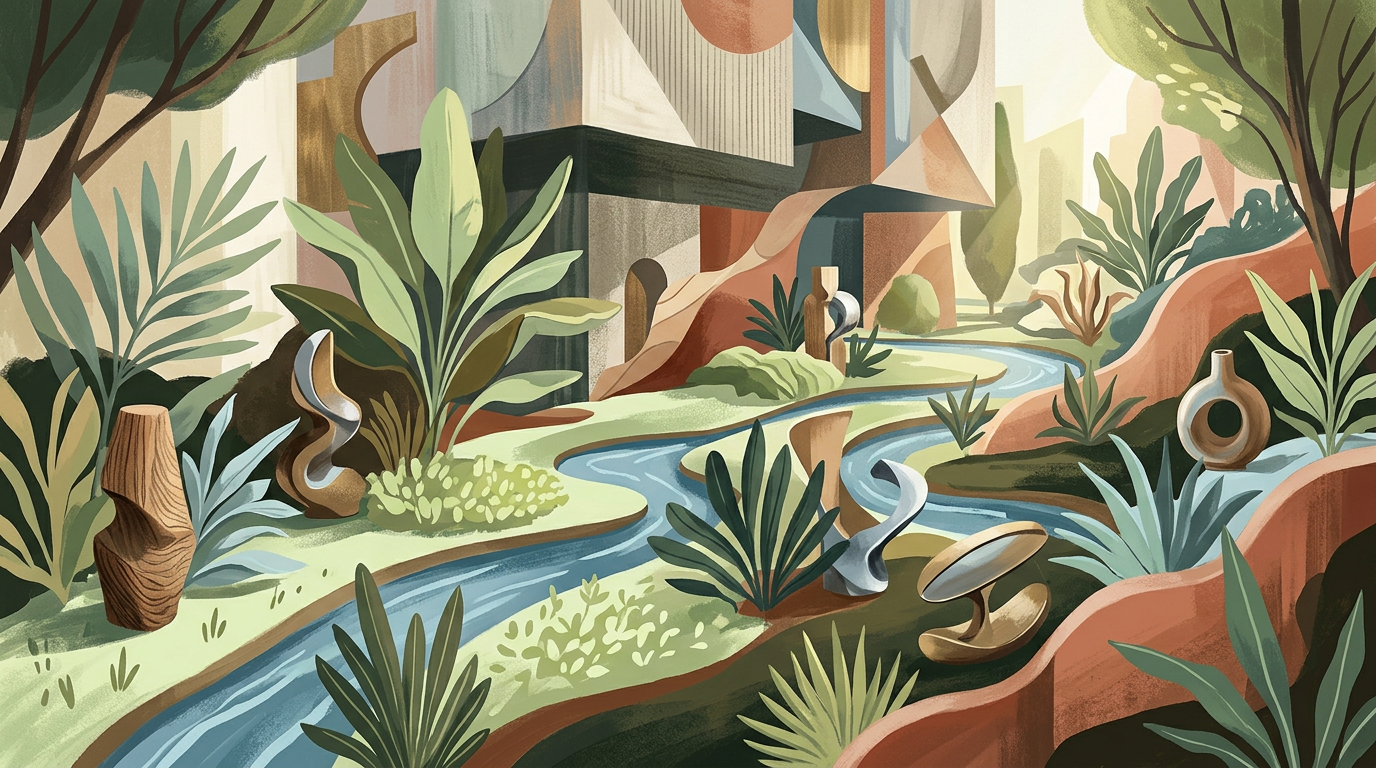
The Clore Garden, a joint gift to Tate and the Royal Horticultural Society from the Clore Duffield Foundation, is due to open in early 2027. The planting has been chosen to boost biodiversity in central London while anticipating hotter, drier summers. Drought-tolerant species will dominate: Mediterranean figs, Japanese sago palms, Persian lilac and the glossy evergreen Schefflera shwelliensis from the Eastern Himalayas.
Landscape architect Tom Stuart-Smith is transforming what was once a largely hard-surfaced area, previously used as a taxi rank, into what he calls “a biodiverse exotic garden”. Around 75% of the site was paved; now it will be layered with planting that exploits the microclimate along the Thames.
“We’re using all these plants you don’t usually see so much in Britain—which we can do because Tate’s extraordinary site by the Thames is virtually frost free,” he explains. The designer, whose credits include gardens for the Hepworth Wakefield, Chatsworth House and the Queen Elizabeth Jubilee Garden at Windsor Castle, has previously won multiple gold medals at the RHS Chelsea Flower Show.
In May, a condensed preview of the Clore Garden appeared at Chelsea as The Tate Britain Garden, winning yet another gold. At its centre stood Barbara Hepworth’s 1949 limestone work Bicentric Form, marking the first time an artwork from the national collection was shown in a garden at the flower show. Further modern and contemporary pieces from Tate’s holdings will eventually punctuate the Millbank site.
Stuart-Smith is quick to downplay the idea of a traditional sculpture garden. “I’m not a great one for sculpture and flowers,” he says. Instead, he is using foliage and plant forms to soften the presence of artworks, so that they become “more like incidental things that you discover”.
Art, fungi and water
Tate’s collection has fed directly into the design. Stuart-Smith points to Victor Pasmore’s painting The Green Earth (1979–80), with its cellular green forms linked by occasional black lines, as an early influence on the garden’s informal, organic layout. Another key reference is Merlin Sheldrake’s book Entangled Life (2020), which examines how fungal mycelia connect ecosystems.
That research has surfaced as a network of narrow waterways and small, bubbling circular dishes threading through the planting. They will eventually feed into a bowl-shaped water feature on a terrace outside the Tate Britain café. “I started looking at microscopic images of mycelium and quite a lot of them have little bacterial nodules on the end,” Stuart-Smith says, “so these branching rills are my little bacterial nodules—it’s a nice metaphor for the garden bringing everyone together.”
Making the museum more porous
For Tate Britain director Alexquharson, the project is as much about access as ecology. He hopes the garden will make the museum’s neoclassical Millbank building feel less forbidding.
“We want to make our façade as porous as possible,” he says. “The environmental aspect of the garden is key, but so is the dialogue between the garden and a building which, when you arrive, can seem quite intimidating and doesn’t exactly signal contemporaneity.”
The global range of the planting is intended to resonate with both London’s diverse population and Tate’s increasingly international programme. “It opens up the garden to a global population as well as Tate’s increasingly global programme,” Farquharson notes.
A designated outdoor classroom will cater for around 30 schoolchildren at a time, with benches cast from reused materials including Tate’s existing paving and shells gathered from the Thames foreshore. A lightweight single-storey garden classroom designed by Feilden Fowles will host an education programme developed with the Royal Horticultural Society.
“We’ll be emphasising the links between nature and art all the time,” Farquharson says. He anticipates visitors moving between garden and galleries, naming plants after encountering them in paintings, and tracing what he describes as “the long ecological theme in British art going back to the landscape tradition and beyond, and also forward to the eco-critical practices of Richard Long and Cooking Sections”.
Margate turns to the ocean
On the Kent coast, Turner Contemporary is grappling with a different environmental reality. The gallery sits almost on the site of the boarding house where JMW Turner once painted the North Sea, and today it faces rising seas and coastal erosion at first hand.
From 19–21 June, the gallery partnered with the UK National Commission for Unesco to stage One Ocean 2026, a free weekend of public talks, workshops, artist and documentary film screenings. The programme brought together artists, scientists, policymakers, activists and local leaders to discuss humanity’s relationship with the ocean and the pressures on marine environments.
Toby Parkin, Turner Contemporary’s head of learning and participation, describes the initiative as “a space for hope and collaboration [...] empowering people (especially young people) to see themselves as part of the solution.”
This first edition is intended as a pilot, with plans to develop One Ocean into a biennial event of international significance. If realised, it would position Margate not only as a destination for contemporary art but as a global ideas hub focused on ocean health, biodiversity and climate resilience.
Culture and climate, intertwined
Taken together, the Clore Garden and One Ocean underline a broader shift. Environmental and cultural priorities are increasingly treated not as competing demands but as deeply intertwined. In both London and Margate, it is institutions rather than governments that appear to be setting the pace, testing new ways for museums to engage with the climate crisis beyond their walls.
Artworks mentioned
Related reading

National Museum Cardiff Faces Potential Temporary Closure for Renovations
Welsh national institution considers closure as centenary approaches amid funding and infrastructure challenges
National Museum Cardiff may temporarily close to allow for redevelopment works, officials have indicated, as the institution seeks to preserve its historic building and secure future funding.

Future Generation Art Prize Extends Deadline to July 2026
PinchukArtCentre announces extended application period for eighth edition of international contemporary art award
The biannual global art prize for artists under 35 has pushed its deadline to July 19, 2026, providing additional time for emerging practitioners worldwide to submit proposals.

Audrey Amiss Finally Gets Her Due at Wellcome Collection
A landmark exhibition restages the self-organised shows of an artist who channelled lived experience of the psychiatric system into a prolific creative practice.
Opening in July 2026, Wellcome Collection's first exhibition dedicated to Audrey Amiss restages three of her self-organised shows and positions her as both a talented painter and a tireless campaigner within the psychiatric survivor movement.