Women Artists of the Middle East & North Africa
Half the story: the women who made, funded and curated this art. Madiha Umar, who set the Arabic letter free before the men who got the credit; Baya, whose paintings Picasso studied; Choucair, Adnan, Farmanfarmaian, Neshat, Hatoum — the artists a canon kept in the margins, moved back to the centre.
When the Barjeel Foundation rehung its collection of Arab abstraction with something close to gender parity, the surprise was not that the women existed. It was how many, how early, and how good — and how thoroughly a standard art history had walked past them. This series is the other half of the canon: the women who made the work, and in many cases funded, wrote and curated it too. Some invented movements that men are usually credited with. Some were noticed by Picasso and then filed under his name. These essays give them the page on their own terms — one artist, one story, no borrowed frame.
The ones who came first
Several women were not following a movement — they started one. Madiha Umar was fusing the Arabic letter with abstraction in the late 1940s, arguably before the male artists now named as the founders of Hurufiyya. Fatima al-Fihri founded the world's oldest university in Fez in 859 CE. Saloua Raouda Choucair built a Lebanese modernism out of modular sculpture and Islamic geometry, decades before a Tate retrospective caught up. Each essay restores a first to the person who actually got there first.
Painted out, then back in
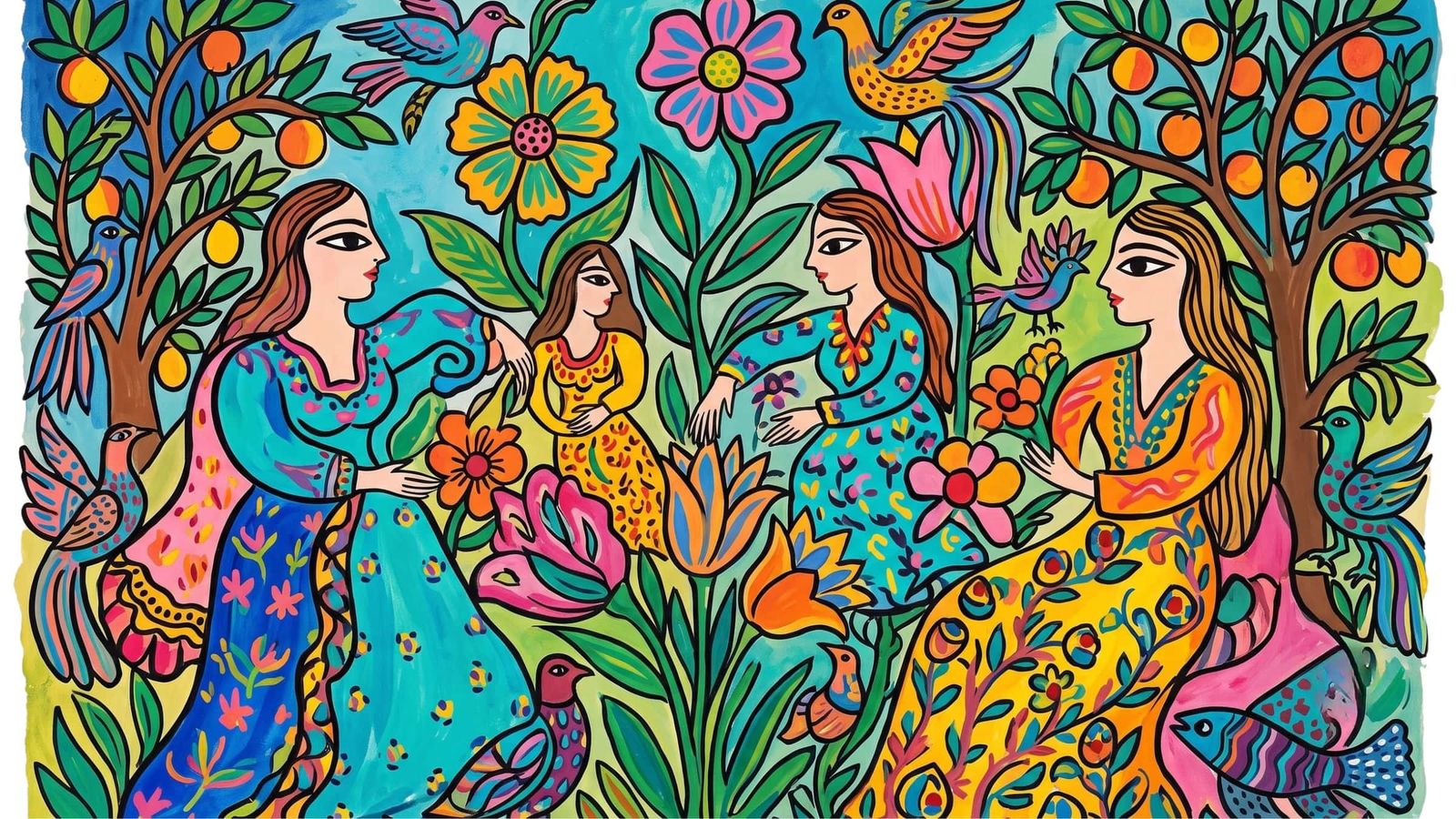
Some of the most original artists of the century were long defined by the men around them. Baya, the self-taught Algerian, was exhibiting in Paris as a teenager in 1947, and the artistic exchange usually filed as "Picasso noticed her" runs at least as strongly the other way, toward his own Women of Algiers. Etel Adnan painted in a language her poetry could not reach; Monir Farmanfarmaian turned mirror mosaic into modernism; Chaibia Talal began painting at forty and changed Moroccan art. These essays read them as originators, not muses.
The canon-shifters and the collections
The rebalancing is itself the work of women. The Taking Shape exhibition that rehung Arab abstraction; the all-female team of five who curated Sharjah Biennial 16; the curators — Nada Shabout, Wassan Al Khudhairi, Suheyla Takesh — who decide what the region's art looks like from outside. Each essay follows the women deciding what gets seen, not only the women being seen.
The living force
The contemporary field is led, in large part, by women. Shirin Neshat on image, text and the female body; Mona Hatoum making the domestic hostile; Ghada Amer threading embroidery against the canvas; Monira Al Qadiri on oil and pearl; Manal AlDowayan on Saudi collective memory; Lalla Essaydi answering the Orientalist gaze with henna and calligraphy. These essays follow the artists defining MENA art right now.
Where to see them
None of this is a footnote any more. The work is entering Barjeel and Mathaf, filling Venice pavilions, hanging in Sharjah and Riyadh. Each essay ends where Exhibo begins — with the artist's own page, her works and the places showing her near you, so a name the textbooks skipped opens onto the room where you can finally stand in front of the work.
Articles in this series
- EditorialWomen Artists
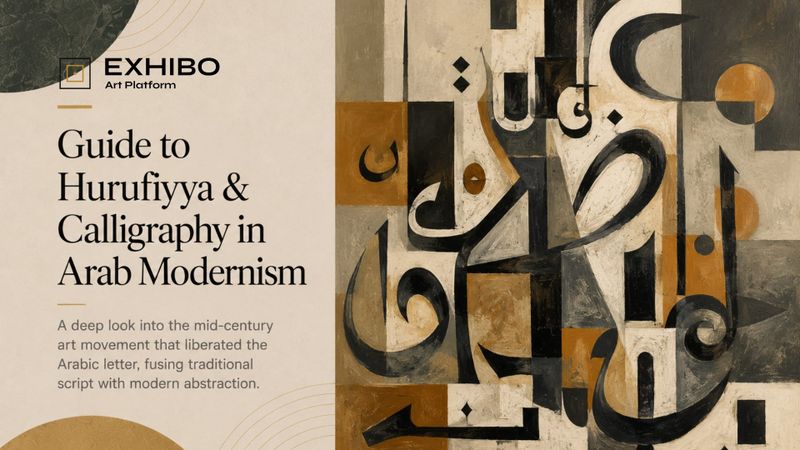
Understanding Calligraphy and Hurufiyya in Arab Modernism
A deep look into the mid-century art movement that liberated the Arabic letter, fusing traditional script with modern abstraction.
The Hurufiyya movement stands as one of the most significant developments in twentieth-century Arab art. Discover how modernist pioneers deconstructed traditional Arabic calligraphy to assert a post-colonial cultural identity, and learn where to experience these works today using Exhibo.
- EditorialWomen Artists
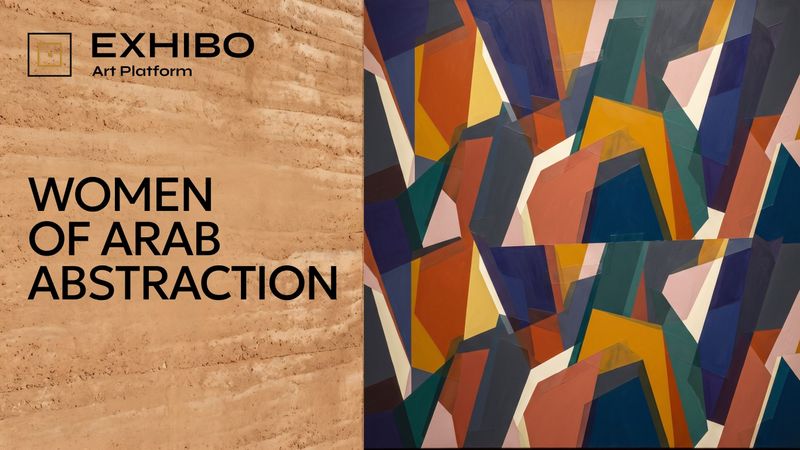
Women of Arab Abstraction
The letter set loose, the line woven, the arabesque the West once threw away — and the women who built modern abstraction out of all three, then got written out of it.
Abstraction is usually told as a Western invention that arrived elsewhere late. Saloua Raouda Choucair, Etel Adnan, Madiha Umar and a room of others tell it differently — often as the only woman in the movement, building modern form from the geometry, craft and calligraphy their own culture already held.
- EditorialWomen Artists
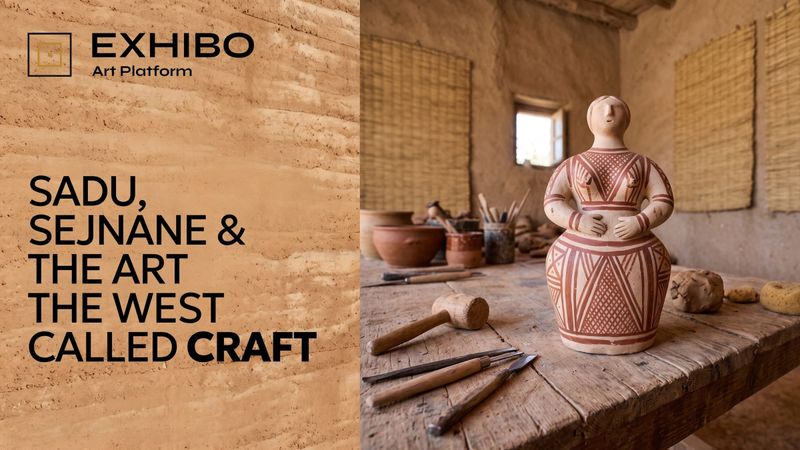
Women Makers: Sadu, Sejnane and the Art the West Called Craft
How the women of Sejnane and the Sadu tents made a world of geometric art the museum system had no shelf for — and how it is finally being called by its name.
Two women's traditions — the clay of Sejnane in Tunisia, the woven tents of the Arabian Peninsula — share no bloodline, only a rhyme: the same spare geometry, held and passed down by women, in whatever material their world gave them. This is the story of the visual knowledge the West filed under "craft," the makers it kept downstairs, and the contemporary artists now carrying it back up into the room where "art" is defined.