Deserts of Arabia & the Sahara: Landscape & Land Art
Where geology becomes a canvas and artists work at the scale of the horizon. The world's largest sand sea, the salt flats Christo wanted to fill with 410,000 barrels, the Nabataean valley now staging land art, the rock galleries older than any museum — the desert read as a medium, not a backdrop.
In 1977 Christo looked at the salt flats south of Abu Dhabi and imagined a sculpture made of 410,000 oil barrels, taller than the Great Pyramid. Almost fifty years later it still is not built — but the impulse behind it explains this whole series. The desert is not empty space between the interesting places. It is the interesting place: a surface at the scale of the horizon, where geology does the work of a brush and artists have been answering it for fifteen thousand years, from engravings in the Sahara to sand pyramids laid across the Gulf. These pieces read the landscape as a medium.
The anatomy of a desert
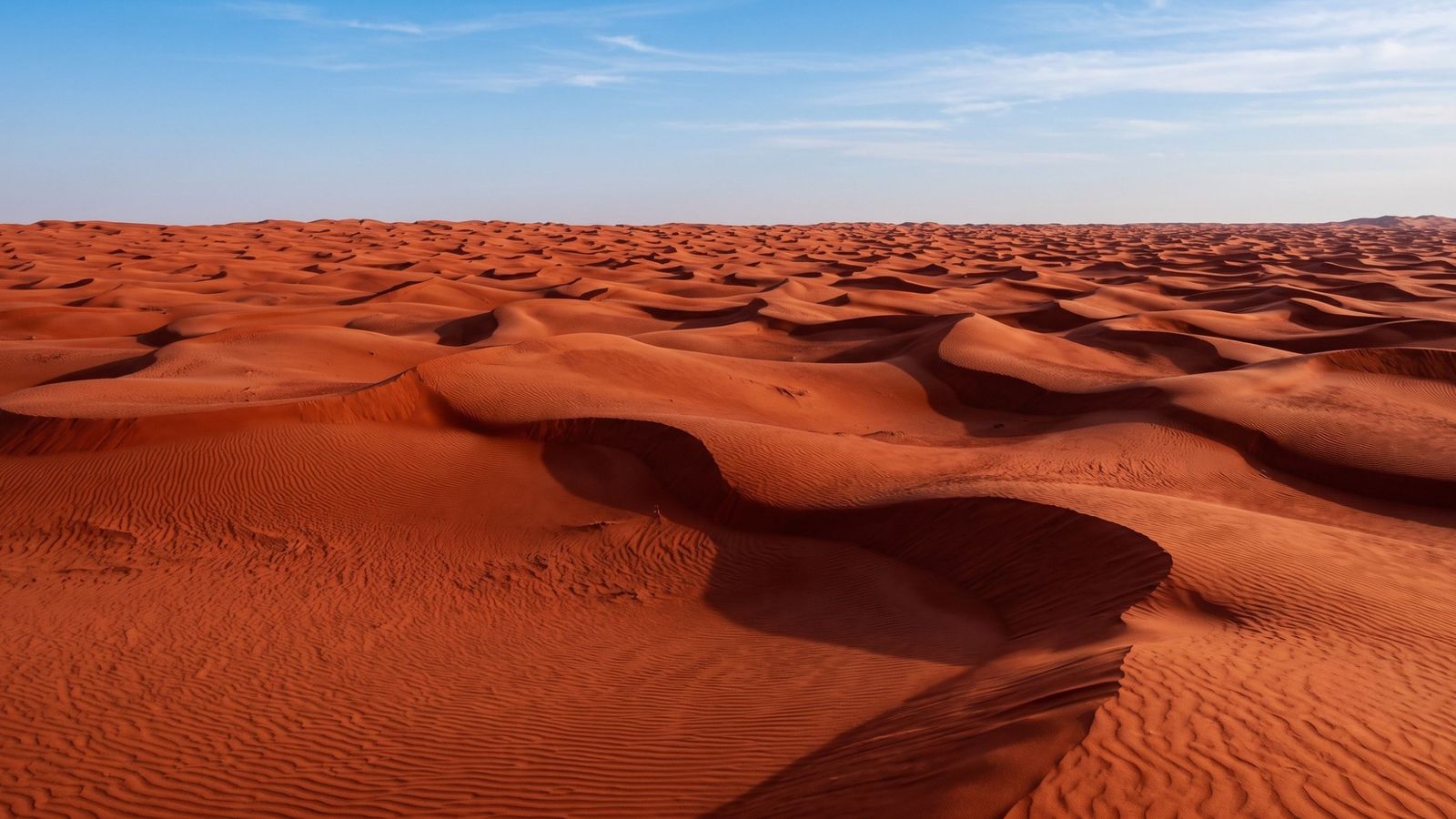
Start with the ground itself. An erg is a sand sea, and the Rub' al Khali is the largest continuous one on Earth. A sabkha is a salt flat — the mirror-flat crust Christo chose for the Mastaba, and the surface minimalist land art keeps returning to. Dunes are not random: barchans migrate in predictable arcs, the same physics whether in Liwa or on a fictional planet. Each essay takes one landform and explains what it is and why it looks the way it does, so the desert stops being scenery and starts being structure.
Land art at the scale of the horizon
Give an artist a surface this big and the work changes size. Jim Denevan laid Self-Similar across the sand as 448 pyramids; Desert X AlUla plants site-specific installations in a Nabataean valley; Manar Abu Dhabi runs light and land art through the mangroves and dunes; Richard Serra set four steel plates into the Qatari desert as East-West/West-East. And over it all hangs Christo's unbuilt Mastaba, the largest sculpture never made. These essays follow artists who treat the horizon as their frame.
The oldest galleries on Earth
The desert was a canvas long before the word "art" existed. Tassili n'Ajjer in the Algerian Sahara holds some fifteen thousand engravings and paintings; the Hajar Mountains carry petroglyphs that are the region's earliest graphic system. They record a green Sahara that really existed — grassland, lakes, herds — during the African Humid Period, a landscape now buried under sand. Each piece reads rock art as the first draft of everything that came after.
What the sand remembers
The desert keeps records the eye misses. Ancient lakebeds sit beneath the dunes of Arabia, mapped in the palaeoclimate literature. Meteorites rest on the surface of Oman's plains like natural ready-mades. The Empty Quarter's dark skies have turned astrophotography into a fine-art genre, and the Gulf's mangroves have become a living medium for ecological art. These essays follow the science into the aesthetics — and back out to where you can stand in it.
Where the landscape becomes art you can visit
The desert is not a place you only read about. Desert X AlUla and Manar are open on a calendar; the rock galleries are reachable; the dunes are an afternoon's drive from the towers. Each essay ends where Exhibo begins — with the installations, sites and works near each place, so a landform you came to understand opens onto the art standing in it right now.
Articles in this series
- EditorialLandscape
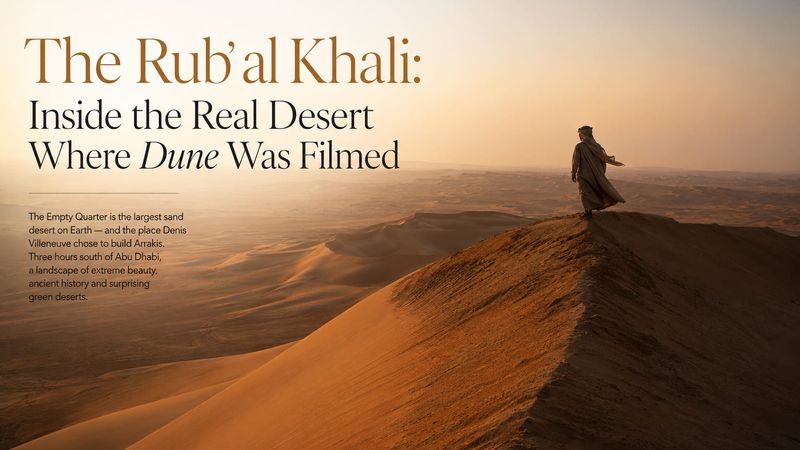
The Rub' al Khali: Inside the Real Desert Where Dune Was Filmed
How the Liwa desert — the Empty Quarter's northern edge, and the real Arrakis — became one of the most filmed, least understood landscapes on Earth.
Denis Villeneuve filmed Dune in Liwa, on the rim of the Rub' al Khali — the largest sand sea on the planet. A desert that has been an ocean, birthed a nation, and is only now being discovered as a subject for art.
- EditorialLandscape
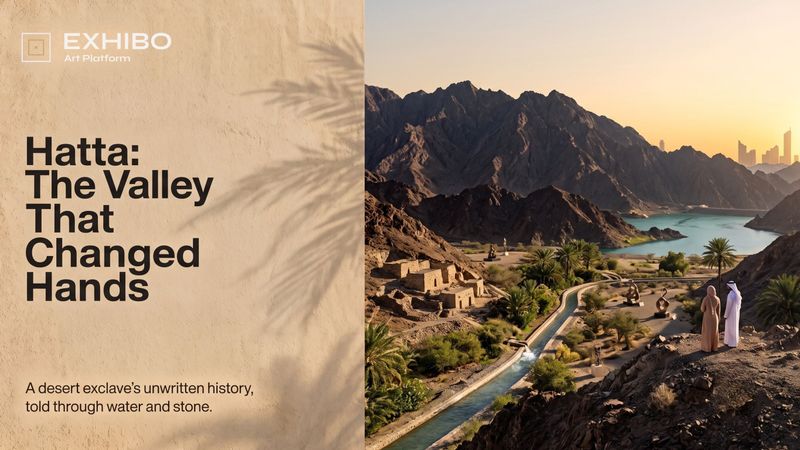
Hatta: The Valley That Changed Hands
Ninety minutes from Dubai, a mountain town where the same water has shaped human settlement for four thousand years.
Most guides to Hatta list its fort, its dam and its trails. This is the valley told differently — through the single physical problem that has shaped every era of its life. From Bronze Age tombs sited by the water to a mosque timed by shadow to a hydro plant that answers Dubai in ninety seconds, one question runs through four thousand years: where does the water go, and whose turn is it?
- EditorialLandscape
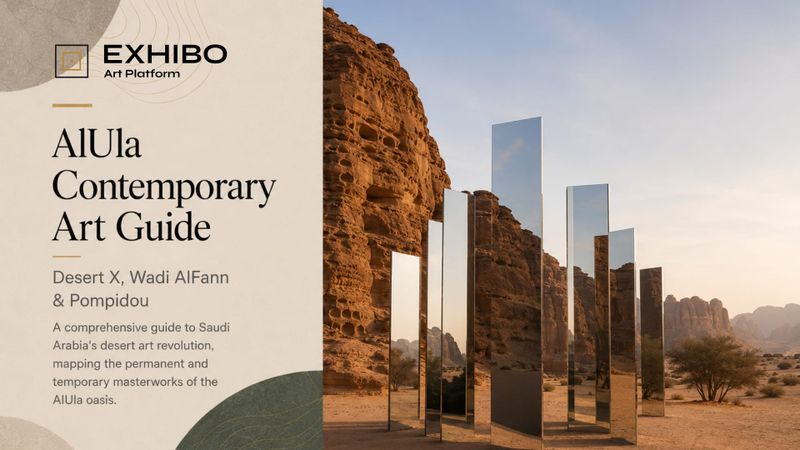
AlUla: How the Desert Became a Contemporary Art Destination
A comprehensive guide to Saudi Arabia's desert art revolution, mapping the permanent and temporary masterworks of the AlUla oasis.
Discover how AlUla transformed from an ancient trade route into a leading destination for contemporary land art. Explore the curatorial vision behind Desert X 2026, the permanent monumentality of Wadi AlFann, and the upcoming Contemporary Art Museum partnered with Paris's Centre Pompidou.