
Exhibo Editorial
Japanese Art: A History
From Jōmon cord-marked clay to Meiji oil paint, a museum map of media, workshops and named works you can still stand in front of
Japanese art is the material culture of the Japanese archipelago across millennia: cord-marked pots, tomb figures, Buddhist sculpture, court painting, ink landscapes, tea ceramics, lacquer, woodblock prints and, after 1868, oil paint trained on European studios. Searchers who type the phrase often meet wall-art shops and one-minute style lists. The historical answer is a sequence of patronage systems and media, each with its own grammar. You recognise a Heian handscroll by seasonal colour and a low viewpoint; a Muromachi hanging scroll by ink tone and empty silk; a Rinpa screen by gold ground and bold silhouette.
This page sits in the World Art Traditions series. Woodblock prints of the floating world get their own essay in ukiyo-e, explained. Living galleries, museums and studio visits in Tokyo belong to a separate city guide, not here. Collection pages for many of the institutions named below sit in the museums directory.
What “Japanese art” names in historical usage
The phrase is a Western museum category. Inside Japan, makers and patrons used more precise labels: yamato-e for Japanese-theme painting, kara-e for Chinese-theme painting, suibokuga for ink painting, nihonga and yōga for the Meiji split between mineral-pigment tradition and oil. Period names (Jōmon, Heian, Edo) are modern chronological tools. They help you hang a work in time. They do not prove that every potter or painter of that century shared a manifesto.
English-language search still treats “Japanese art” as if one look should answer it: cherry blossom, wave, gold screen, Zen emptiness. Those motifs exist. They sit inside longer craft histories. Ceramics begin before writing. Buddhist icons arrive with continental monks and craftsmen. Court painting invents narrative formats for Japanese literature. Warrior and merchant patrons later fund ink, tea wares and prints. Meiji reformers invent the school categories that still organise museum labels.
Collectors and textbooks also drag architecture, gardens and performing arts into the phrase. This article stays with portable and installable visual arts: pottery, sculpture, painting, lacquer, metalwork and print. Garden design and Noh costume deserve their own pages. So does the living gallery circuit in Tokyo, which answers different search intent.
The usable definition for a general reader is this: Japanese art is the body of objects and pictures made in the archipelago (and by Japanese artists working abroad) whose techniques, iconographies and display formats were shaped by local materials, continental exchange and successive courts, temples and cities. It is plural. The rest of this article maps the conditions that made that plurality, then names works you can check against museum catalogues.
Conditions that produced the traditions
The archipelago sits off the east coast of Eurasia, close enough for boats and ideas, far enough for local experiments to harden. Rising seas after the last Ice Age separated the islands from the continent. Jōmon foragers stayed for thousands of years, firing clay vessels while other Neolithic cultures rose and fell. Wet-rice farming, bronze and iron arrived later with Yayoi communities, in contact with the Korean peninsula and China. From then on, Japanese workshops absorbed continental models and remade them.
Materials set limits that became tastes. Cypress and lacquer trees, clay beds, silk, mineral pigments, paper, bamboo and iron all mattered. Lacquer (urushi) demands patience: sap, humidity, polishing, metal powder. Ink painting demands water control and a brush that can thicken or thin mid-stroke. Woodblock printing needs a designer, a carver, a printer and a publisher. Those workshop chains are social facts as much as technical ones.
Patronage shifted the centre of gravity. Asuka and Nara rulers imported Buddhism and Tang court culture as tools of statecraft. Heian aristocrats, after official missions to China stopped, cultivated native scripts, poetry and painting of Japanese places and tales. Kamakura and Muromachi warriors and Zen temples favoured Chinese ink models. Momoyama warlords ordered gold screens for castles. Edo merchants funded prints and decorative arts. Meiji ministries funded expositions, art schools and the public museum. Each shift left objects that later collectors and national museums reclassified as “Japanese art.”
Religion and ritual never sit outside that map. Shinto shrine architecture and offerings, Pure Land temple halls, Zen monastery painting programmes, and tea-room utensils each asked for different surfaces and degrees of finish. The same maker might work for a temple and a merchant. The same motif might move from a handscroll into lacquer and then into a textile.
Climate and season trained the eye as well. Humid summers and sharp autumns gave court poets and painters a shared calendar of blossom, insect noise, mist and snow. Display formats followed: handscrolls unrolled in sections for a seated viewer; hanging scrolls changed with the month in a tokonoma alcove; folding screens divided a room for a banquet. You meet those formats in museums as “works of art.” They began as furniture for time and occasion.
A chronology from Jōmon to Meiji
Period boundaries are scholarly conventions with fuzzy edges. Dates below follow the Metropolitan Museum of Art’s Heilbrunn Timeline essays where those essays are explicit, and standard school chronologies for later eras. Use the table as a looking map, then check the wall label when you stand in front of an object. Absolute dates for the oldest pottery remain contested; museums soften the earliest carbon claims and prefer broad phases.
| Period (approx.) | Rough dates | What makers concentrated on | Named museum anchor |
|---|---|---|---|
| Jōmon | ca. 10,000–300 BCE | Cord-marked earthenware; later dogū figurines | Met, “Flame-Style” Deep Pot (Kaen doki), Middle Jōmon (2015.300.258) |
| Yayoi | ca. 300 BCE–300 CE | Smoother pottery; wet-rice villages; bronze bells and mirrors | Met Heilbrunn essays on Yayoi culture |
| Kofun | ca. 3rd century–538 | Tomb mounds; haniwa clay figures; early Sue pottery | Tokyo National Museum haniwa galleries |
| Asuka–Nara | 538–794 | Buddhist temples; bronze and wood icons; Tang-derived capital culture | Hōryū-ji bronzes (Tori Busshi circle); Tōdai-ji Vairocana programme |
| Heian | 794–1185 | Court culture; yamato-e; Pure Land halls; kana literature | Byōdō-in Phoenix Hall, Amida by Jōchō (1053), Uji |
| Kamakura–Nanbokuchō | 1185–1392 | Warrior patronage; realist sculpture; early ink experiments | Kamakura sculpture in major Japanese temples and museums |
| Muromachi | 1392–1573 | Zen ink painting; imported Chinese models; Kanō workshops | Sesshū Tōyō, Haboku sansui (1495), Tokyo National Museum |
| Momoyama | 1573–1615 | Castle screens; bold colour and gold; tea ceramics | Castle-period screens in Kyoto and Tokyo collections |
| Edo | 1615–1868 | Rinpa design; tea wares; lacquer; ukiyo-e (sibling article) | Ogata Kōrin, Writing Box with Eight Bridges, Tokyo National Museum |
| Meiji | 1868–1912 | Nihonga / yōga split; expositions; art schools | Kuroda Seiki, Wisdom, Impression, Sentiment (1897–99), Tokyo National Museum |
The table skips living Tokyo scenes on purpose. After Meiji, Japanese artists kept working in oil, photography, performance and installation. Those decades belong elsewhere on this site. Here the job ends when the school categories of “Japanese-style” and “Western-style” painting are in place, because that binary still shapes how museums caption historical rooms.
Between the table’s rows, two stretches repay a slower walk. Kamakura sculpture hardened faces, drapery and portrait-like monks under warrior and temple patrons who wanted presence more than Heian softness. Momoyama castle programmes scaled motifs for gold-leaf rooms where a hawk or pine had to read across a hall lit by lamps. Tea ceramics of the same decades could refuse that glitter: a rough Raku bowl for a four-and-a-half-mat room answers a different social script. Keep both scripts in mind when a museum label says “sixteenth century.”
Characteristics across media
If you force a single “Japanese art style,” you flatten the media that carry the tradition. Painting, sculpture, ceramics, lacquer and print each developed its own criteria of skill. Shared habits still recur: attention to seasonal change, comfort with empty ground, workshop collaboration, and a willingness to treat useful objects as serious art. Those habits look different on clay than on silk.
Two painting systems dominate museum rooms before Meiji. Yamato-e grew in the Heian court for Japanese landscapes, seasons and literary tales, set against kara-e, Chinese-theme painting. Later ink painters, many of them Zen monks or painters employed by Zen temples and shoguns, worked in monochrome with Chinese brush conventions. Decorative schools such as Rinpa then abstracted classical motifs onto gold screens and lacquer. Ceramics and lacquer parallel that story with different tools. Sculpture keeps its own chronology of wood joints, lacquer skins and bronze casting, often more public and more liturgical than a hanging scroll.
Painting systems: Yamato-e and ink
Heian painters built yamato-e for native subjects: Kyoto hills, court interiors, The Tale of Genji, seasonal outings. Surviving early panels are scarce. Documents and later copies show low viewpoints, cropped architecture, and colour keyed to season and poetry. The twelfth-century Genji Monogatari Emaki fragments, split between the Tokugawa Art Museum in Nagoya and the Gotoh Museum in Tokyo, remain the classic narrative examples: alternating text and image, figures with abbreviated faces, interiors opened as if a roof had been lifted. Pure Land temple painting at Byōdō-in uses related landscape conventions for religious narrative.
Muromachi ink painting (suibokuga) arrived with Zen networks and imported Chinese scrolls. Painters such as Josetsu, Shūbun and Sesshū Tōyō trained eyes on Southern Song and Yuan models, then adjusted compositions for Japanese hanging scrolls and sliding doors. Ink tone, wet and dry brush, and the decision to leave silk blank do as much work as motif. The Kanō school, beginning with painters such as Kanō Motonobu, folded Chinese brush vocabulary into decorative programmes for shoguns and monasteries. Later Rinpa painters (Hon’ami Kōetsu, Tawaraya Sōtatsu, Ogata Kōrin) returned to classical literature with gold, strong contour and design logic closer to pattern than to atmospheric landscape.
Ukiyo-e woodblock prints belong to Edo urban culture. They inherit oblique viewpoints and everyday subjects from earlier narrative painting, then industrialise the image through publisher, carver and printer. That system needs its own essay; see ukiyo-e, explained. Here, treat prints as one mutation among many, not as the whole of Japanese art.
Ceramics, lacquer and metal
Jōmon vessels carry cord impressions and, in the Middle Jōmon, sculptural rims that look like flame or crest. Yayoi pots smooth those surfaces for storage and serving in agrarian villages. Sue stoneware and later kiln traditions (Seto, Bizen, Shigaraki, Raku and many others) feed tea practice and everyday tables. Tea aesthetics prize asymmetry, kiln accident and the hand’s trace; court and export wares can be the opposite: even glaze, bright enamel, precise crest.
Lacquer turns wood, leather or other cores into waterproof, polishable surfaces. Maki-e sprinkles gold or silver powder into wet lacquer to draw plants, bridges, crests and poems. Mother-of-pearl and metal inlays add colour and edge. Writing boxes, incense containers, armour and furniture carried pictures into everyday handling. Meiji officials later sent lacquer to world’s fairs as national craft; school departments kept the technique in the curriculum even as oil painting claimed “fine art” prestige.
Metalwork runs from Yayoi bronze bells and mirrors through Buddhist ritual implements to sword fittings and architectural hardware. Sculpture in wood and bronze anchors temple halls: joined-wood techniques such as yosegi-zukuri let workshops build large icons that stay light enough to move and restore. Dogū figurines of the later Jōmon, shown in force at the British Museum’s 2009 Power of Dogu exhibition and in Japanese prefectural museums, remind you that modelled clay bodies predate Buddhist icons by millennia. Their broken limbs and goggle eyes answer ritual questions archaeologists still debate.
Key figures and workshops
Japanese art history is thick with anonymous makers. When names survive, they often mark workshop heads, monk-painters or court sculptors whose studios trained the next generation.
Tori Busshi (active in the early seventh century) is among the first sculptors named in Japanese sources; bronzes associated with his circle at Hōryū-ji set an early Buddhist icon type under the Asuka court’s temple programme. Jōchō (d. 1057) perfected joined-wood Amida figures for Fujiwara patrons; the seated Amida in Byōdō-in’s Phoenix Hall (completed 1053) is the work students meet first. Unkei and Kaikei, working for Kamakura temples around 1200, pushed wood sculpture toward taut drapery and individualised monk portraits; their names stand for a wider Nara-Kamakura workshop culture you meet in temple halls more than in Western encyclopaedia pages.
Sesshū Tōyō (1420–1506) trained in Zen contexts, travelled to Ming China, and painted ink landscapes that Japanese museums still treat as a Muromachi peak. Kanō Motonobu (c. 1476–1559) professionalised a school style that served military and monastic clients for centuries. Sen no Rikyū (1522–1591) was not a painter, yet tea taste under his circle redirected ceramic commissions toward subdued bowls and utensils that museums now hang beside gold screens from the same decades.
In the Edo period, Ogata Kōrin (1658–1716) and his brother Kenzan linked painting, lacquer design and ceramics under what later historians call Rinpa. Print designers such as Hokusai and Hiroshige belong to the ukiyo-e system and should be read there. In Meiji, Okakura Kakuzō and Ernest Fenollosa argued for preserving Japanese painting methods inside modern schools, while painters such as Kuroda Seiki returned from France with oil technique and helped institutionalise yōga. Those arguments still organise how textbooks sort “tradition” from “modern.”
Workshop continuity matters as much as biography. A Kanō atelier could staff a castle programme. A lacquer shop could take a classical literary theme and recompose it for a box lid. A print publisher could commission a series, hire a carver, and sell impressions to a city audience. When you credit a famous name, ask who sanded, carved, printed or fired beside them.
Four works, read closely
Classroom summaries list periods and stop. The search gap is objects with dates, media and rooms, read for decisions you can see. The four below run from prehistoric clay to Edo lacquer. Each section stays with one work. Together they sample ceramics, Buddhist sculpture and yamato-e space, ink painting, and lacquer design. Meiji oil enters the critics section through Kuroda. Print culture waits for the sibling article.
Stand in front of the object when you can. Reproduction flattens cord marks, gold powder and ink bloom. Museum lighting and case glass add their own distortions. The looking notes below assume you have a catalogue page or a clear photograph to hand. Give each object ten quiet minutes before you reach for the wall text.
Middle Jōmon “Flame-Style” Deep Pot (Metropolitan Museum of Art)
The Met’s “Flame-Style” Deep Pot (Kaen doki), Middle Jōmon period (museum dating 3500–2500 BCE), earthenware with cord-marked and incised decoration, stands about 53 cm high (accession 2015.300.258, Mary Griggs Burke Collection). The body rises from a flat base and widens toward a mouth broken into four groups of forward-projecting coils, pierced and stacked until the rim reads as flame or crest. Cord-rolling marks cover the surface inside and out. The museum notes restoration work; X-rays show joins that keep a fragile excavated vessel upright in a gallery case.
What you learn from this pot is older than any painting school. A Jōmon maker built by coiling, then spent extravagant labour on a rim that does not help the vessel pour. Tokyo National Museum displays related flame bowls from Niigata river sites and notes burn marks that support cooking use even on ornate pieces. Ceremony and kitchen share the same clay here. Later Japanese ceramics will prize accident and hand again in tea wares, yet the genealogy stays crooked. The Jōmon pot is a prehistoric problem of form and fire. Tourist copy that calls it wabi-sabi ahead of schedule is selling a slogan. If your museum also shows a dogū, compare the two: vessel versus body, ornament versus stance, both fired by foragers who left no written manifesto.
Jōchō’s Amida and the Phoenix Hall (Byōdō-in, Uji)
Fujiwara no Yorimichi completed the Amida Hall now called the Phoenix Hall in 1053 at Byōdō-in in Uji. Inside sits a seated Amida carved by Jōchō and his workshop in Japanese cypress, assembled by the joined-wood method (yosegi-zukuri), then covered with lacquer and gold leaf. Official temple and tourism texts give the figure a height on the order of 2.4–2.8 metres depending on measurement points; what matters for looking is the calm frontal presence framed by the hall’s open wings and pond reflection. Doors and walls once carried kuhon raigō-zu paintings of Amida welcoming the dead in nine grades, early yamato-e landscapes with seasonal hills around Kyoto.
The building is architecture as Pure Land image: island hall, water, east-facing approach that places paradise to the west across the pond. The sculpture answers a court that feared the Latter Day of the Dharma and funded halls as vehicles of rebirth. Joined wood let the workshop build a large, stable icon without a single massive trunk. The hall pairs sculptural gold with painted Japanese scenery on doors and walls. When later writers invent a national painting style, they are already standing in rooms like this. Walk the approach before you study brushwork; the building teaches scale first.
Sesshū Tōyō, Haboku sansui (Tokyo National Museum)
Sesshū’s hanging scroll known as Haboku sansui (“broken-ink” or splashed-ink landscape), dated Meiō 4 (1495) in the painter’s own inscription, is a National Treasure at the Tokyo National Museum (e-Museum entry: Landscape with ink broken). Sesshū painted it as a certificate for his pupil Josui Sōen. The inscription names Chinese painters he studied and Japanese monk-painters in his lineage. Six Zen poet-monks later added verses when Sōen passed through Kyoto. The image itself refuses hard outlines. Dark and light washes suggest cliff, mist, roof and boat with a structure that still holds, a discipline under the splash.
The scroll teaches Muromachi looking. Ink is the medium; empty paper is part of the composition; poetry and pedagogy share the same silk. “Zen painting” as a tourist phrase undersells the professional painter who lived for long stretches outside temple office while using Zen brush culture. Compare a Kanō panel with firm outlines and you see why ink tone became a separate skill set. Compare a later Rinpa gold screen and you see another mutation: design clarity without Sesshū’s wet atmosphere. Keep the inscription in view; the social life of the scroll is part of the art.
Ogata Kōrin, Writing Box with Eight Bridges (Tokyo National Museum)
Kōrin’s Writing Box with Eight Bridges (Yatsuhashi maki-e raden suzuribako), Edo period, eighteenth century, lacquered wood with maki-e, lead and mother-of-pearl, is a National Treasure at the Tokyo National Museum (H-86). The lid and sides carry irises and an eight-plank bridge from chapter nine of The Tales of Ise. Abalone shell forms the blossoms; gold powder forms leaves; lead strips form weathered planks; silver marks posts. Inside, wave patterns in gold maki-e imply water the exterior never draws as a continuous stream. Viewpoint shifts between oblique and overhead without breaking the object’s unity.
The box collapses literature, painting and craft. A Heian poem-tale becomes a portable surface for a writing set: inkstone above, paper below. Rinpa clarity (few motifs, strong contrast of black lacquer against metal and shell) replaces Muromachi mist. Kōrin’s related iris screens at the Nezu Museum push the same theme toward pure pattern on gold. Hold both in mind and you see how Edo decorative art feeds later design, print and nihonga without reducing Japanese art to screens alone.
How styles spread and mutated
Continental models entered Japan in waves: rice and metal in Yayoi; Buddhist icons and Tang capital planning in Asuka–Nara; Song and Yuan ink painting in Muromachi; European oil, perspective and salon institutions in Meiji. Each time, Japanese workshops selected and recomposed. Official missions to China ended in the Heian period even as private pilgrims and traders continued; yamato-e grew in that relative inward turn. Zen temples later reopened a strong Chinese channel for monochrome painting. Meiji ministries sent students to Europe and invited foreign teachers, then founded schools that split nihonga from yōga.
Mutation also happened inside the islands. Court handscroll devices reappear in print compositions. Tea taste reshapes kiln priorities. Castle programmes enlarge motifs until a pine or hawk fills a gold field. Export markets in the nineteenth century pushed lacquer, cloisonné and print toward foreign buyers, which changed finish and subject. European japonisme then recycled those exports into Impressionist and Art Nouveau vocabularies. Whistler, the Goncourt brothers and Art Nouveau designers took asymmetrical composition, flat colour fields and craft prestige from Japanese objects in European collections. That feedback loop is real. It is not a licence to treat Hokusai’s wave as the origin of all Japanese art.
Korean and Chinese makers also received Japanese goods and styles at different moments, from tea ceramics to printed books. Exchange ran in more than one direction. Treat the archipelago as a busy node rather than a sealed island waiting for China to invent art.
Regional kilns, shrine towns and castle cities kept local habits alive even when Edo or Kyoto set fashion. A Bizen jar and a Kyoto court painting answer different briefs. A survey that flattens them into one brand has stopped doing history.
Critics, then and now
Criticism is as old as patronage. Heian diaries and poetry contests judged taste in colour, paper and seasonal timing. Zen monks inscribed paintings with praise or correction. Edo writers debated print quality and actor likenesses. Meiji argument was louder because the state was inventing public art education. Fenollosa and Okakura defended Japanese painting methods against wholesale Westernisation and helped shape the Tokyo art school’s early craft and painting curriculum. Oil painters and their critics fought over the nude, plein-air colour and what counted as national art. Kuroda’s triptych Wisdom, Impression, Sentiment (oil on canvas, Tokyo National Museum; shown 1897, later Paris 1900 as Études de femmes) drew press debate for its nudes and gold grounds; e-Museum notes the controversy and the silver medal in Paris. The work is a Meiji document: Japanese models, European oil, a gold field that quotes screen tradition while announcing a new academy.
Twentieth- and twenty-first-century scholarship has pushed back against several English-language habits: treating Zen as the master key; treating ukiyo-e as the whole story; treating “empty space” as mystical rather than compositional; ignoring craft genres that museums once filed under decorative arts. Archaeologists keep revising Jōmon chronologies as dating methods improve. Conservators revise what you can say about colour in faded handscrolls. Restitution and provenance debates now touch objects that left Japan in the late nineteenth and early twentieth centuries, including works in Western museums. When two catalogue essays disagree on a date or attribution, name both and wait for the next materials study.
Popular criticism on the open web still collapses the field into “wabi-sabi” and wall prints. That is a market voice. It is not museum education.
What the historical traditions left behind
The durable residue is a set of techniques and display formats that later artists can quote without repeating the social world that produced them. Joined-wood sculpture, maki-e, ink wash, gold-ground screens, handscroll narrative, tea-bowl irregularities and woodblock division of labour all remain teachable. Museum period rooms and temple treasuries keep the objects in public view. Art schools still train nihonga mineral pigments beside oil and digital media.
For viewers outside Japan, the inheritance includes a habit of taking craft objects seriously and a visual comfort with cropped composition and seasonal coding. Those habits shaped modern design far beyond Japan. Inside Japan, the Meiji categories still organise collections even when living artists refuse them. Historical Japanese art, on this page’s definition, stops before the postwar and contemporary scenes that fill Tokyo galleries today. Follow those living rooms in the Tokyo city guide when you need them. Stay with clay, gold, ink and lacquer when you need the older grammar.
If you are building a reading path, move from this hub to the ukiyo-e sibling for prints, then use museums directories to plan which collection holds the period you care about. The chronology table above is a start. The four close readings are a second pass. The objects will correct both.
FAQ
What is Japanese art, in one paragraph?
Japanese art is the painting, sculpture, ceramics, lacquer, metalwork, architecture-related decoration and printmaking produced in the Japanese archipelago across prehistoric and historical periods, shaped by local materials and by exchange with Korea, China and, later, Europe. It is a family of media and workshops, not one style. Period labels help you date objects; medium and patronage tell you more about how they were made.
What are the main periods of Japanese art history?
Most survey courses run Jōmon, Yayoi, Kofun, Asuka, Nara, Heian, Kamakura, Muromachi, Momoyama, Edo and Meiji, then continue into modern and contemporary decades outside this article’s fence. Exact year-breaks vary by museum. Use the table above as a working map and confirm dates on the object label.
Is ukiyo-e the same as Japanese art?
No. Ukiyo-e is an Edo-period woodblock (and painting) system focused on urban entertainment, actors, courtesans, travel views and popular life. It is one famous branch. Jōmon pots, Heian handscrolls, Muromachi ink landscapes and Meiji oil paintings are Japanese art without being ukiyo-e. Read the dedicated ukiyo-e article for that branch.
What is Yamato-e?
Yamato-e is Japanese-theme painting that matured at the Heian court: native landscapes, seasons and literary narratives, distinct from kara-e (Chinese-theme painting). Surviving early examples include Pure Land door paintings at Byōdō-in and the Genji handscroll fragments in Nagoya and Tokyo. Later Tosa and Rinpa painters revived and redesigned its motifs.
What should I look at first in a museum?
If the museum has archaeology, start with one Jōmon vessel and one haniwa or Yayoi bronze so your eye learns clay before gold. Then find a Buddhist sculpture, an ink landscape and a lacquer object. Add a print room only after that sequence, or you will let Edo commerce define the whole visit. Check museums for which institutions hold strong Japanese collections near you.
Did Meiji modernisation end traditional Japanese art?
It renamed and institutionalised it. Nihonga painters kept mineral pigments, paper and silk inside modern exhibitions. Yōga painters adopted oil and European studio methods for Japanese subjects. Crafts such as lacquer entered expositions and art-school departments. Tradition continued as a contested curriculum, not as a sealed past.
Why do so many search results show wall prints instead of history?
“Japanese art” is a commercial head term as well as an art-history query. Print sellers and decor sites bid for the phrase. Informational results (Wikipedia, museum collection hubs, brief video essays) compete with product grids. This article answers the history intent with dated works and leaves shopping results to the marketplace.
Where does contemporary Tokyo art fit?
In a city guide and in living artists’ own catalogues, not in this historical survey. Postwar and contemporary Japanese art inherits techniques and arguments from the periods above. It also answers different patrons, media and global networks. Keep the fence: historical traditions here; Tokyo’s present scene elsewhere.
Related reading
Sharjah Biennial 17 Unveils Curatorial Vision and Opening Schedule
Angela Harutyunyan and Paula Nascimento frame the 2027 edition around archival residue and spatial memory
The seventeenth iteration of the Sharjah Biennial runs from January to June 2027, presenting a dual curatorial methodology that examines historical legacies and infrastructural critique across multiple emirate locations.
One Thousand and One Nights as a Visual Network
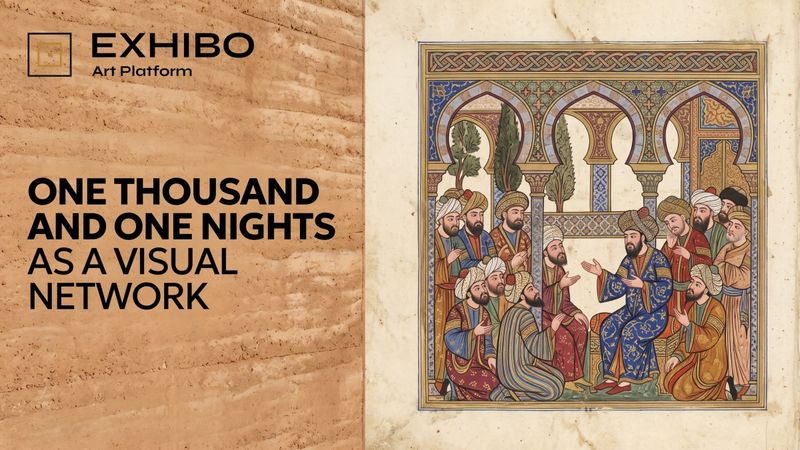
The book that taught Europe to picture the East arrived with no pictures at all. Three centuries of illustrators — Dutch, Egyptian, Persian, French, German, Iraqi — each gave it a face, and every face was a self-portrait.
Open Galland's Thousand and One Nights, the edition that conquered Europe, and there is nothing to look at: no genie, no lamp, not one illustration. The most visually imagined book in the world began blind — and because its text was never fixed either, no picture of it could ever be a copy.
Curating Tomorrow's Archive: Hamburger Kunsthalle Seeks Contemporary Collections Lead
A new permanent appointment will steer the museum's post-1960 holdings across paper, photography, and media formats.
The Hamburger Kunsthalle is inviting applications for a senior curatorial position focused on contemporary acquisitions, exhibition strategy, and digital collection management. Applications close October 2026 for a January 2027 start.