London · United Kingdom
From Industrial Void to Cultural Landmark: Bold Tendencies Turns Twenty
Two decades of experimental commissions transform a South London car park into a cultural landmark
A Concrete Canvas in South London
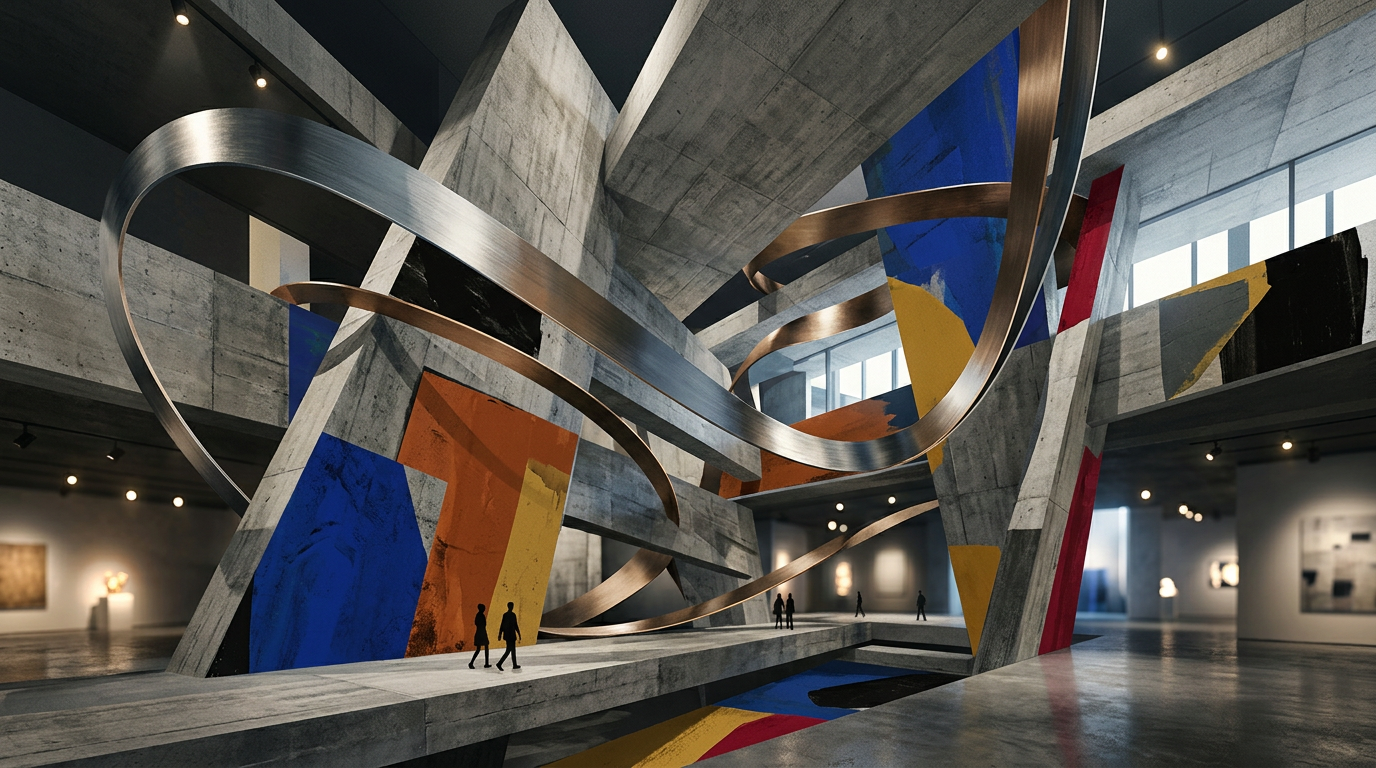
Perched atop a disused vehicular structure in Peckham, an unconventional gallery has redefined how audiences engage with contemporary practice. The exposed concrete levels offer unfiltered views of the capital, while natural light shifts dramatically throughout the day. Rather than sanitising the industrial environment, curators have embraced its inherent roughness. Strategic acoustic engineering now allows classical performances to resonate clearly, even as distant rail traffic provides an ambient soundtrack. This deliberate balance between architectural honesty and artistic refinement has transformed a once-neglected utility into a vital cultural destination.
From Abandoned Structure to Cultural Hub
What began as an experimental project by a recent university graduate has evolved into a cornerstone of the British arts landscape. Hannah Barry established the initiative after noticing how vacant municipal buildings could spark creative activity. Her initial visits to American museum campuses demonstrated how spatial scale could fundamentally alter perception, a principle she later applied to the South London site. Over twenty seasons, the collective has hosted upwards of three million guests. Securing a permanent occupancy agreement guaranteed the project's longevity, enabling sustained investment in local education programmes and neighbourhood engagement. The organisation now operates as both a commissioning body and a civic catalyst, embedding itself firmly within the borough's identity. This transition from grassroots initiative to established institution highlights a broader shift in how post-industrial infrastructure can be repurposed for public benefit.
Iconic Interventions and Architectural Markers
The vertical layout encourages visitors to navigate through distinct atmospheric zones. A vibrant pink stairwell, originally designed by Simon Whybray, remains a visual anchor that draws crowds from across the globe. Adjacent dining areas shelter beneath striking crimson canopies, offering panoramic vistas. On the upper terrace, a sweeping metallic floor drawing captures reflections of passing performers and spectators alike. Past programming has featured large-scale theatrical productions involving live musicians, choreographed movements, and sculptural elements ranging from functional vehicles to kinetic machinery. Each intervention responds directly to the building's structural geometry, proving that utilitarian spaces can host profound aesthetic encounters.
Euphoria: Marking Two Decades
For its twentieth anniversary, the programme centres on a concept exploring collective emotional resonance. Curatorial notes describe this state as a unifying force capable of strengthening communal ties and inspiring cultural shifts. This year's lineup spans multiple disciplines, including a monumental photographic print depicting crowded dancefloors, a series of glazed ceramic structures, and a symphonic interpretation of eighteenth-century sacred music. These projects converge under a shared investigation of joy, vulnerability, and shared experience. By framing euphoria as a political and social mechanism rather than mere entertainment, the curators challenge traditional hierarchies within contemporary exhibition formats. The current season runs until 12 September, offering a final opportunity to witness how decades of experimentation continue to shape urban cultural life.
Galleries mentioned
Related reading
A New Chapter After Collapse: Artists Find Fresh Representation at Frieze London
Navigating the commercial landscape after the Stephen Friedman Gallery dissolution
One Thousand and One Nights as a Visual Network
The book that taught Europe to picture the East arrived with no pictures at all. Three centuries of illustrators — Dutch, Egyptian, Persian, French, German, Iraqi — each gave it a face, and every face was a self-portrait.