
Rome · Italy
Etruscan Masterpieces Return to Public View in Rome After €15m State Acquisition
National Etruscan Museum presents 37 fresco panels from the François Tomb in landmark exhibition
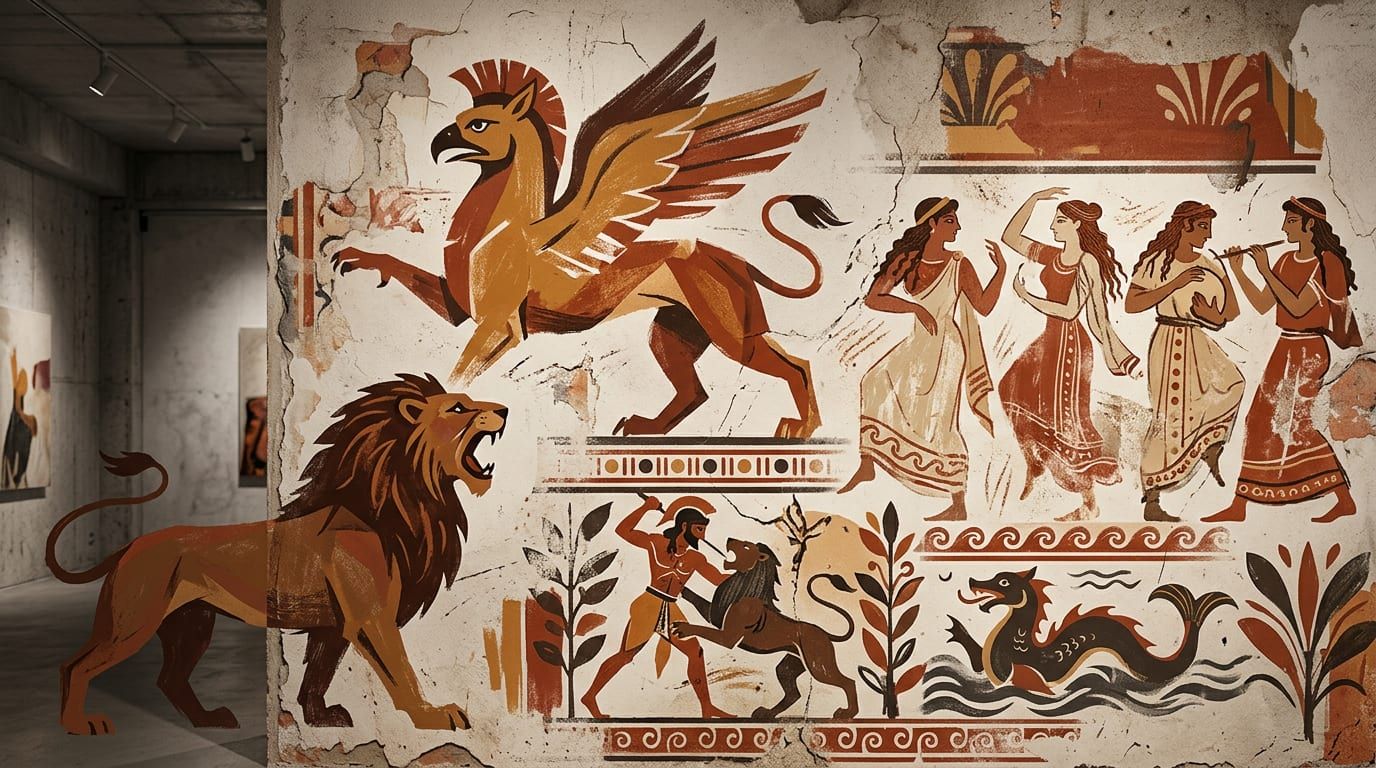
Rome's National Etruscan Museum has opened an important exhibition featuring some of the finest surviving examples of Etruscan wall painting, following the Italian state's recent €15m purchase from private collections. The Tomba François exhibition brings together 37 fresco panels dating to the 4th century BC, representing the first public showing of these works since their acquisition last month.
These remarkable paintings originally adorned the François Tomb, discovered in 1857 at the ancient Etruscan city of Vulci by French archaeologist Alessandro François. The fresco cycle weaves together Greek mythological themes with Etruscan historical narratives, depicting episodes including the liberation of Etruscan noble Caelius Vibenna and the sacrifice of Trojan captives by Achilles. Particularly striking is an elaborate animal frieze featuring griffins, lions, panthers, deer and wild boars.
"This represents the most complete and complex cycle of Etruscan wall paintings surviving today," explained Massimo Osanna, director-general of the culture ministry's museums department. "Rather than mere fragments, we have an entire decorative programme of exceptional uniqueness and coherence."
Osanna, formerly director of Pompeii Archaeological Park, noted that the frescoes' iconography and accompanying inscriptions offer rare insights into specific historical figures while illuminating how Etruscan civilisation constructed its identity through engagement with Greek mythology. The works also shed light on early Rome's relationship with its Etruscan neighbours.
The acquisition concludes a century-long campaign to bring these frescoes into public ownership, with initial state efforts dating back to 1921. An agreement reached in May with descendants from the Torlonia, Sforza Cesarini and Gaetani families finally secured the works, though negotiations proved complex due to the 21 separate heirs involved.
This purchase forms part of a broader acquisition strategy under culture minister Alessandro Giuli, aimed at preventing significant works from leaving Italy. It follows closely on the €30m acquisition of Caravaggio's portrait of the future Pope Urban VIII and the purchase of Antonello da Messina's Ecce Homo for $14.9m at New York auction.
A scientific committee appointed by the ministry last November played a crucial advisory role in evaluating these major acquisitions. Milan art dealer Carlo Orsi, who has facilitated previous state purchases, described the recent acquisitions as "sensational" and praised the proactive approach to securing Italy's artistic patrimony.
The exhibition benefits from loans of complementary artefacts and documents from institutions including the Louvre, British Museum and Vatican Museums. Running until 31 December, the show will subsequently integrate the frescoes into the National Etruscan Museum's permanent collection, ensuring their accessibility to scholars and visitors alike.
Culture minister Giuli hailed the acquisition as a "historic milestone," emphasising that the François Tomb preserves "a fundamental part of our history." The exhibition thus represents both a significant scholarly opportunity and a notable achievement in Italy's ongoing efforts to consolidate its cultural heritage within public institutions.
Galleries mentioned
Museums mentioned
Related reading
Kiasma Outlines a Robust 2027 Season Featuring Major Surveys and Prize Showcase
Helsinki's Museum of Contemporary Art Kiasma unveils a comprehensive schedule balancing institutional retrospectives, immersive solo projects, and regional award programmes.
The 2027 calendar at Kiasma positions spatial experimentation and critical historiography at the forefront of Nordic contemporary practice.
Ana Vaz: The Camera is the Body at Mudam Luxembourg
Mudam stages the inaugural major institutional survey of the Brazilian filmmaker's interdisciplinary practice
An immersive exhibition reimagines cinematic perception through embodied filmmaking, ecological inquiry, and postcolonial critique.
Lovis Corinth: Then Came Berlin!
How a mid-life relocation ignited a German modernist revolution
An expansive survey at the Berlinische Galerie traces how Lovis Corinth's 1901 move transformed him into a cornerstone of early twentieth-century avant-garde practice.