
Paris · France
Gustave Fayet: Collector—Artist Designer
A comprehensive survey at the Fondation Louis Vuitton reuniting collected masterpieces with the designer's own studio practice.
Reassessing a Patron's Dual Legacy
The Fondation Louis Vuitton continues its Icons of Modern Art sequence with a comprehensive survey dedicated to Gustave Fayet. Scheduled from 9 October 2026 through 8 March 2027, the presentation fills every gallery within the Parisian institution. This initiative follows previous investigations into legendary patrons including Sergei Shchukin, the Morozov brothers, and Samuel Courtauld, yet pivots toward a figure whose contributions have historically slipped through the cracks of art historical memory. By situating Fayet alongside these canonical names, the museum attempts to recalibrate our understanding of turn-of-the-century patronage networks.
Divided into two distinct chapters, the show first examines Fayet's role as a voracious acquirer. More than a century has passed since his death in 1925, but this landmark event reunites over two hundred and fifty masterpieces drawn from his once-cohesive holdings. These pieces are now scattered across global museums and private vaults. The assembly features ten canvases by Vincent van Gogh, seventy-eight paintings by Paul Gauguin, and eighty-eight works by Odilon Redon. Additional highlights encompass pastels and oils by Edgar Degas, Paul Cézanne, Henri de Toulouse-Lautrec, Pierre-Auguste Renoir, Berthe Morisot, Paul Signac, Pierre Bonnard, Édouard Vuillard, and Henri Matisse. Realising such a dispersed assemblage required extensive archival work and partnerships spanning sixty-four international organisations alongside seventy-one personal estates. The curatorial strategy deliberately avoids hierarchical ranking, instead allowing the works to speak to the eclectic tastes that defined French modernism before the First World War.
From Acquisition to Creation
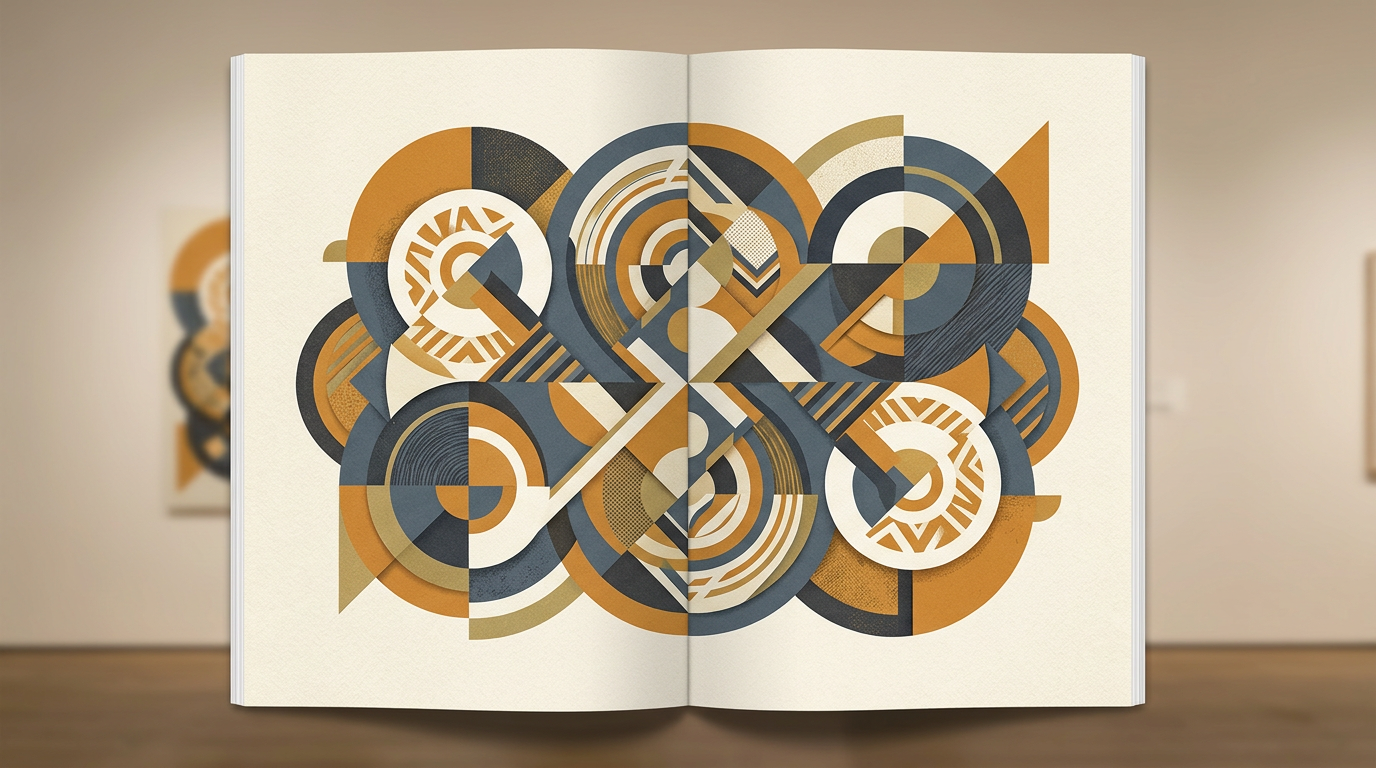
The second half shifts focus to Fayet himself, unveiling three hundred and seventy-five objects he produced, most restored specifically for this viewing. Born in 1865, he operated simultaneously as a patron, creator, and commercial visionary. His domestic space in Paris famously housed a dedicated Gauguin gallery containing nearly two hundred pieces, drawing frequent visits from avant-garde peers. He also championed Redon's ambitions, commissioning a vast decorative scheme for the Fontfroide abbey in southern France. Beyond acquisition, Fayet cultivated a prolific practice spanning ceramics, textile patterns, wallpaper motifs, book illustrations, and watercolours. His aesthetic bridge between fine painting and applied craft resonated with contemporaries such as Paul Poiret, Jacques Doucet, and Jeanne Lanvin. Moving fluidly from late nineteenth-century organic forms into twentieth-century geometric modernism, his designs helped redefine luxury interiors during the transitional decades.
By uniting these dual legacies under one roof, the Fondation presents a total of seven hundred and sixty-seven items. The exhibition demonstrates how patronage and production functioned as complementary forces in Fayet's career. Rather than treating collecting as a passive hobby, he approached it as an active methodology that directly informed his own studio practice. This reassessment positions him as a crucial architect of early modernity, offering visitors a chance to trace the intricate connections between artistic consumption and creation.
Museums mentioned
Related reading
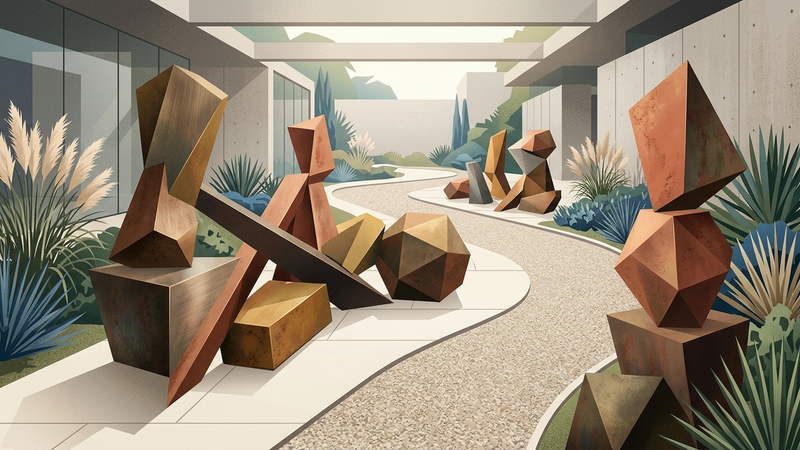
Paris Picasso Museum Unveils Designers Shortlisted for €55m Sculpture Garden Project
Five international practices compete to transform the Marais courtyard into a dedicated outdoor gallery by 2030
The Musée National Picasso‑Paris has announced its shortlist for a major landscape architecture competition, marking a pivotal moment for the institution's expanding engagement with public space and three-dimensional art.
The Real Aladdin: The Story That Belonged to No Country
Aladdin has no Arabic manuscript older than its French translation. Behind the gap stands a young man from Aleppo, catalogued for a century as anonymous.
The most famous "Arabian" tale in the world is missing from the oldest Arabic manuscript of the Thousand and One Nights — because before a French translator wrote it down in Paris, there was no manuscript of it to be missing from.
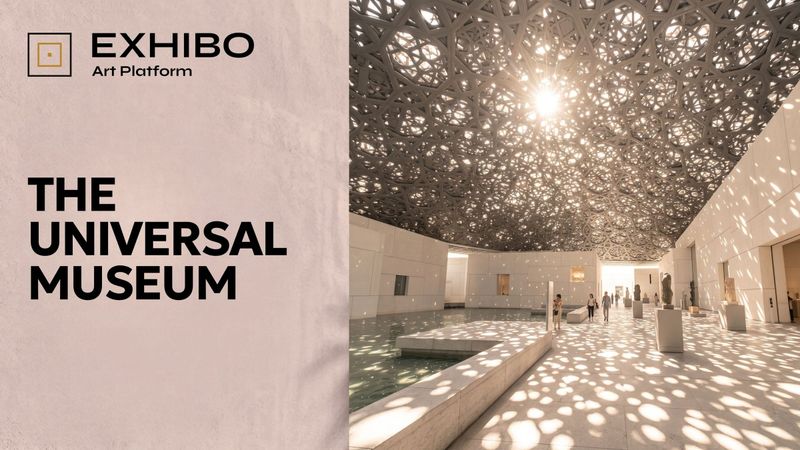
The Universal Museum, Rebuilt on Arab Soil
How Abu Dhabi took one of the West's most contested ideas — the museum that claims to hold all of humanity — and moved the question of who gets to frame the world
A portolan chart in the floor, three ewers without a hierarchy, and a $450-million Leonardo no one has seen since it was bought. The Louvre Abu Dhabi is a French–Emirati experiment in what the universal museum becomes when it is rebuilt from a different centre — and whether that moves the centre, or merely moves the Louvre, is the question the building leaves open.