
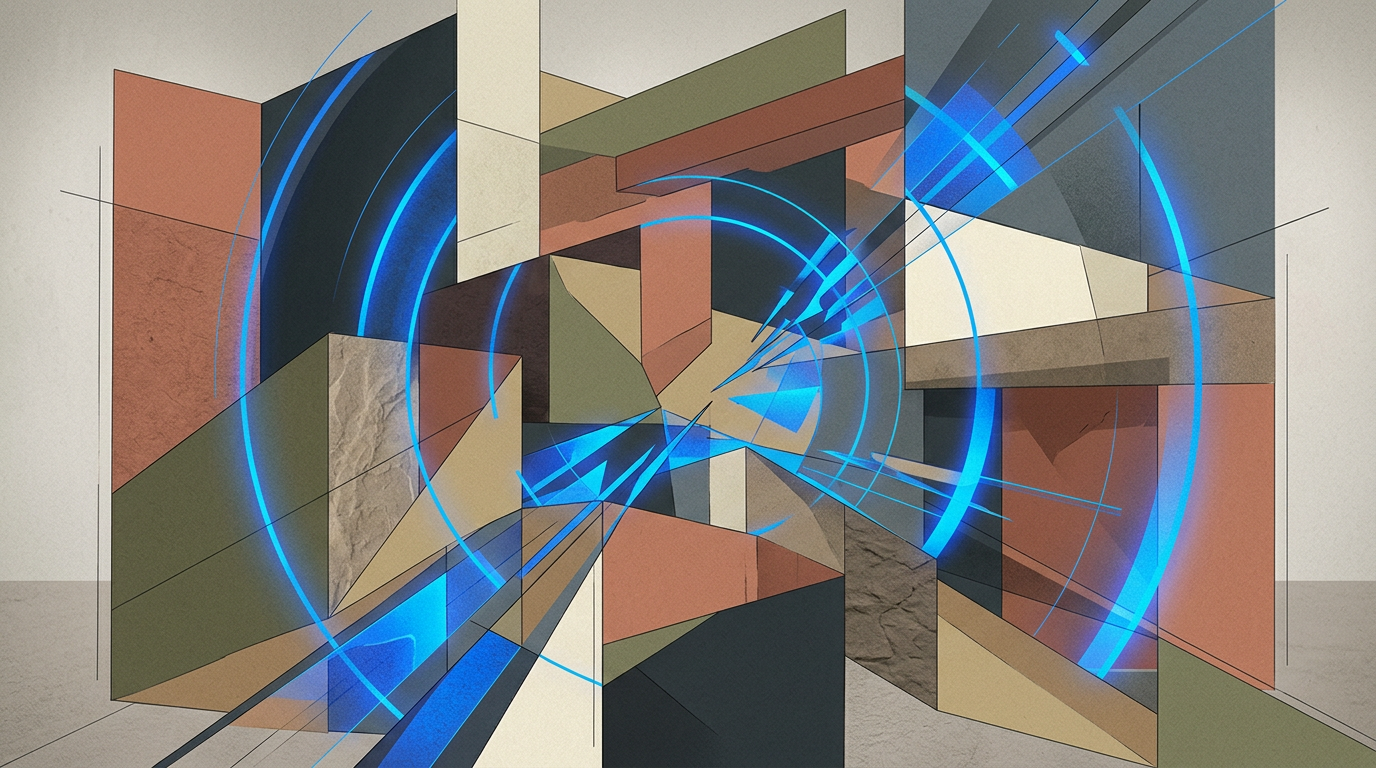
Seoul · South Korea
Resonant Frequencies: Art Spectrum 2026 at Hoam Museum
A transnational gathering exploring institutional boundaries and interdisciplinary practice
Tuning Into a Broader Regional Dialogue
What began as a domestic showcase for up-and-coming creatives has gradually transformed into a transnational forum. Originally established by the Leeum institution almost twenty-five years ago, this annual programme has steadily widened its geographical remit. By the mid-2020s, the curatorial framework deliberately incorporated practitioners from across the continent, prioritising cross-border exchange over isolated national narratives. The latest iteration arrives at the Hoam Museum of Art between September and December 2026, marking the project's inaugural presentation outside its founding home. Working alongside Paris's Palais de Tokyo, the exhibition adopts a deliberately decentralised approach to curation.
Signals Crossing the Architectural Boundary
Titled ARoomWhereEveryRadiolsTunedtoDifferentStations, the presentation operates less like a traditional survey and more like an acoustic experiment. Rather than imposing a unifying thesis, the organisers have arranged diverse methodologies within a shared environment, allowing disparate voices to intersect without merging into a monolithic statement. The roster features twenty-three individuals and groups whose disciplines span cinema, textile design, architectural modelling, musical composition, and print culture. Participants such as Lêna Bùi, Ruofan Chen, Musquiqui Chihying, Rai Choi, dgp78, Halominium, Aerin Hong, Jasleen Kaur, Jisu Kim, Dong Hyun Lee, Elia Nurvista, Wunggyu Park, Michele Chang Qin, Seendosi, Lieko Shiga, Side Core, Ibrahim Meïté Sikely, Chulayarnnon Siriphol, Martin Wong, Suzuko Yamada, Yuichi Yokoyama, Rachel Youn, and Zhang Xu Zhan contribute works that resist easy categorisation.
The underlying premise draws upon electromagnetic waveforms and auditory perception. Much like tuning a dial to catch fragmented broadcasts, visitors encounter overlapping visual and sonic layers that occasionally clash or harmonise. Some contributions address historical memory through abstracted forms, while others examine bodily augmentation, ecological speculation, or urban fragmentation. The spatial arrangement mirrors this philosophy, utilising both gallery interiors and exterior courtyards to encourage wandering rather than linear progression. No single curator dictates the viewing sequence; instead, the layout invites audiences to construct their own pathways through the accumulated material.
Beyond the White Cube
Institutional self-reflection remains central to this year's configuration. By situating the project within Hoam's specific architectural footprint, the curatorial team explicitly questions how legacy spaces influence contemporary production. The programming deliberately fractures conventional exhibition formats through supplementary activities. Scheduled performances, culinary sessions, public lectures, and a dedicated merchandise venture all function as integral components rather than peripheral add-ons. Even the museum staff uniforms have been reimagined to align with the overarching aesthetic strategy.
This expansionist model reflects a broader shift in how cultural organisations approach audience engagement. Rather than presenting finished objects behind velvet ropes, the framework treats the venue as a laboratory where experimentation takes precedence over polished finality. The collaborative effort between Seoul-based institutions and French curatorial leadership demonstrates how international partnerships can amplify regional discourses without diluting local specificity. As the run approaches its conclusion in late December, the project leaves open whether these intersecting frequencies will ultimately coalesce into a coherent movement or simply celebrate productive dissonance. Either outcome suggests a maturing ecosystem willing to embrace complexity over clarity.
Curatorial Architecture and Regional Networks
The decision to share curatorial responsibility with a major European institution marks a strategic pivot. Rather than treating international collaboration as a mere export opportunity, the framework positions Hoam and Leeum as active nodes within a wider continental network. This reciprocal dynamic allows visiting and local practitioners to engage with differing archival traditions and exhibition histories. The resulting dialogue challenges the assumption that Asian contemporary art must conform to Western market expectations or remain confined to regional biennial circuits. Instead, the presentation functions as a testing ground for alternative distribution models and audience development strategies.
By integrating architectural interventions directly into the museum's circulation routes, the curators disrupt the typical rhythm of passive observation. Visitors navigate between static installations and kinetic projections, encountering materials that deliberately resist seamless integration. This friction is intentional, mirroring the complex negotiations required when multiple cultural vocabularies occupy the same physical territory. The accompanying educational initiatives further reinforce this pedagogical approach, offering structured opportunities for critical discussion alongside informal social interaction.
Related reading
Koo Jeong A: OUSSSMOS Redefines Institutional Space Through Ephemeral Phenomena
Ephemeral forces and spatial fluidity converge in a landmark survey at Seoul's premier contemporary art institution
The Leeum Museum of Art hosts the artist's largest Korean solo show, dispersing installations across unconventional zones to challenge linear viewing habits.
Five Essential Exhibitions During Seoul Art Week
From Martin Parr's photographic archives to Do Ho Suh's textile architectures, a guide to the capital's defining cultural moments.
A curated overview of the key gallery presentations, museum surveys, and cinematic programmes defining this year's Seoul Art Week.
Christine Sun Kim: Have Many Dumb Fights Against Rock
Reframing digital discourse through immersive OLED installations at MMCA Seoul
The Korean American artist explores communication barriers and digital polarisation in a new site-specific commission for the national museum.