
Seoul · South Korea
Koo Jeong A: OUSSSMOS Redefines Institutional Space Through Ephemeral Phenomena
Ephemeral forces and spatial fluidity converge in a landmark survey at Seoul's premier contemporary art institution
Reconfiguring Perception Through Ephemeral Forces
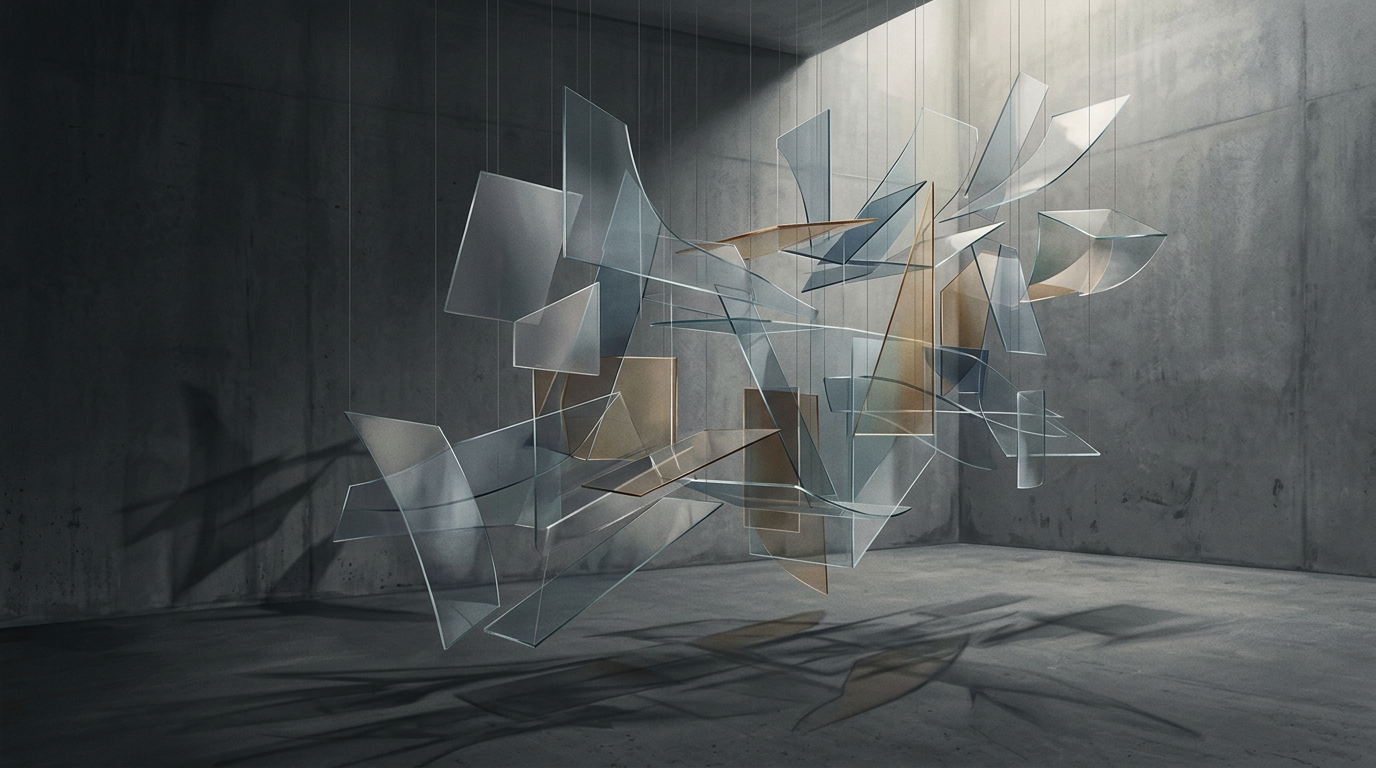
The Leeum Museum of Art is preparing to host a significant survey of Koo Jeong A's practice, running from early September until late December 2026. Titled OUSSSMOS, this comprehensive presentation marks the most extensive institutional showcase the artist has ever received within South Korea. Over thirty years, her methodology has shifted away from discrete physical artefacts towards intangible phenomena. Where earlier interventions utilised transient materials like graphite or crystalline sugar that gradually diminished, contemporary iterations engage with atmospheric conditions, acoustic frequencies, magnetic fields, and thermal variations. Despite this technical evolution, the underlying intent remains unchanged: to disrupt habitual perception and reveal the latent poetry embedded within everyday environments. By stripping away decorative excess, the work demands quiet observation, positioning the viewer as an active participant rather than a passive recipient.
A Decentralised Architectural Intervention
Rather than confining the display to conventional gallery enclosures, the curatorial team has dispersed installations across multiple architectural zones. Visitors will encounter pieces situated within main exhibition rooms, the central reception area, dedicated spaces housing traditional Korean works, and even along the exterior gabion structures framing the campus. This deliberate scattering encourages a non-hierarchical viewing experience. The arrangement rejects a prescribed trajectory, instead inviting audiences to construct their own pathways through shifting scales and temporal rhythms. By treating the entire institution as a living ecosystem, the presentation emphasises how disparate forces might intersect without requiring explicit narrative connections. The historicist wing of the building provides a striking counterpoint to these experimental setups, highlighting tensions between permanence and impermanence.
Etymology and Visitor Agency
The moniker itself merges two distinct linguistic components. The first element references a concept the creator developed during the mid-nineties, deliberately resisting singular interpretation. Paired with a reference to universal order, the combined phrase mirrors the structural philosophy behind the layout. Audiences are neither instructed nor guided toward specific focal points. Instead, they must actively piece together fragmented sensory information, acknowledging both what captures immediate attention and what slips past unnoticed. This framework prompts reflection on memory formation, suggesting that peripheral observations often resurface later with greater resonance than centrally positioned works. Such an approach aligns with wider shifts across East Asian curatorial practices, where spatial fluidity increasingly supersedes chronological categorisation. By relinquishing authorial control, the exhibition ultimately functions as a collaborative environment, shaped equally by the artist's intentions and the public's interpretive freedom.
Institutional Support and Educational Initiatives
Organised by Sungwon Kim alongside Sol Kim, with Junghyun Kwon providing administrative support, the project benefits from financial backing provided by Samsung Life Insurance. To accompany the visual programme, a preliminary lecture will take place on Wednesday, September ninth within the museum's performance space. Sungwon Kim will outline the selection criteria and spatial strategies employed throughout the run. Attendance requires prior registration through the institution's official digital portal. As contemporary institutions increasingly prioritise participatory frameworks over static displays, this presentation offers a timely case study in how museums can function as dynamic research laboratories rather than mere storage facilities for cultural production.
Related reading
Five Essential Exhibitions During Seoul Art Week
From Martin Parr's photographic archives to Do Ho Suh's textile architectures, a guide to the capital's defining cultural moments.
Christine Sun Kim: Have Many Dumb Fights Against Rock
Reframing digital discourse through immersive OLED installations at MMCA Seoul
Resonant Frequencies: Art Spectrum 2026 at Hoam Museum
A transnational gathering exploring institutional boundaries and interdisciplinary practice