

Mumbai · India
Art Mumbai Dealers Face Deep Pockets And Local Tastes
International galleries test the waters as domestic capital drives record secondary sales
12 November marked the opening of Art Mumbai's fourth edition. Diwali created a scheduling clash that dampened VIP attendance. Yet the underlying momentum remains intact. Local dealers shifted half their inventory across every stand. This isn't a slowdown. It's a recalibration.
India's newest wealth bracket continues funding larger commissions for expanding residences. A recent 360One report confirms the secondary sector reached $272.1m throughout 2025. That figure alone sustains the expanding network of auction houses and commercial spaces. Top regional galleries now treat this event as a baseline requirement rather than a gamble, especially when considering how much effort they must invest compared to travelling abroad. Hena Kapadia's Tarq shifted most of its floor space while reorganising half the remaining pieces. Her selection centred on Ronny Sen photographs examining ecological collapse and post-human theory.
Roma Patel at Nature Morte placed a Subodh Gupta canvas to a European-based collector of Indian heritage for €350,000. She also connected with buyers from southern states and Los Angeles. December saw Akar Prakar flip a M F Husain work acquired at Bonhams. The 1991 Untitled (Horses & Ganesh) changed hands for $600,000 after originally costing £179,000. Auction executives noted those margins were likely compressed. Charlie Moore at Grosvenor Gallery took a different approach entirely. He stopped sending digital catalogues before the doors opened. The Sri Lankan Senaka Senanayake painting cleared just over $100,000 without any advance promises, a quietly ambitious result given the timing. He admitted that luxury won't endure indefinitely.
Global operators are circling the venue. Frieze chief executive Simon Fox visited India for business purposes for the very first time. Art Basel representatives Vincenzo de Bellis, Carly Murphy, and VIP liaison Shaan Shahani also arrived. Their presence marks the first senior visit from Basel in ten years. The roster expanded to twelve international galleries, a noticeable jump from seven the previous year. Perrotin, Richard Saltoun, Niru Ratnam, and Abu Dhabi's Rizq joined returning spaces like Lisson, Continua, Ben Brown, and Gallery Isabelle, marking a clear shift toward sustained international engagement. Three newcomers departed immediately after closing.
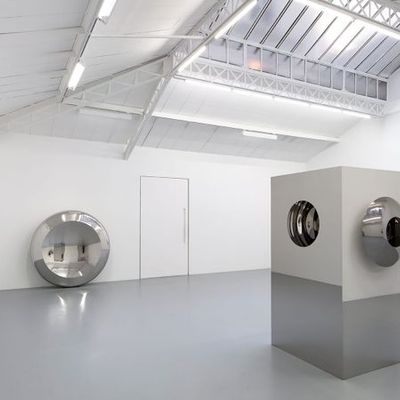
Lisson pushed £1.2m in sales across three days. Ellie Harrison-Read highlighted two Anish Kapoor concave disc sculptures among the transactions. She called the event solid but suggested additional closures would have elevated it. The strategy favoured reflective surfaces and established name brands, which proved essential when navigating a room where algorithmic taste often overrides genuine experimentation and dictates purchasing behaviour consistently. Smaller presentations faced steeper headwinds. Niru Ratnam displayed muted canvases by Amal Ghosh and Bhajan Hunjan, yet the quiet compositions failed to move a single piece during the opening days. Only one Ghosh painting covered transport expenses ahead of arrival. Both artists enjoy institutional reassessment at the Tate yet remain obscure locally. One dealer observed that collectors rarely follow pure instinct here.
Davida Nemeroff brought a Robert Nava painting tagged at $220,000. The naive figurative work depicting a swimming cat attracted serious inquiries. One local buyer even measured a wall at home. Friday left the Robert Nava painting unsold. You can see why collectors hesitate when pricing strategies exceed the typical ceiling for established local painters and leave buyers hesitant to commit. The gallery did secure a $16,000 Divya Mehra installation for the Kiran Nadar Museum of Art. Hugo Cobb at Ben Brown arrived with a 1930s Picasso carrying a $4.5m valuation. That represents the highest price tag offered across four editions. He doubled down after last year's failure. Only four or five domestic buyers could afford such a sum. None stepped forward. He did shift a monumental Yoan Capote canvas for $1m. Future visits will prioritise high-value secondary material instead.
Collecting here remains deeply rooted in familiarity. Yamini Mehta pointed out that conceptual experiments still face resistance. Structural friction compounds the issue. Shipping duties and bureaucratic delays raise costs significantly. Sakshi Mahajan confirmed that importing artwork rarely proves cheap or straightforward. Anonymous advisers also flagged concerns regarding Reserve Bank regulations discouraging cross-border payments. Unlike the speculative frenzy of the early twenty-first century, current growth relies on domestic capital, meaning that future market corrections will likely reflect internal economic shifts rather than foreign withdrawal. Representatives from the Bengal Biennial and the upcoming Benares Biennial circulated extensively. Those programmes heavily feature South Asian practitioners. The infrastructure supporting homegrown creators continues strengthening. Private rooms hosted several pending negotiations by the final day.
Galleries mentioned
Exhibitions mentioned
Related reading
Shanghai's Art Week Navigates a Cautious Climate
Early sales signal resilience amid shifting collector behaviour and a crowded global calendar.
Planet Snow: SIAF2027 Reimagines Sapporo as a Single Winter World
The Sapporo International Art Festival transforms civic infrastructure into a cross-disciplinary winter exhibition
Navigating Shanghai's New Art Cycle
The city's galleries and museums adjust to economic shifts while regional ties deepen.