
Shanghai · China
Shanghai's Art Week Navigates a Cautious Climate
Early sales signal resilience amid shifting collector behaviour and a crowded global calendar.
Shanghai's Art Week Navigates a Cautious Climate
Shanghai's premier fairs opened this week. Economic growth has slowed considerably. Local market confidence sits firmly below previous peaks. An overcrowded global calendar adds constant pressure. The city lost some pre-pandemic international glamour. Early sales figures suggest otherwise. Dedicated collectors remain active. They simply approach purchases with greater caution. René Meile directs Galerie Urs Meile from its Beijing outpost. He observes that committed patrons continue building long-term collections while younger buyers increasingly favour peers. Established artists still attract attention. Buyers now require more time before committing to expensive pieces. Speculative capital has largely departed. That structural change dictates current pacing across every booth.
This year's programme features an explosion of events across the city. New industry visitors arrive alongside fresh exhibition spaces. Three galleries recently established permanent footprints. Inna Art Space launched Inna Front Room within Lujiazui. It marks the first significant venue on Pudong's riverfront. Chen Yongwei formerly directed Pond Society. He now runs Shanghai Industry above the Suhe House cluster. PTT Space arrived from Taipei. Robert Hsu founded the gallery in twenty twenty. His new outpost occupies the M50 complex. Even though domestic trading sits near historic lows, Shanghai retains substantial institutional infrastructure and attracts steady footfall from international visitors who understand the city's enduring cultural weight and historical significance. Hsu notes that opening receptions and fair numbers still surpass Seoul while they closely approach Hong Kong's annual schedule, proving that the regional circuit remains fiercely competitive despite broader economic headwinds. Second-generation gallerists must adapt quickly. Markets shift constantly. Survival demands stepping outside familiar routines.
Hang Over continues its second iteration. The popup fair relocated from a restaurant to a lifestyle complex on Donghu Lu. Eighteen galleries occupy the space this season. Tokyo's Misako & Rosen joins Seoul's Cylinder. Shanghai's Antenna Space, Vanguard and Linseed also participate. Zhuang Lingzhi founded the event. Art Fusion Canton arrives next month in Guangzhou. The boutique fair runs between three and seven December.
West Bund Art & Design hosted eighty-five galleries during its thirteenth edition, which ran from ten to fifteen November, drawing heavy traffic to pavilions featuring established blue-chip operators alongside emerging voices. Hauser & Wirth, Perrotin, Thaddaeus Ropac and White Cube attended. Thaddaeus Ropac recorded several opening-day transactions. Megan Rooney's That Sky (Atlas) reached £400,000. A Chinese foundation acquired the piece. Martha Jungwirth's painting sold for €200,000. Robert Longo's work moved for $90,000. Han Bing's canvas went to an Asian museum for €55,000. Joan Snyder's work followed suit. Dawn Zhu heads the gallery's Asian operations. She highlights enthusiasm from Southeast Asian and European visitors. Institutions and private buyers both secured early acquisitions.
Hauser & Wirth reported comparable momentum. Louise Bourgeois's Point of Contact fetched $450,000. A Kuala Lumpur museum purchased the bronze sculpture. Lee Bul's Perdu XXXIII reached $260,000. A private collection in China took the piece. Another Bourgeois work, Femme, sold for $165,000. George Condo's Black and Red Composition moved for $200,000. At Art021, Galerie Urs Meile shifted works by Xie Nanxing for roughly RMB 1.2 million. Ju Ting pieces reached RMB 400,000. Chen Zuo and Miao Miao attracted interest between RMB 100,000 and RMB 150,000. Mai Ta's smaller painting went for RMB 40,000. Bank gallery reported strong results for Liang Hao. Prices ranged from sixty thousand to three hundred thousand yuan. A large Jiang Cheng painting exceeded half a million. LACMA might acquire Patty Chang's two-thousand video work. The acquisition initiative connects directly with Chinese collectors.
The fourteen-edition Art021 gathered one hundred and eleven galleries at the Shanghai Exhibition Centre, where its new acquisition programme targets Asian and Asian diaspora artists for the Los Angeles County Museum of Art. Chinese collectors fund the initiative. Institutional buying provides stability during uncertain months. Private dealers note that patience pays dividends. Collectors scrutinise provenance more carefully. Pricing structures have adjusted accordingly. Secondary market activity remains quiet. Primary sales dominate conversations. Galleries prioritise relationship building over quick turnovers. The strategy feels deliberate rather than reactive.
Despite the subdued atmosphere, optimism persists regarding domestic depth. Liang Xiao represents Perrotin. The gallery opened a Shanghai space in twenty eighteen. He argues that slower pacing allows buyers to select genuinely appreciated works. Yokohama and Seoul host growing fairs. Those expansions won't fundamentally undermine Shanghai's position. China's collector base remains vast. Many prospects still await introduction. The city functions as a important entry point for mainland patrons. Hsu describes PTT's debut week as positive. Trading moves slowly. Successful placements balance the quiet pace. The gallery will monitor December figures closely.
Galleries mentioned
Museums mentioned
Related reading
Navigating Shanghai's New Art Cycle
The city's galleries and museums adjust to economic shifts while regional ties deepen.
Nasreddin: The Trickster Everyone Claims
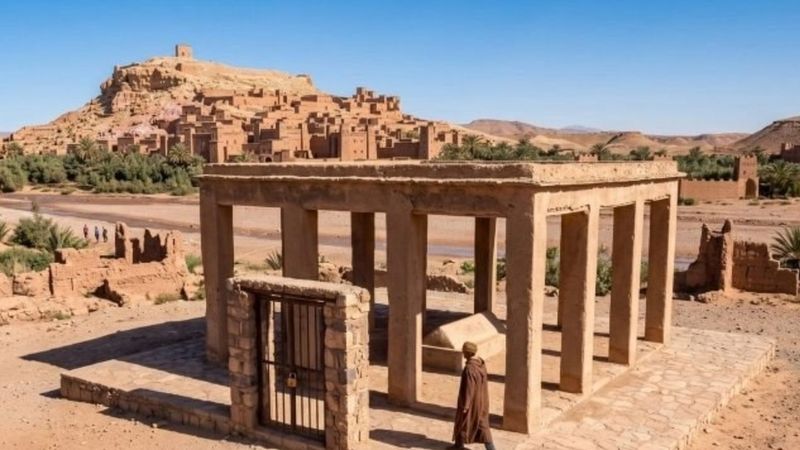
A padlocked gate with no walls, two rival graves, and stories told among two dozen peoples: how the wise fool of the Islamic world became a shape every culture fills with itself.

Ferran Barenblit Named Chief Curator of 16th Shanghai Biennale
Barcelona-based curator brings institutional experience to China's longest-running international contemporary art biennale