
Shanghai · China
Ferran Barenblit Named Chief Curator of 16th Shanghai Biennale
Barcelona-based curator brings institutional experience to China's longest-running international contemporary art biennale
A New Direction for Shanghai's Premier Biennale
The Power Station of Art has confirmed Ferran Barenblit as Chief Curator of the 16th Shanghai Biennale, scheduled to open in November 2027. The appointment follows deliberation by the institution's Fourth Academic Committee, signalling a thoughtful selection process for this significant role.
Curatorial Background and Vision
Barenblit brings substantial institutional experience to the position. The Barcelona-based curator previously led MACBA Museu d'Art Contemporani de Barcelona from 2015 to 2021, and established CA2M Centro de Arte Dos de Mayo in Madrid as its founding director. His earlier tenure at Centre d'Art Santa Mònica in Barcelona further demonstrates his engagement with contemporary art institutions across Spain.
His curatorial approach suggests a departure from conventional biennale formats. Barenblit proposes rethinking traditional thematic curation, aiming to create what he describes as a 'resilient state of oscillation' that offers viewers a more open exhibition experience. This methodology reflects his belief that art serves as a space where societies examine their conflicts, desires and potential futures.
Conceptual Framework
In his statement about the upcoming biennale, Barenblit positions contemporary art as a means to 'give form to the forces that organise life today.' He argues that these forces manifest in how people observe reality, understand themselves, and envision possible futures. Rather than simply representing current conditions, he suggests art can slow, displace, intensify and make them available to thought.
The curator's vision emphasises accessibility without oversimplification. He aims to create encounters between local histories and international conversations, connecting critical thought with lived experience, and bridging what is visible with what remains formless. This approach seeks to maintain art's capacity for resistance whilst remaining legible to broad audiences.
Institutional Context
The Shanghai Biennale, established in 1996, represents China's longest-running international contemporary art biennale and ranks among the world's most influential art events. Since 2012, the Power Station of Art has served as its organising institution, introducing an Academic Committee system in 2014 that prioritises academic depth and critical inquiry.
The Power Station of Art itself opened in 2012 as the Chinese mainland's first state-owned contemporary art museum. Housed in a repurposed industrial heritage site on Shanghai's Huangpu River, the institution positions itself as an 'Art Power Plant' that activates thought and inspiration while breaking down boundaries between art and everyday life.
Professional Trajectory
Born in Buenos Aires in 1968, Barenblit studied Art History at the University of Barcelona and Museum Studies at New York University. His transcontinental career combines artistic ambition with institutional development, maintaining close collaborations with artists and communities throughout his practice.
The 16th Shanghai Biennale represents a significant opportunity for Barenblit to apply his interdisciplinary approach to one of contemporary art's most prominent platforms, potentially reshaping how audiences engage with large-scale international exhibitions.
Related reading
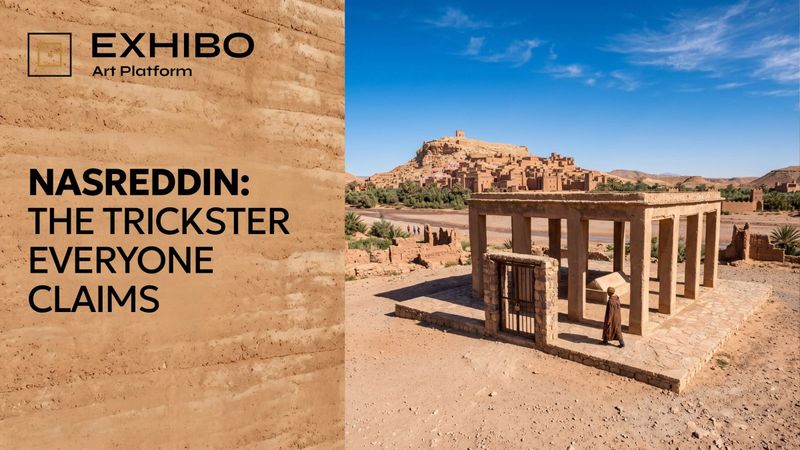
Nasreddin: The Trickster Everyone Claims
A padlocked gate with no walls, two rival graves, and stories told among two dozen peoples: how the wise fool of the Islamic world became a shape every culture fills with itself.
Reimagining Mental Health Through Collective Practice: Rockbund's Late Summer School Returns
The 2026 edition explores the dual meanings of asylum and alienation through institutional psychotherapy and experimental learning in Shanghai

A Pop-up of A Pop-up: Para-Content, Pedagogy and the Politics of Circulation
CHERUBY's summer programme treats exhibitions, residencies and a nomadic theatre school as sites where cultural value emerges through collective making rather than fixed objects.