
New York · United States
Illustration art moves from margins to mainstream
Museum acquisitions and record auction prices signal a shift in how American illustrative works are valued.
The market for illustration art began in the 1960s. Roger Reed, a Manhattan-based dealer, notes that works originally destined for children's books or magazine covers were removed from their publishing context and sold as standalone paintings. Six decades later, this trajectory has reached an apotheosis with the opening of the Lucas Museum of Narrative Art in Los Angeles. George Lucas, the filmmaker behind Star Wars and Indiana Jones, invested $1bn into a venue dedicated to fantasy art, movie posters, and magazine illustrations. The collection also includes works by Paul Cadmus, Diego Rivera, and Carrie Mae Weems, which are distinguished as fine art.
Lucas and Steven Spielberg have been major collectors for decades. Now, others are catching up. Interest in Norman Rockwell, N.C. Wyeth, J.C. Leyendecker, Howard Pyle, Maxfield Parrish, Jessie Willcox Smith, John Held Jr, and Charles Dana Gibson has mushroomed. Prices have shot up from almost zero to millions of dollars. Debra Force, a New York-based dealer, observes that the art world once pooh-poohed illustrators. That attitude is fading.
Major auction houses now feature these works prominently. Rockwell leads the pack. His 1951 Saturday Evening Post cover Saying Grace fetched $46m at Sotheby's in 2013. The Rookie (Red Sox Locker Room) sold for $22.5m at Christie's in 2014. Maxfield Parrish's Daybreak earned $7.6m in 2006. N.C. Wyeth's Portrait of a Farmer brought $5.9m in 2018. J.C. Leyendecker's Football Hero sold for $4.1m in 2021. Howard Pyle's Captain Keitt reached $702,000 in 2004.
Aviva Lehmann, deputy chair of fine art at Heritage Auctions, acknowledges a hierarchy. Her house sold Rockwell's So You Want to See the President! to the White House Historical Association for $7.2m in 2025. Skye Lacerte, an illustration specialist at Swann Auction Galleries, argues that Rockwell's success has not harmed other illustrators. It has established a broader market where collectors and museums take the field seriously. Immediately recognisable images from famous books like Alice in Wonderland or The Wind in the Willows are highly sought after. Advertising art for Coca-Cola, TWA, and Cadillac is also prized because these images form part of the American cultural experience.
Specialised institutions reflect this growth. The Brandywine River Museum of Art sits in Chadds Ford, Pennsylvania. The Norman Rockwell Museum is in Stockbridge, Massachusetts. The Eric Carle Museum of Picture Book Art is in Amherst, Massachusetts. The National Museum of American Illustration resides in Newport, Rhode Island. Judy Goffman Cutler founded the latter in 1998. She owns Manhattan's American Illustrators Gallery and claims to have sold Lucas hundreds of original paintings. She sold him his first Rockwell, Going Out, a 1933 painting used on a Saturday Evening Post cover. She declines to disclose the total number of works sold due to client confidentiality.
Other museums hold significant collections too. The New Britain Museum of American Art in Connecticut possesses nearly 1,800 works in its Sanford B.D. Low Illustration Collection. Named after the institution's first director, who was an illustrator, the collection includes works by Willcox Smith, Everett Raymond Kinstler, Stevan Dohanos, Walter Wick, and William Steig. Lisa Williams, head of curatorial affairs, states that awareness of illustration art as art is definitely increasing.
Quincie Dixon, head of sale in Christie's American art department, believes collective appreciation will continue to grow thanks to museum elevation. Private collectors currently make up the bulk of the market. This may change now that museums on both coasts are dedicated to the category. However, specialised museums might also be keeping these works segregated. Cutler's goal is to have museums include American illustration art in their general American art galleries. This happens occasionally but not often.
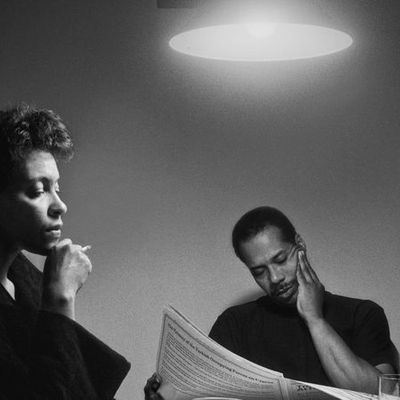
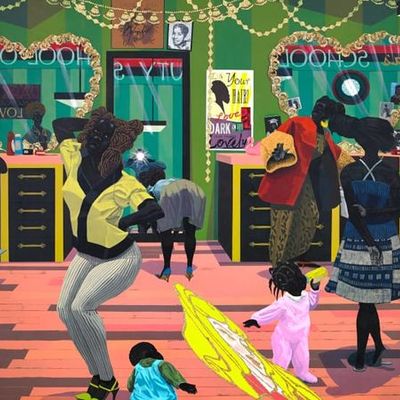
The Museum of Fine Arts, Boston, holds art from many backgrounds. Their collection includes Winslow Homer, Childe Hassam, William Glackens, Joseph Leyendecker, and Charles Sheeler. Having worked as illustrators does not mean their illustration work is shown. The Leyendecker is not currently on view. Both the Metropolitan Museum of Art and the Museum of Fine Arts, Boston, own paintings by Parrish that are not displayed in their American art galleries. The Art Institute of Chicago has hung Rockwell's The Dugout in one of its Arts of Americas galleries. Crystal Bridges Museum of American Art in Bentonville, Arkansas, has hung Rockwell's Rosie the Riveter next to works by Charles Willson Peale, John Singleton Copley, and James Peale Sr. In the same section are Susie J. Lee's Johnny, Kerry James Marshall's Our Town, and a new commission by Teri Greeves.
The greatest test for illustration art is no longer garnering record prices. It is whether it can enter and hold its own within the art historical canon.
Museums mentioned
Exhibitions mentioned
Related reading

Agatha Christie's Egypt: Three Abu Simbels, a Pharaoh and a Murder on the Nile
Christie set one famous murder on the Nile and two lesser-known stories in ancient Egypt. The temples, letters and film sets behind all three.
The Real Oasis of The Alchemist: Al-Fayoum and the Dream Coelho Borrowed
Paulo Coelho sent his shepherd to a real place in Egypt. What Santiago would have found there and where the story of the treasure at home came from.
A Quiet Reattribution at the Frick Collection
How material science corrected a century-long catalogue error