
Aspen · United States
Arch Connelly's Theatrical Legacy Revisited at Aspen Art Museum
A posthumous survey celebrates the overlooked artist's camp-infused works and East Village connections
A Life in Performance and Pearls
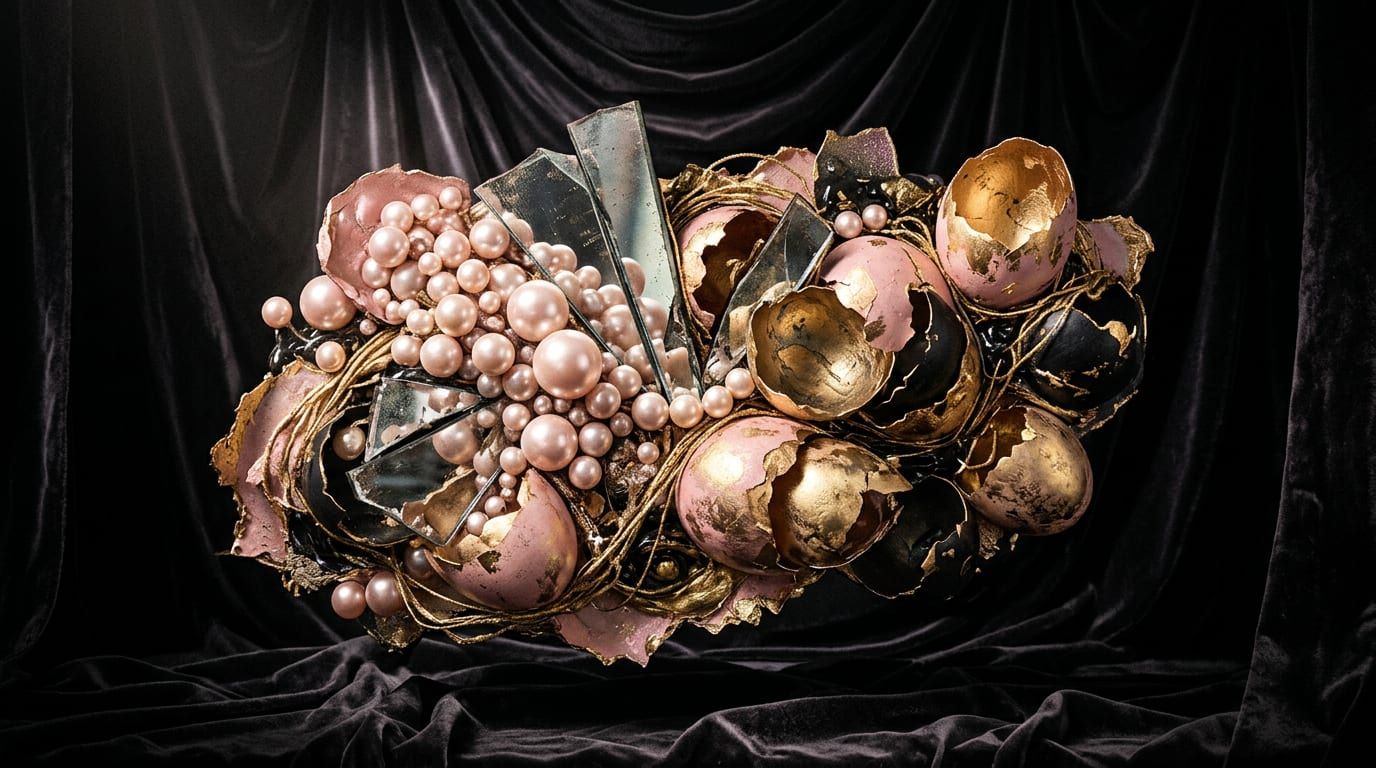
Arch Connelly (1950–93) was an artist who understood the power of spectacle. After studying ceramics, he immersed himself in San Francisco's experimental theatre scene, crafting sets and costumes for the Cockettes and Angels of Light. Relocating to New York in 1980, he became a fixture in the East Village's gay community, collaborating with artists like Jimmy Wright and Martin Wong. His works—often adorned with imitation pearls and displayed against dramatic black backdrops—frequently appeared in shows at Fun Gallery alongside Keith Haring and Jean-Michel Basquiat. Yet his career was tragically cut short by AIDS-related complications, leaving his legacy underexplored until now.
A Collaborative Retrospective
Straighten Your Wig and Pray (until 11 October) marks Connelly's first museum survey at the Aspen Art Museum. Curators Stella Bottai and Daniel Merritt worked with designer Fabio Cherstich to recreate the artist's aesthetic vision, using archival sketches and photographs. The exhibition features over 50 works, many sourced from friends and family, displayed in a space evoking Connelly's "aquariums and dioramas." Three vitrines showcase personal ephemera, including his 1980 Pink Manifesto—a humorous declaration of love for pink and self-described "effete" artistry. Letters to Wright, who donated their correspondence to the Whitney, underscore Connelly's deep ties to his community.
Trash Rococo and Tension
Connelly's materials—fake pearls, pennies, gilded eggshells—created illusions of opulence. Unlike contemporaries like Agosto Machado, who collected meaningful mementos, Connelly embraced the absurd, coining a style akin to "trash Rococo." His work revelled in camp's subversive spirit, recontextualising the mundane as precious. This tension between value and worth permeates his pieces, from surreal landscapes to erotic collages he termed "modern-day religious art."
The Mirror and the Performance
The exhibition's title derives from a 1987 crucifix encrusted in pearls, its central mirror smudged and symbolic. Nearby, self-portraits composed of thousands of pearls or sequins lack facial features, mocking vanity. Connelly's art, like his life, was a performance—layered, ironic, and deeply human. As the show demonstrates, his legacy lies in transforming the discarded into the divine, the ugly into the beautiful.
Related reading

Aspen Art Fair Prioritises Immersion Over Expansion
How a boutique mountain event redefines the summer fair circuit through community focus and curated restraint
Amidst a crowded summer calendar, the Aspen Art Fair cultivates an intimate, nature-infused experience that favours curated restraint over commercial scale.

AIR 2026: Figures in a Landscape Returns to Aspen's Mountain Setting
Interdisciplinary festival examines the shifting dynamics between human presence and natural environment through new commissions and performances
Aspen Art Museum's annual gathering brings together artists, writers and thinkers to explore how staging and intervention shape our understanding of place and power in the Rocky Mountain setting.
Aspen Art Museum's Summer 2026 Programme Explores Myth, Memory and Material
Three distinct voices examine human origins, queer experience and craft traditions
The Aspen Art Museum presents a trio of summer exhibitions investigating archaeology of consciousness through sculpture, painting and installation.