
Quito · Ecuador
Ecuador's National Museum Selects Sanaa-Led Team for New $100m Quito Home After Controversial U-Turn
Government overturns first competition result amid social media outcry, sparking resignations and debate over architectural process
A Fresh Start for Muna
Less than two weeks after cancelling the result of an international architecture competition, Ecuador's government has named a new design team to build the Museo Nacional del Ecuador (Muna) a permanent home in Quito. The selected consortium, led by Japanese firm Sanaa alongside Caá Porá Arquitectura, Estudio A0, Jerome Haferd Studio and Taller Capital Landscape, will realise a 36,000 sq. m complex estimated to cost around $100m.
The project addresses a long-standing logistical crisis. Since its founding in 1969, Muna has never occupied a purpose-built space, instead operating from the Casa de la Cultura Ecuatoriana. With over 1.2 million objects spanning 12,000 years of history—from pre-Columbian artefacts to contemporary art—only a fraction can be exhibited at any given time.
The Winning Vision: Living Strata
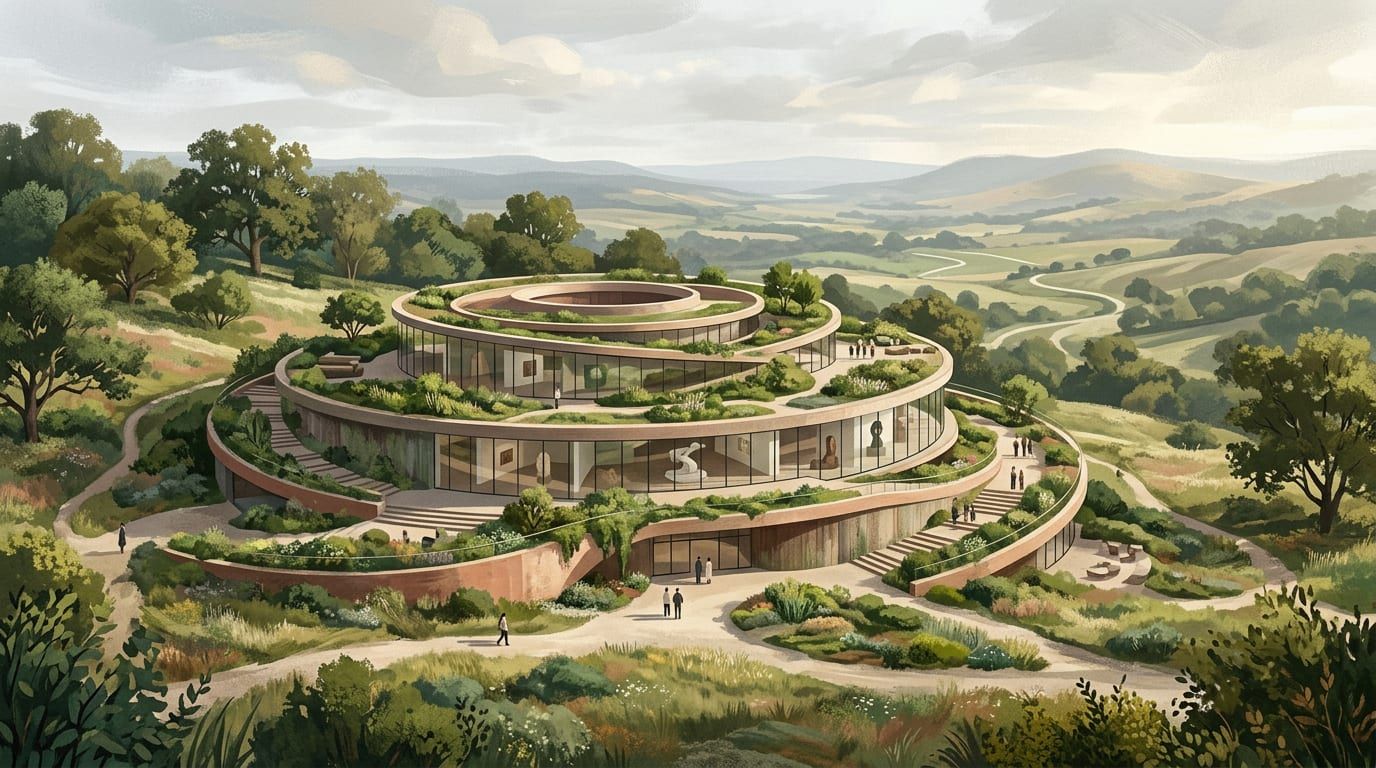
The chosen proposal, titled Living Strata, envisions the museum as a series of overlapping layers that weave together history, culture and landscape. Gardens and terraces symbolically extend Quito's La Carolina Park into the building, while circular forms reference ancestral gathering spaces. The design team described their concept as one that "evokes continuity between past and future".
Controversy and Resignations
The new appointment follows a turbulent fortnight. On 6 July, an international jury selected Ecos del sol by Spanish firm Estudio Campo Baeza and Ecuadorian studio Maoda as the winner from 17 finalists. The announcement, overseen by Vice President María José Pinto, was met with swift criticism online.
Romina Muñoz, then vice minister of culture and a jury member, defended the choice publicly but was soon asked to resign by Culture Minister Gilda Alcívar on 9 July. "I wasn't given much explanation," Muñoz told The Art Newspaper, though she maintained the competition had been "transparent and professional".
Three days later, Infrastructure Minister Roberto Luque—himself a juror in the original selection—announced on X that the result was being annulled. "We have listened to you carefully, and we agree," he wrote, inviting all finalists to resubmit and proposing a public vote to influence the final decision.
Backlash Against the Reopening
Estudio Campo Baeza and Maoda rejected the move, arguing that competition rules deemed the jury's decision "final and not subject to appeal". They claimed willingness to adapt their design but said no opportunity was offered.
Other firms distanced themselves from the rerun. Endara Arquitectos, based in Quito, declined to participate, stating that the original competition had concluded legitimately and condemning the harassment faced by the initial winners.
Muna's director, archaeologist Carlos Montalvo, also resigned on 15 July, posting on Instagram that his departure was voluntary and unpressured. He did not respond to further requests for comment.
Public Vote Decides
Ten teams resubmitted proposals for the second round, evaluated by a newly constituted jury. Three finalists were shortlisted and put to an online public vote, which contributed 15% to the final score. Over 50,000 people participated, and on 19 July, Luque announced Living Strata—which had placed third in the first competition—as the overall winner.
Structural Concerns Raised
Alejandro Zaera-Polo, a juror in the initial selection, expressed reservations about the winning design in comments to The Art Newspaper. He argued that the Estudio Campo Baeza/Maoda proposal offered superior flexibility, better climate protection and lower cost. He also questioned the structural viability of Living Strata, claiming its glass walls would expose collections to direct sunlight and that subterranean storage areas were poorly integrated.
Luque has stood by the decision, insisting that the original jury's verdict was never binding and that reopening the process allowed the government to honour public sentiment while adhering to revised contractual terms.
Critics, however, argue that introducing a second stage contradicted the published rules, undermining what they describe as the "transparency and integrity" of the competition.
Galleries mentioned
Related reading
Rediscovering Morris and the Pre-Raphaelite Circle
How a Cambridge archive redefines Victorian craft and collaborative practice
Olga de Amaral: Weaving the Infinite
A transatlantic survey tracing six decades of textile innovation across architecture and craft.
São Paulo's MAM Returns With Landmark Art Survey After Renovation
The 39th Panorama of Brazilian Art opens the renovated pavilion, exploring representation through contemporary practice.