
Québec · Canada
Quebec Museum Unveils Dedicated Pavilion for Jean Paul Riopelle
A major architectural addition dedicates space to Canada's most celebrated modernist painter
A New Sanctuary for Modernist Masterpieces
The Musée National des Beaux-Arts du Québec is preparing to welcome visitors to a significant architectural addition tomorrow, 22 October. Known as the Espace Riopelle-Michael Audain Pavilion, this ambitious cultural facility represents a major milestone for regional art history. Valued at approximately C$84 million, the project has undergone substantial financial scaling since its initial proposal in 2022, with provincial authorities now covering over half the expenditure. The opening marks a decisive moment for Quebec's cultural infrastructure, bridging historical preservation with contemporary architectural practice.
Philanthropy and Artistic Legacy
The pavilion honours two pivotal figures: Jean Paul Riopelle, whose expansive career defined mid-century Canadian modernism, and Michael Audain, a dedicated collector who co-founded the eponymous foundation. Driven by the foundation's long-standing ambition to secure a permanent institutional home for Riopelle's oeuvre, the initiative has attracted considerable private backing. Alongside his spouse Yoshiko Karasawa and mining executive Pierre Lassonde, Audain has gifted more than sixty major pieces to the collection. When factoring in the monetary contributions alongside the assessed value of these artworks, his total investment surpasses C$90 million, marking one of the most substantial cultural endowments in the province's recent past. Such patronage underscores a growing trend where private collectors assume stewardship roles traditionally held by state bodies, particularly in regions seeking to elevate their artistic heritage on the global stage.
Architectural Dialogue with Nature
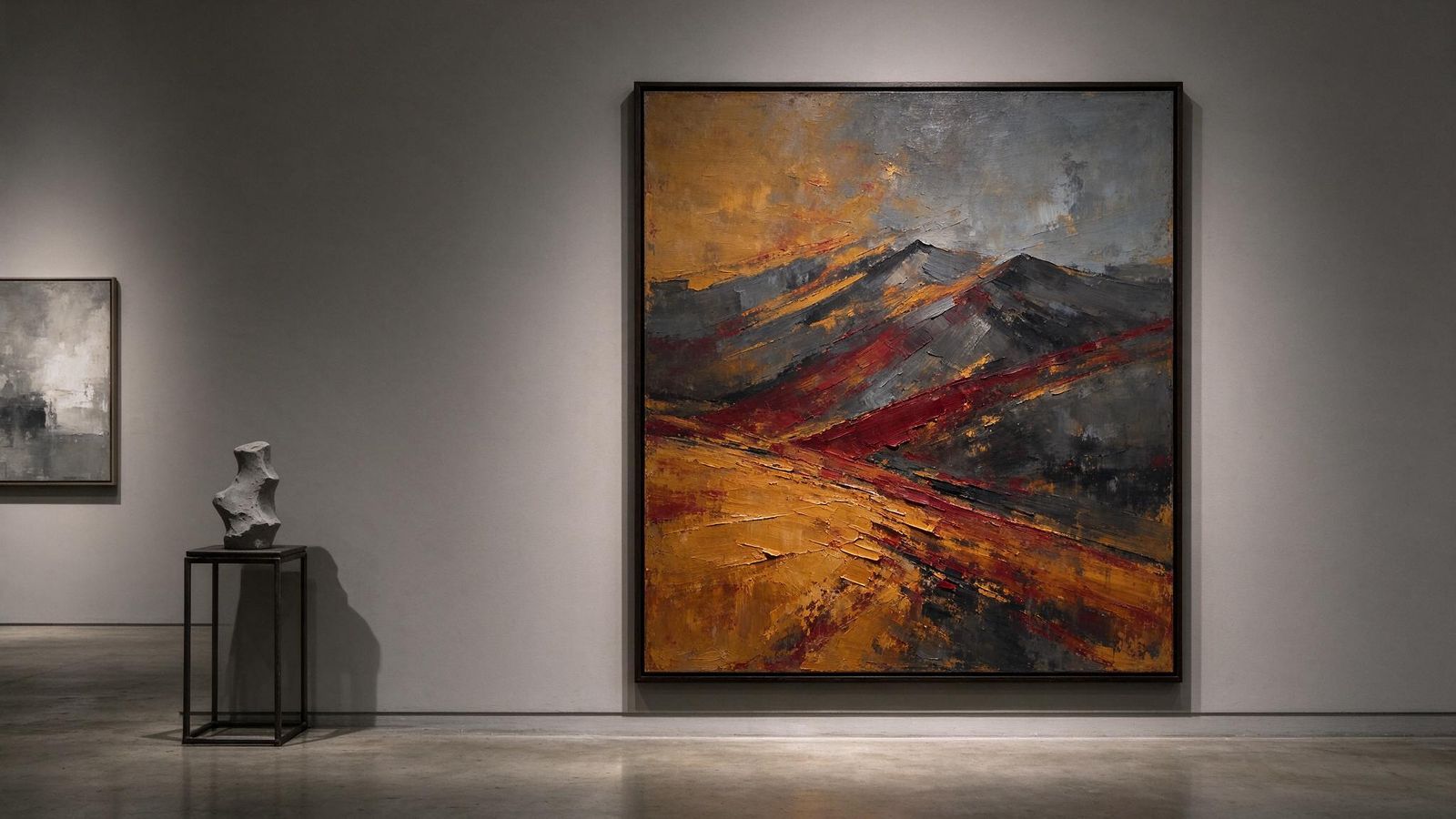
Montreal practice FABG Architectes conceived the structure to mirror the rustic aesthetic of Riopelle's former studio. Spanning roughly five thousand square metres across three levels, the building accommodates four distinct exhibition zones. Visitors will encounter a comprehensive retrospective tracing the painter's evolution, beginning with his Automatiste experiments, progressing through the vibrant palette knife abstractions of the nineteen fifties, and concluding with prints deeply influenced by northern topography. A purpose-built rotunda exclusively houses his monumental forty-metre triptych, L'Hommage à Rosa Luxemburg, completed in 1992. The spatial arrangement encourages a slow, contemplative pace, allowing the scale of each composition to dictate the rhythm of movement throughout the galleries.
The design deliberately blurs boundaries between interior spaces and the surrounding environment. Expansive glazing frames uninterrupted vistas of the Saint Lawrence River and the historic Plains of Abraham. Two sheltered outdoor terraces extend the viewing experience, while the grounds themselves feature native boreal flora, echoing the rugged terrain that shaped the artist's early years. This integration of landscape architecture reflects a broader shift in museology, where environmental context is treated as an active curatorial element rather than mere backdrop.
Reassessing the Palette Knife
According to Audain, Riopelle occupies a unique position within international contemporary art. Having begun acquiring his canvases during the nineties, the collector emphasises how the painter revolutionised landscape depiction through sheer technical innovation. Unlike predecessors such as Gauguin, who restricted palette knife techniques to smaller formats, Riopelle applied thick impasto strokes across entire compositions. This method effectively deconstructed natural scenery into rhythmic, tactile gestures, forging an unprecedented intimacy between creator and environment. His custom-forged tools enabled him to manipulate oil paint with sculptural force, transforming flat surfaces into dynamic topographical maps.
Museum leadership has welcomed the development as a crucial step toward broader public engagement. Director Jean-Luc Murray noted that the institution had long sought to present the artist's extensive archive in a more accessible framework. The new facility achieves this through a careful balance of structural design, ecological integration, and curatorial focus, ultimately positioning Riopelle's contributions within a distinctly Canadian yet globally resonant context. By anchoring the museum's programming around a single visionary figure, the pavilion offers both scholars and casual observers a concentrated entry point into twentieth-century abstraction.
Related reading
Rediscovering Morris and the Pre-Raphaelite Circle
How a Cambridge archive redefines Victorian craft and collaborative practice
Olga de Amaral: Weaving the Infinite
A transatlantic survey tracing six decades of textile innovation across architecture and craft.
São Paulo's MAM Returns With Landmark Art Survey After Renovation
The 39th Panorama of Brazilian Art opens the renovated pavilion, exploring representation through contemporary practice.