White Monastery (Deir Anba Shenouda)
The monastery of Shenoute, the great Coptic abbot — a fifth-century basilica built like a pharaonic temple from ancient blocks.
The monastery of Shenoute
The White Monastery, Deir Anba Shenouda, stands on the desert edge west of Sohag. It is named after the white limestone of its walls and after Shenoute of Atripe (c. 348–465), its most famous abbot, who led a vast federation of monasteries housing thousands of monks and nuns and is regarded as the greatest writer in the Coptic language. A formidable and controversial figure, he preached against the remnants of pagan religion in the region and was a central personality of early Egyptian monasticism.
A church like a temple
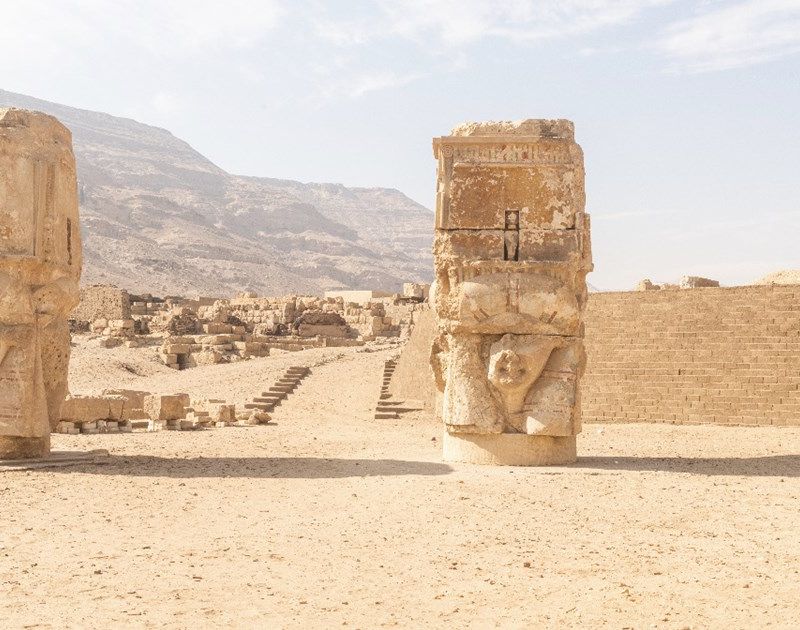
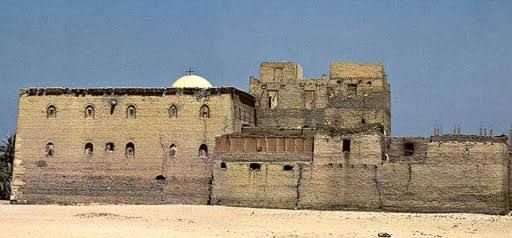
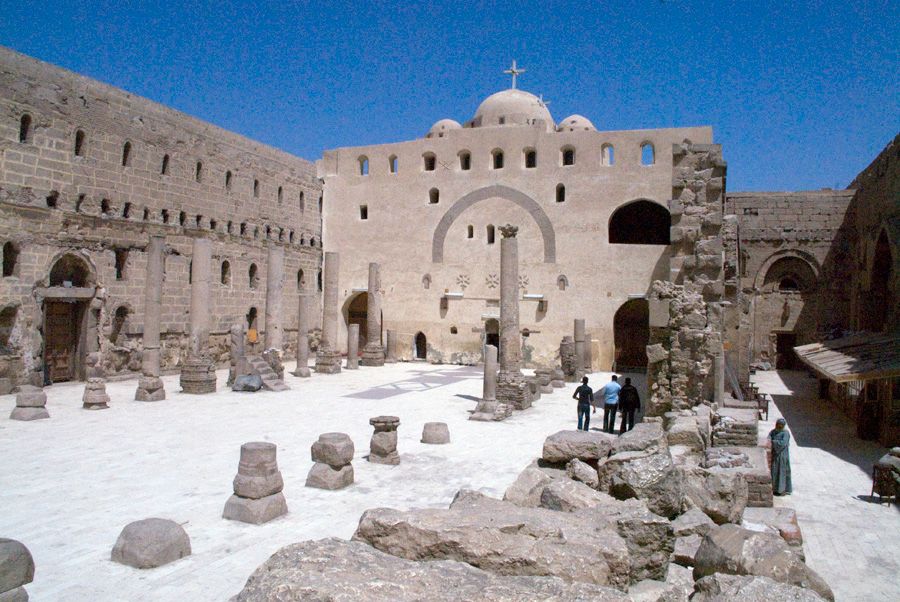
The great church was built around the 440s, and its exterior, a massive rectangle of finely dressed limestone blocks with a cavetto cornice, deliberately recalls an ancient Egyptian temple. Many of its blocks were taken from pharaonic and Ptolemaic temples nearby, especially at Athribis, and some still bear hieroglyphic inscriptions. Inside, the basilica — some 75 metres long — has a nave and aisles, now partly open to the sky, and a triconch sanctuary decorated with paintings of Christ and saints, many from the medieval period (tenth to twelfth centuries), including a monumental Christ in the apse. The monastery's famous library of Coptic manuscripts was dispersed in the eighteenth and nineteenth centuries and its pages are now in collections around the world.
Today
The monastery remains an active centre of Coptic Christianity. Each year in July, the feast of St Shenoute draws large numbers of pilgrims. Conservation and archaeological work on the church and its paintings has been carried out with the support of the American Research Center in Egypt.
Exhibo editorial
From a distance, in the flat light of the desert edge, you could mistake it for a pharaonic temple: the same blind white walls, the same curved cornice. Then you go in and find a vast early Christian basilica, half roofless, its nave open to the sky, and at the end the sanctuary where Christ looks down from the apse.
Look at the blocks in the walls: here and there, hieroglyphs carved for the old gods, reused by monks who wanted to build their faith literally out of the past. It's a powerful place, and still a living one. Come in the morning, and pair it with the Red Monastery's painted sanctuary nearby.
How to find it
The White Monastery lies about 5 km west of Sohag on the desert edge; taxis know it as Deir al-Abyad or Deir Anba Shenouda. The ancient church is the large white stone building within the monastery compound; enter through the side doorway into the nave and walk to the sanctuary at the eastern end.