Ottoman Houses of Rashid (Rosetta)
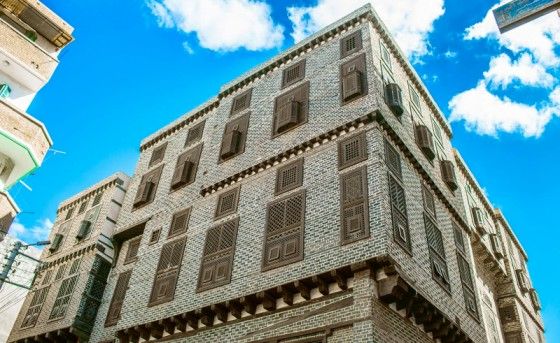
Brick merchants' houses of the seventeenth and eighteenth centuries with mashrabiya windows, in the town of the Rosetta Stone.
A port on the Nile
Rashid, known in Europe as Rosetta, lies on the western branch of the Nile near its mouth on the Mediterranean, about 65 kilometres east of Alexandria. From the Mamluk period and especially under the Ottomans, it was one of Egypt's most important ports, handling trade between the Nile valley and the Mediterranean, until the construction of the Mahmudiya Canal in the nineteenth century redirected commerce to Alexandria. Its wealthy merchants built fine houses and mosques, and Rashid today preserves one of the largest concentrations of Ottoman-era domestic architecture in Egypt.
The houses
The historic houses, mostly built in the seventeenth and eighteenth centuries, are tall buildings of three or four storeys made of fired brick laid in decorative patterns of red and black, with lower storeys sometimes incorporating reused ancient columns and stones. Their upper floors project over the street and are fitted with wooden mashrabiya windows, carved wooden ceilings and cupboards, and coloured tiles. Among the best known are the houses of Amasyali and Abu Shahin, the latter including a mill, and the house of Arab Killi, which serves as a local museum. Several mosques of the period, such as the mosques of Zaghloul and al-Mahalli, complete the historic townscape.
Visiting
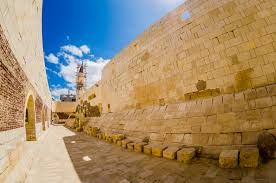
A number of houses have been restored and can be visited on a combined ticket. The town is often combined with the Fort of Qaitbay, where the Rosetta Stone was found, and the hill of Abu Mandour on the Nile.
Exhibo editorial
Rashid is a working Delta town of markets, fishing boats and donkey carts — and scattered through it, tall Ottoman houses of patterned red and black brick, their wooden mashrabiyas leaning out over the lanes. It feels like Cairo's old houses transplanted to a sleepy river port, with far fewer visitors.
Walk from house to house, look up at the carved woodwork, and stop for tea by the Nile. Then drive out to the fort where, in 1799, a French officer noticed an inscribed stone that would unlock the hieroglyphs.
How to find it
Rashid lies about 65 km east of Alexandria, about 1 hour by car. The historic houses are concentrated in the old town near the main market street and Dahliz al-Molk Street; buy the combined ticket at the house of Arab Killi or the first house you visit, and ask for a map of the open houses.