Fort of Qaitbay, Rashid (Fort Julien)
The Mamluk fort on the Nile where French soldiers found the Rosetta Stone in 1799.
A fort at the mouth of the Nile
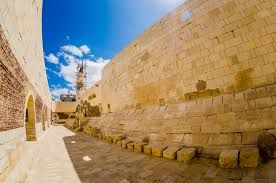
The Fort of Qaitbay stands on the west bank of the Rosetta branch of the Nile, a few kilometres north of the town of Rashid, near the river's mouth on the Mediterranean. It was built in the late fifteenth century by the Mamluk Sultan al-Ashraf Qaitbay, the same ruler who built the citadel on the site of the Pharos in Alexandria, to defend the Nile mouth against attack from the sea. Its brick and stone walls and towers enclose a courtyard with a small mosque.
The Rosetta Stone
In July 1799, during Napoleon's expedition to Egypt, French troops were rebuilding the fort, which they renamed Fort Julien, when an officer, Pierre-François Bouchard, noticed a large stone slab inscribed in three scripts — hieroglyphic, demotic and Greek — built into an old wall. The stone carried a decree issued in 196 BC by priests in honour of Ptolemy V. After the French defeat, it passed to the British under the Treaty of Alexandria in 1801 and has been in the British Museum since 1802. Because the same text appeared in Greek, which scholars could read, the Rosetta Stone became the key to deciphering Egyptian hieroglyphs, achieved by Jean-François Champollion in 1822.
Visiting
The fort has been restored and is open to visitors, with displays on its history and the discovery of the stone; a replica of the Rosetta Stone is on show. From its walls there are views over the Nile.
Exhibo editorial
There is little dramatic about the fort itself — a low, sturdy Mamluk stronghold on a quiet bend of the Nile, palm trees and fishing boats around it. But this is where, in the summer of 1799, a French officer looked twice at a stone in a wall and changed our understanding of an entire civilisation.
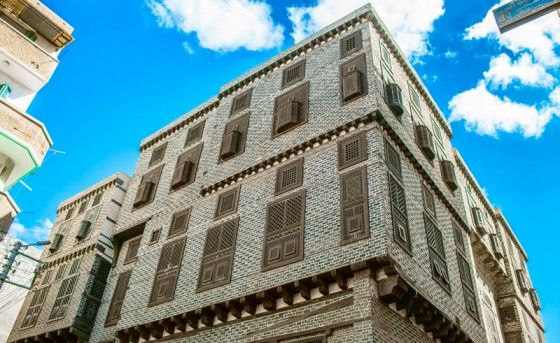
Stand by the replica, read the three scripts, and look out over the river. Combine it with the Ottoman houses of Rashid and the sunset at Abu Mandour for a perfect day out from Alexandria.
How to find it
The fort lies about 6 km north of Rashid's town centre, on the road along the west bank of the Nile towards the river mouth; a taxi or car is needed. The entrance is through the main gate on the landward side.