Madaba Mosaic Map (St George's Church)
The oldest surviving map of the Holy Land, laid in mosaic on a church floor in sixth-century Madaba.
The map
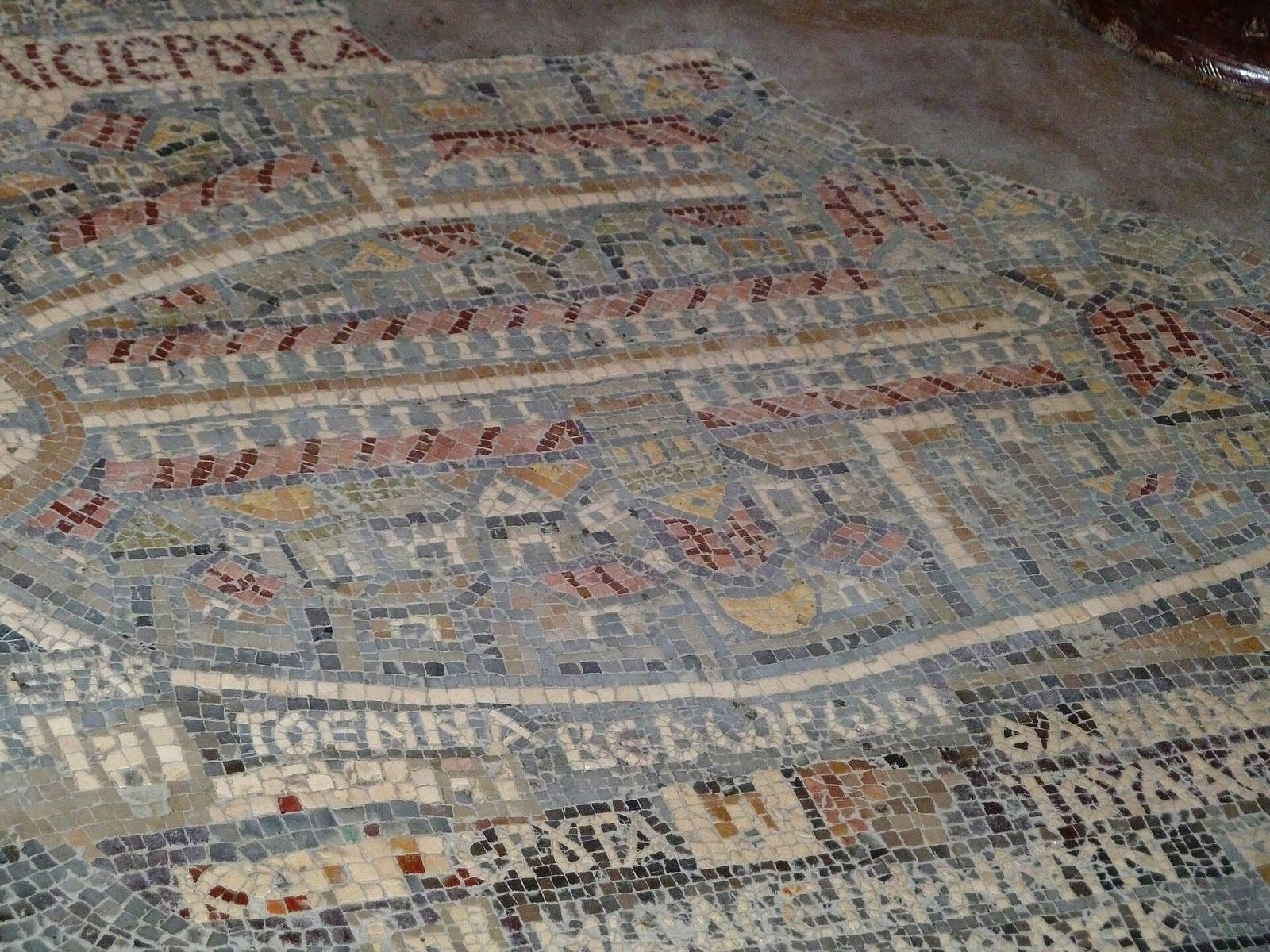
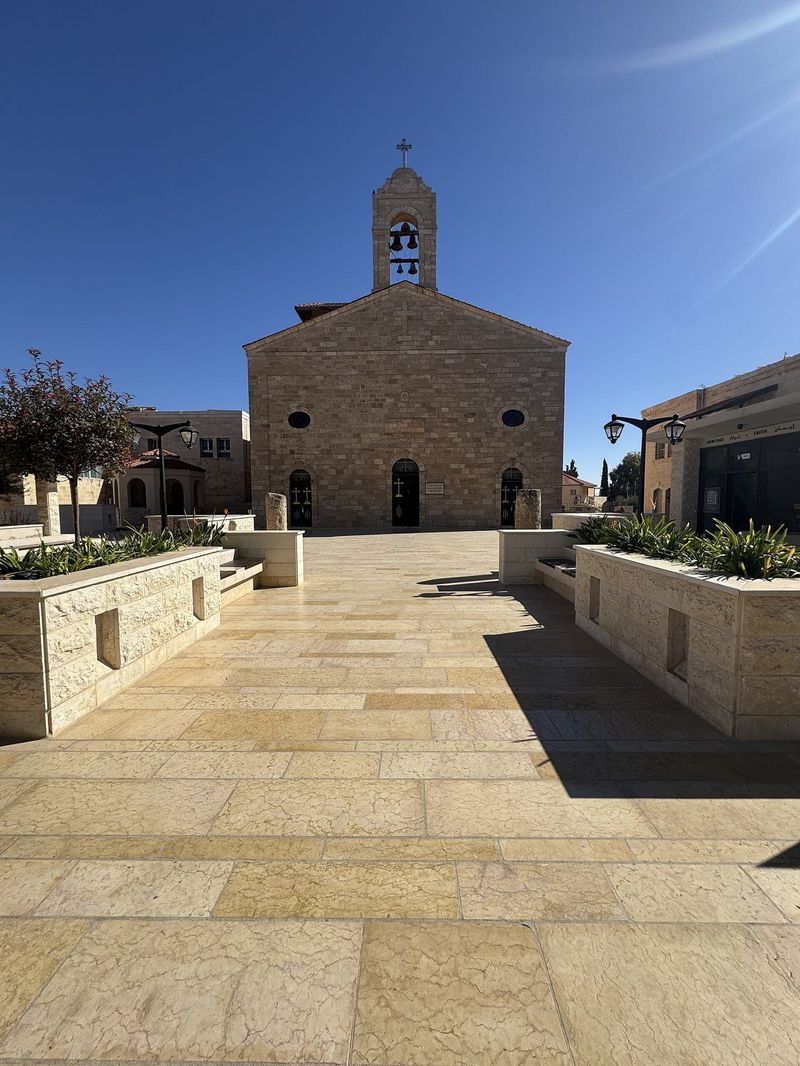
The Madaba Map is a floor mosaic in the Greek Orthodox Church of St George in Madaba. It was laid in the second half of the sixth century and is the oldest surviving original map of the Holy Land. It is the most famous mosaic in Jordan and one of the most important in the Middle East.
Discovery
The mosaic came to light in 1884, when Christian families who had moved to Madaba from Karak began building a church on the ruins of a Byzantine one. Its importance was recognised in the 1890s and the first full study of it was published in 1897. The present church was built over and around the mosaic at the end of the nineteenth century.
What it shows
In its original form the map filled the eastern part of the church, about 21 by 7 metres, with more than two million tesserae. It covered the land from Lebanon in the north to the Nile Delta in the south and from the Mediterranean to the desert in the east. Today a large fragment survives. Like the church, it faces east, so east is at the top.
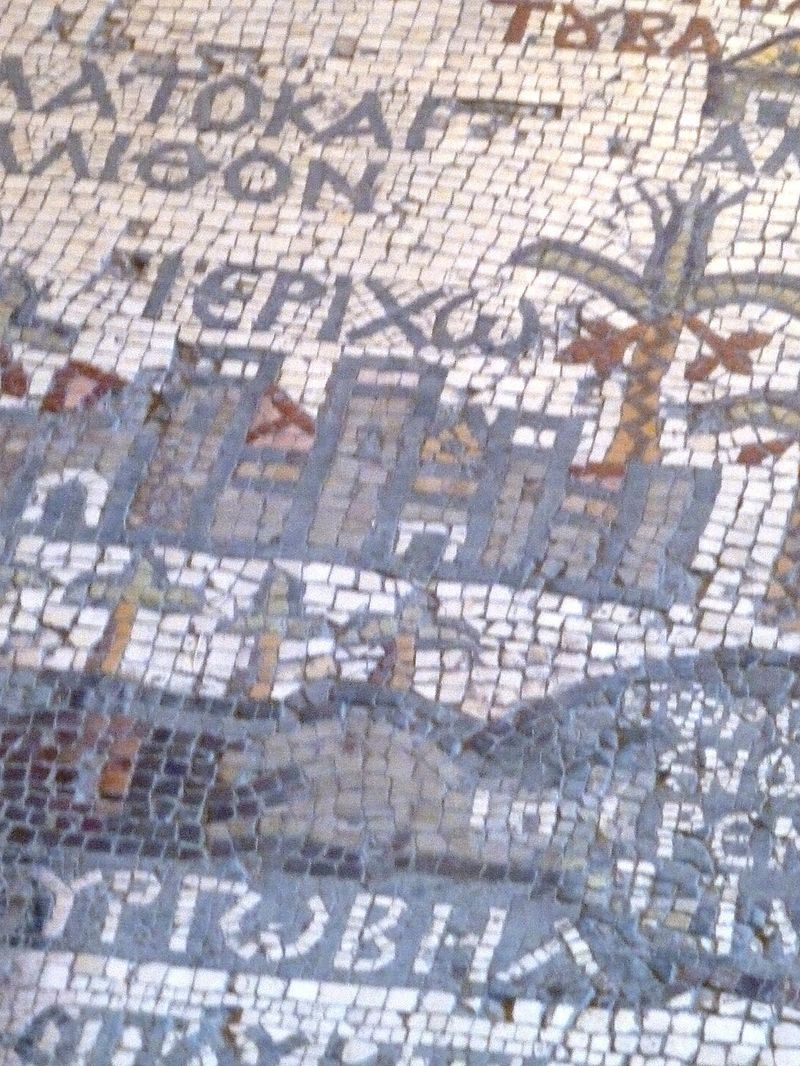
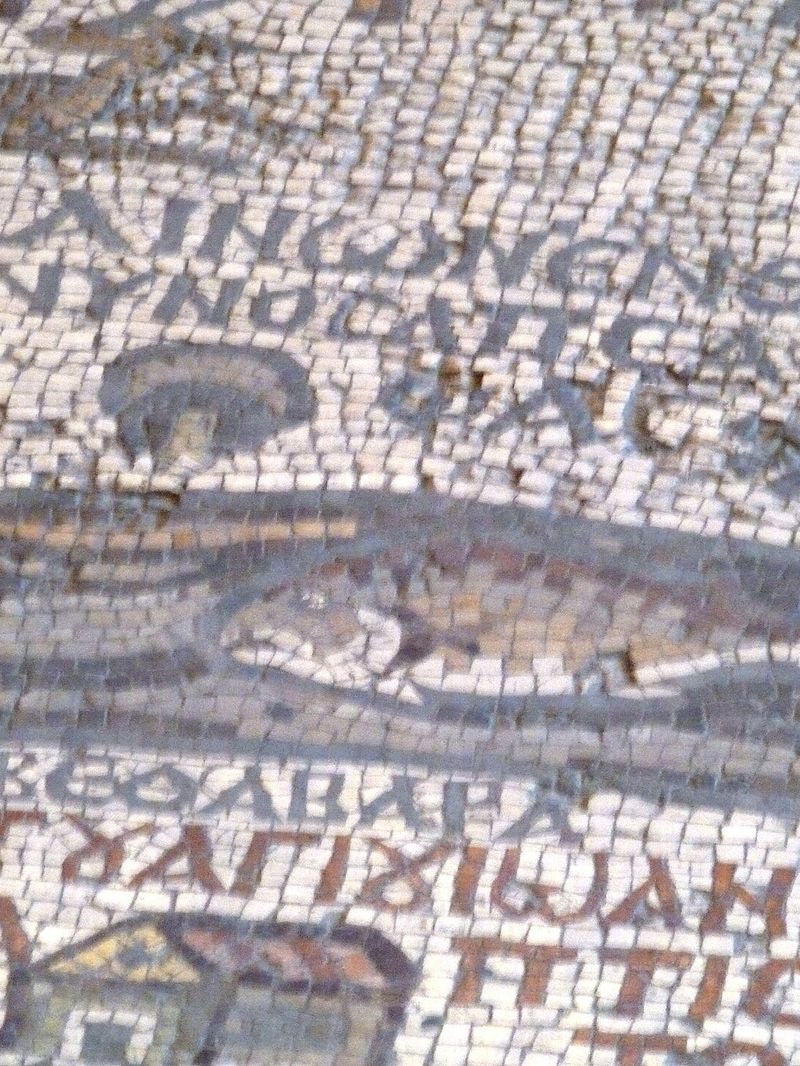
The centre is Jerusalem, shown in remarkable detail: the walls and gates, the colonnaded Cardo running through the city, the Church of the Holy Sepulchre and the Nea Church, consecrated in 542, which gives the earliest possible date for the mosaic. Around it are Jericho with its palm trees, Bethlehem, the Jordan with fish swimming in it, two boats on the Dead Sea and the branches of the Nile. Captions in Greek name the places and quote the Bible.
Significance
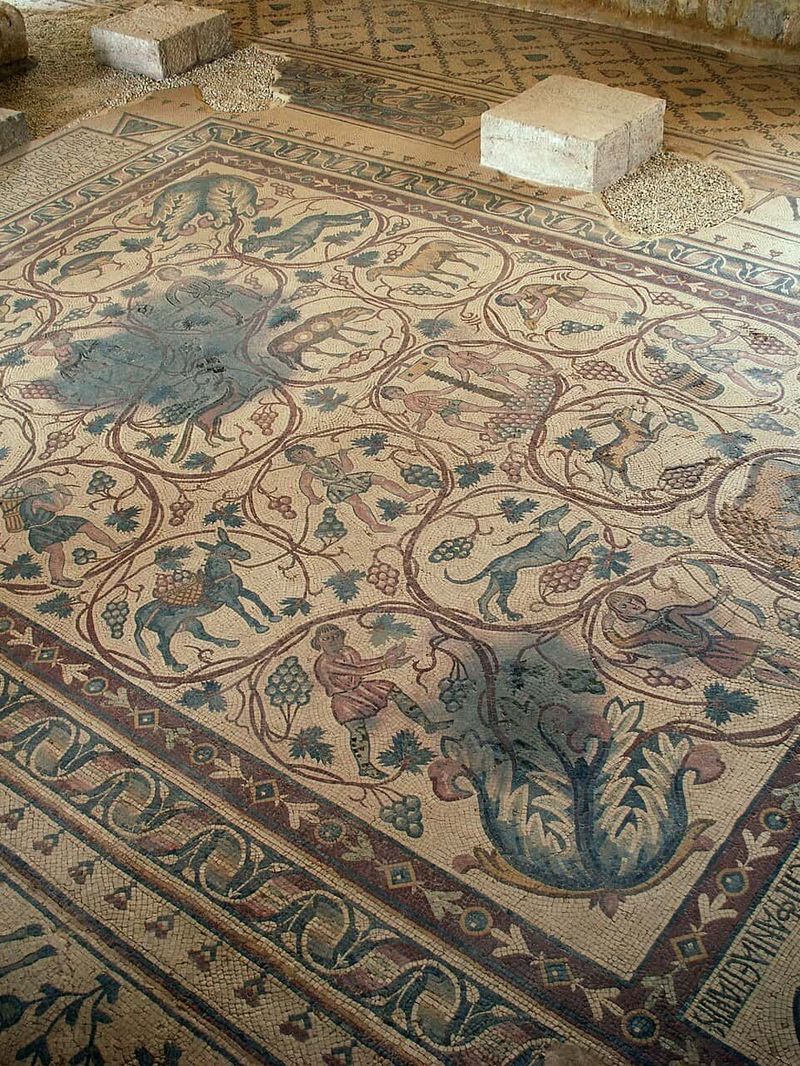
The map has guided archaeologists. Its picture of Jerusalem helped excavators locate the Byzantine Cardo and the Nea Church in the twentieth century. Madaba's other mosaics are in the Archaeological Park and the Church of the Apostles. Mount Nebo is about 10 km west.
Exhibo editorial
You come for Jerusalem and stay for the fish. In the Jordan, a few of them swim downstream towards the Dead Sea. The ones nearest the salt water have turned round and are swimming back. Someone in sixth-century Madaba thought that was worth putting into a map of the holy world.
The church is small and usually busy. The map lies behind a railing at your feet. Find the oval of Jerusalem, the long line of its columned street, the Holy Sepulchre in the middle. These stones are fifteen hundred years old and you can still find your way by them.
Gallery
How to find it
In central Madaba on Talal Street, two blocks north of the visitor centre. Tourists use a side entrance with a small ticket office. The map is on the floor at the front of the church, near the iconostasis.