Church of the Apostles, Madaba
A Byzantine church of 578 whose floor holds Thalassa, the sea, signed by the mosaicist Salamanios.
The church
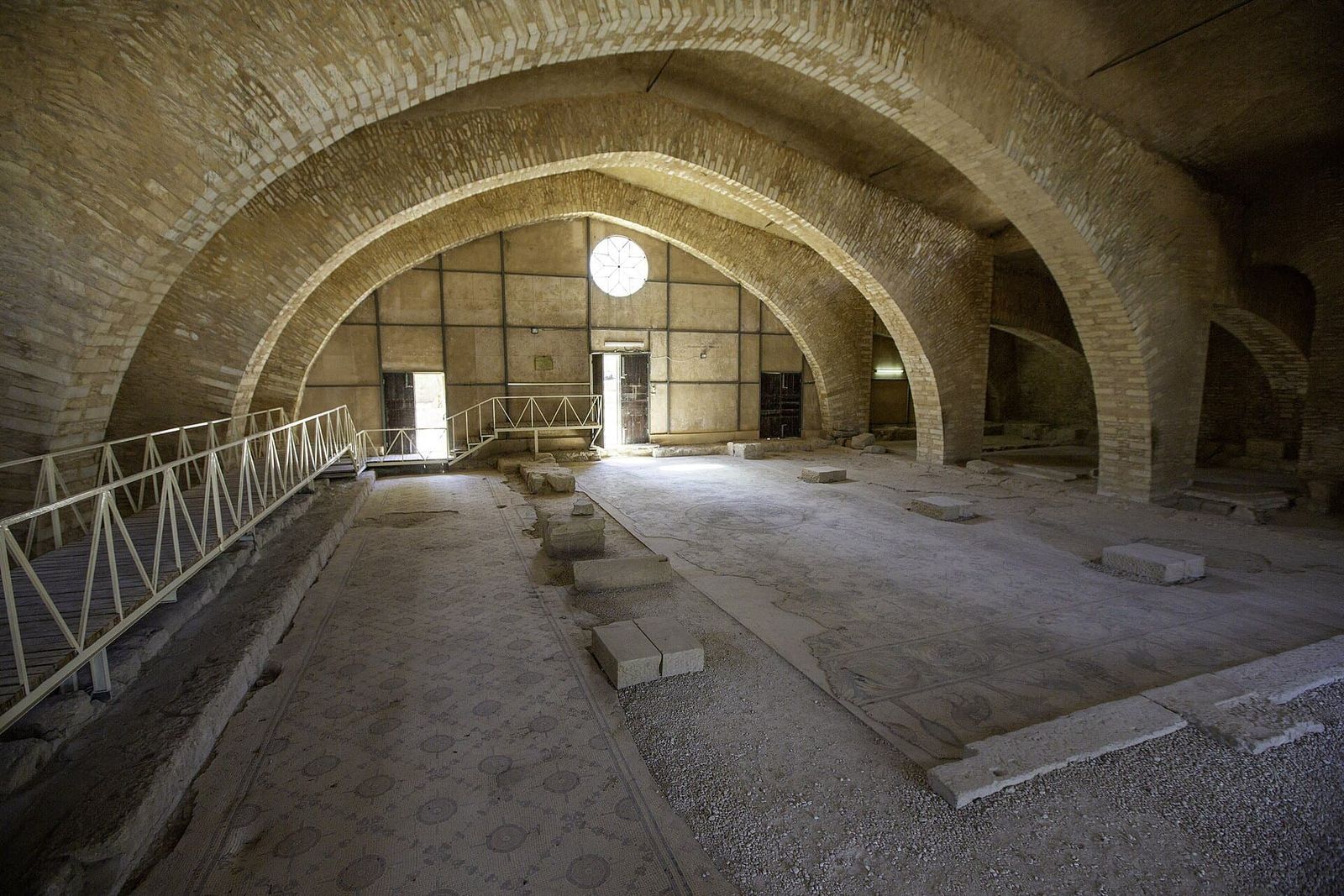
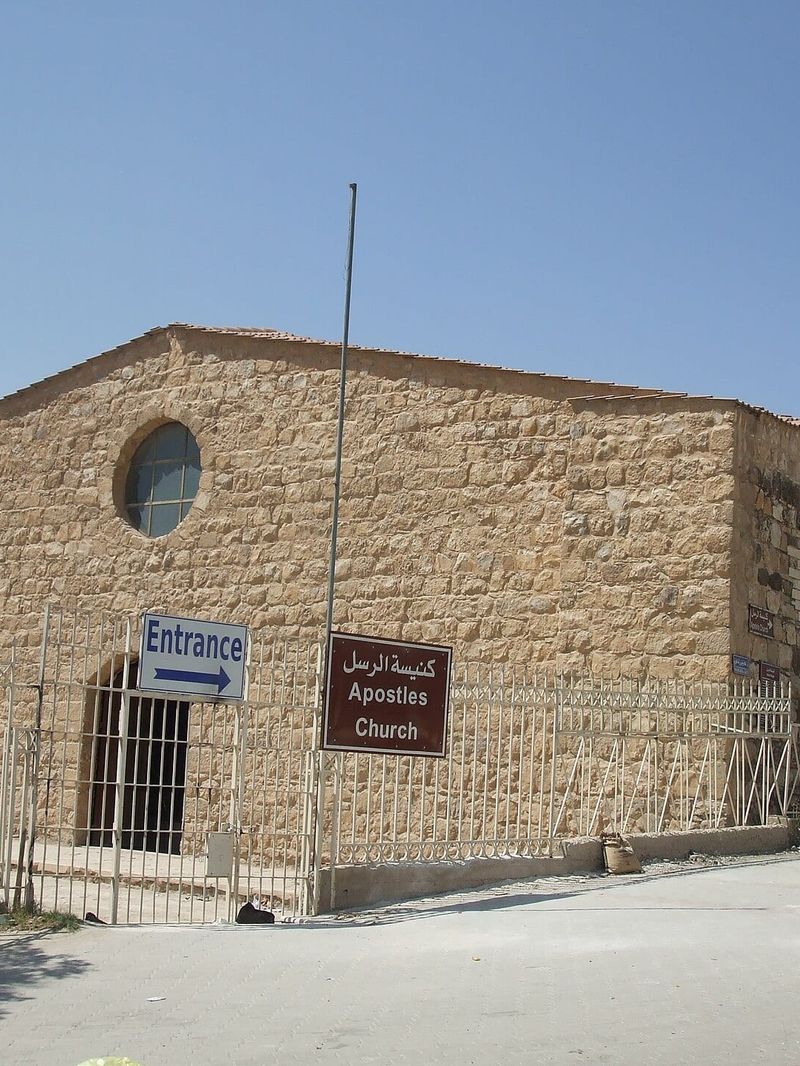
The Church of the Apostles is a large Byzantine church on the southern edge of old Madaba. Its dedicatory inscription dates it to AD 578. The ruins are protected by a modern roof.
The mosaic
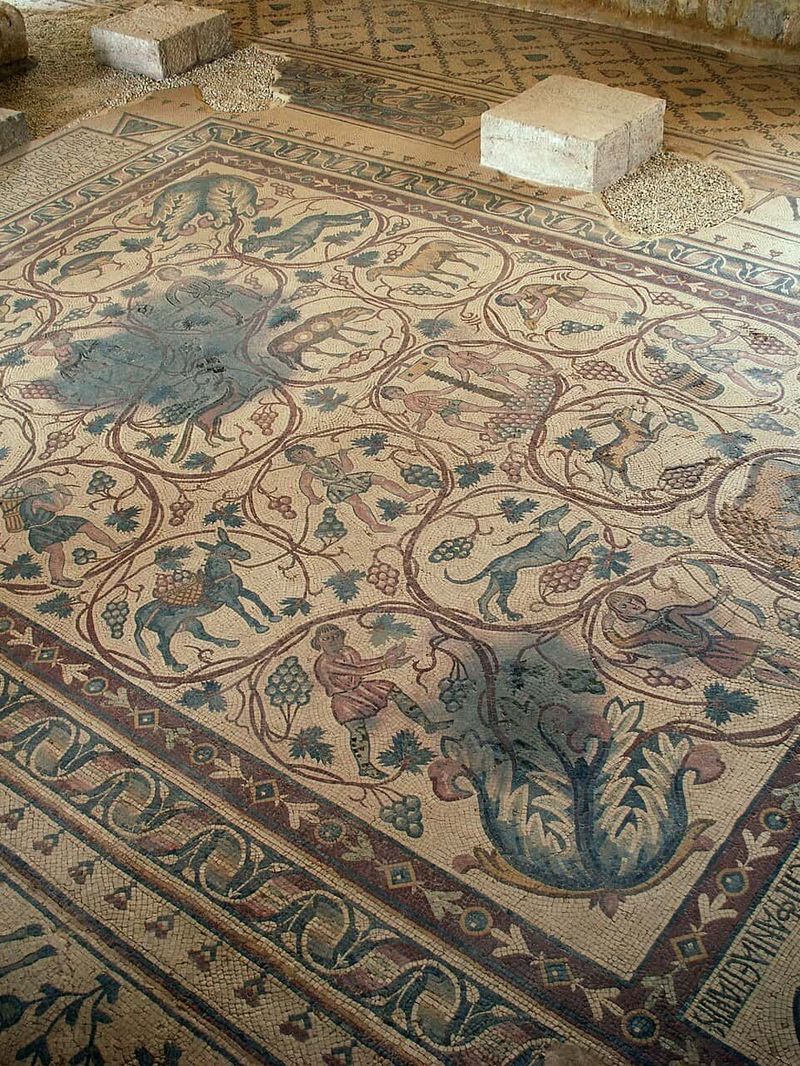
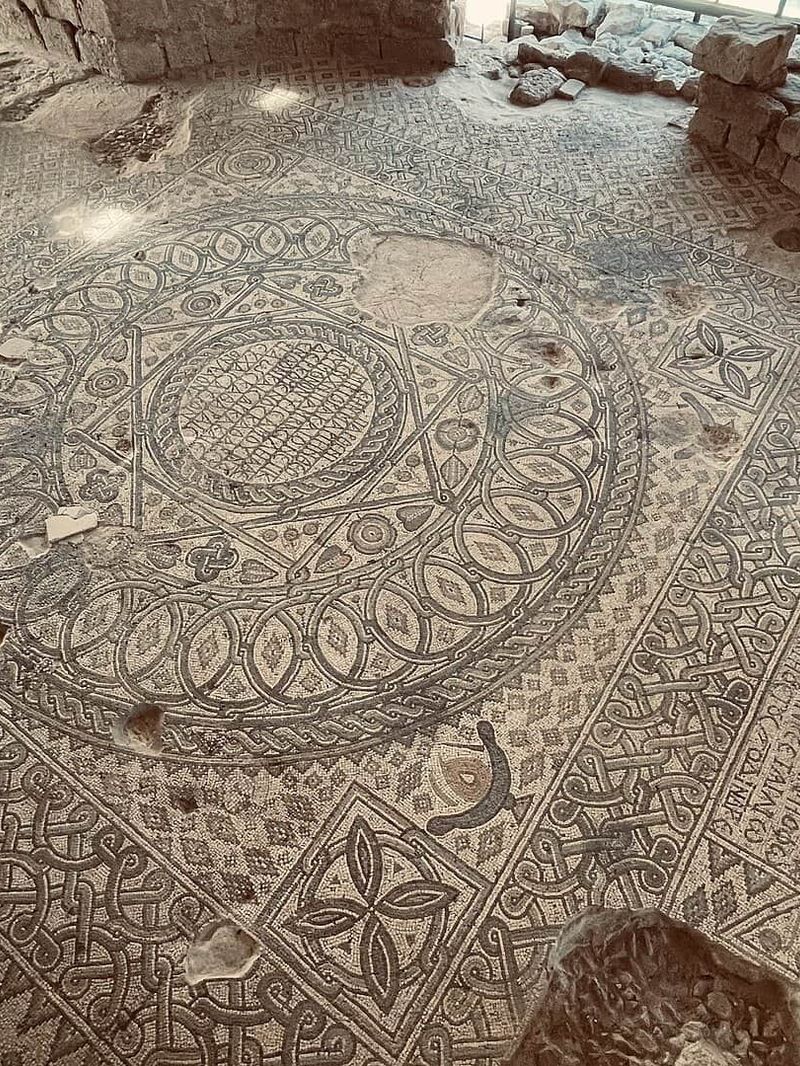
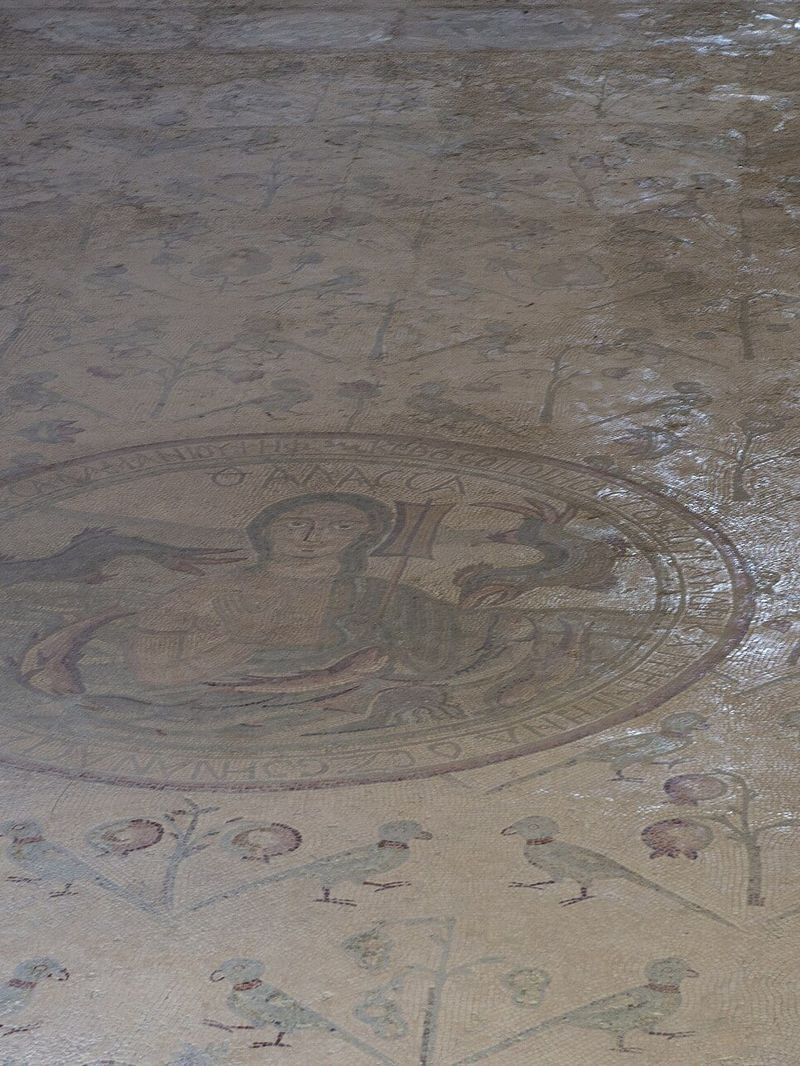
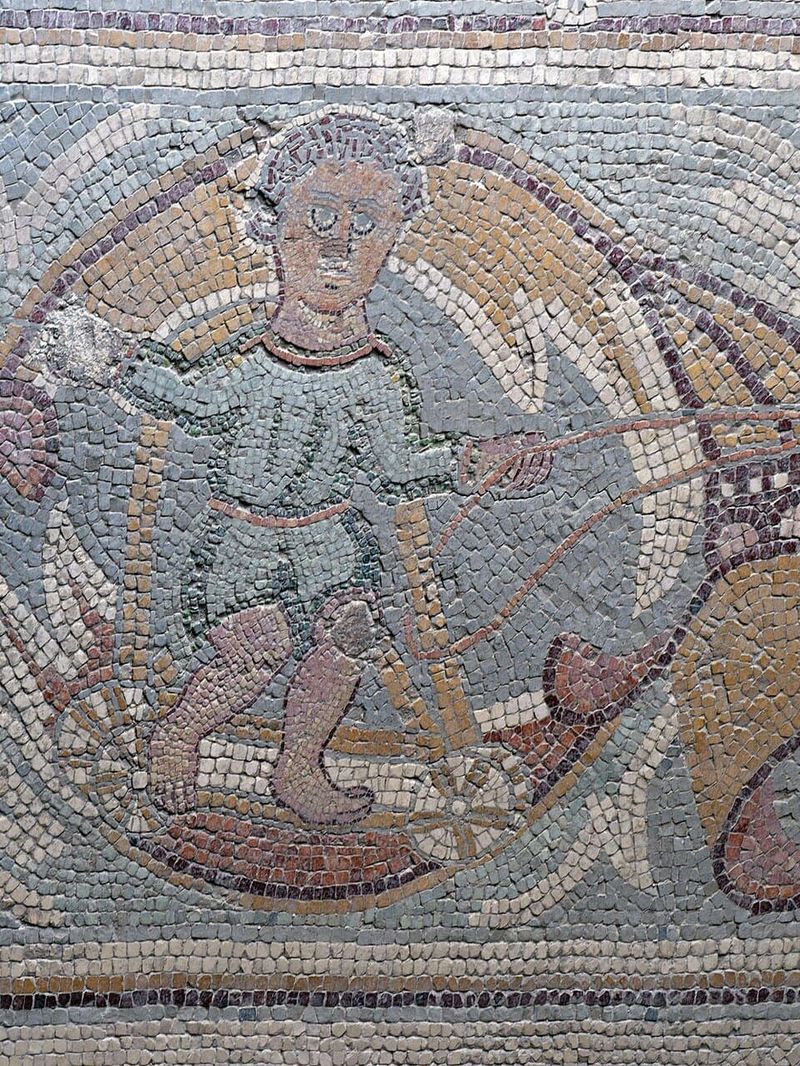
The central floor carries one of the finest mosaics in Madaba, signed by the mosaicist Salamanios, one of the few artists of the period known by name. In the middle is a medallion with Thalassa, the personification of the sea: a woman rising from the waves among fish and sea creatures, with a Greek inscription that invokes God. Around her, a grid of birds, plants, animals and baskets of fruit fills the nave, framed by masks and acanthus scrolls.
Visiting
The church is on the same ticket as the Madaba Archaeological Park. The Madaba Map at St George's is a short walk north.
Exhibo editorial
Thalassa has the best face in Madaba. She looks up out of her medallion with a frank, almost modern expression, hair loose, sea creatures circling. The classical sea on a Christian church floor, kept because she was beautiful.
And there is a name beside her. Salamanios signed his work, which almost nobody did. Fourteen centuries later he is the one the guides name first. The church is quieter than St George's. Give her a few minutes.
Gallery
How to find it
On King Talal Street at the southern edge of Madaba's centre, about 10 minutes' walk from the Archaeological Park. Look for the modern building with a large roof over the ruins.